
What Is a Compostable Clamshell? Takeout Clamshell Sizes and Materials Explained
Compostable clamshell containers are hinged takeout boxes, usually bagasse. Sizes from 6x6 to 9x9, 1 vs 3 compartments, heat limits, green bin rules, and cost.
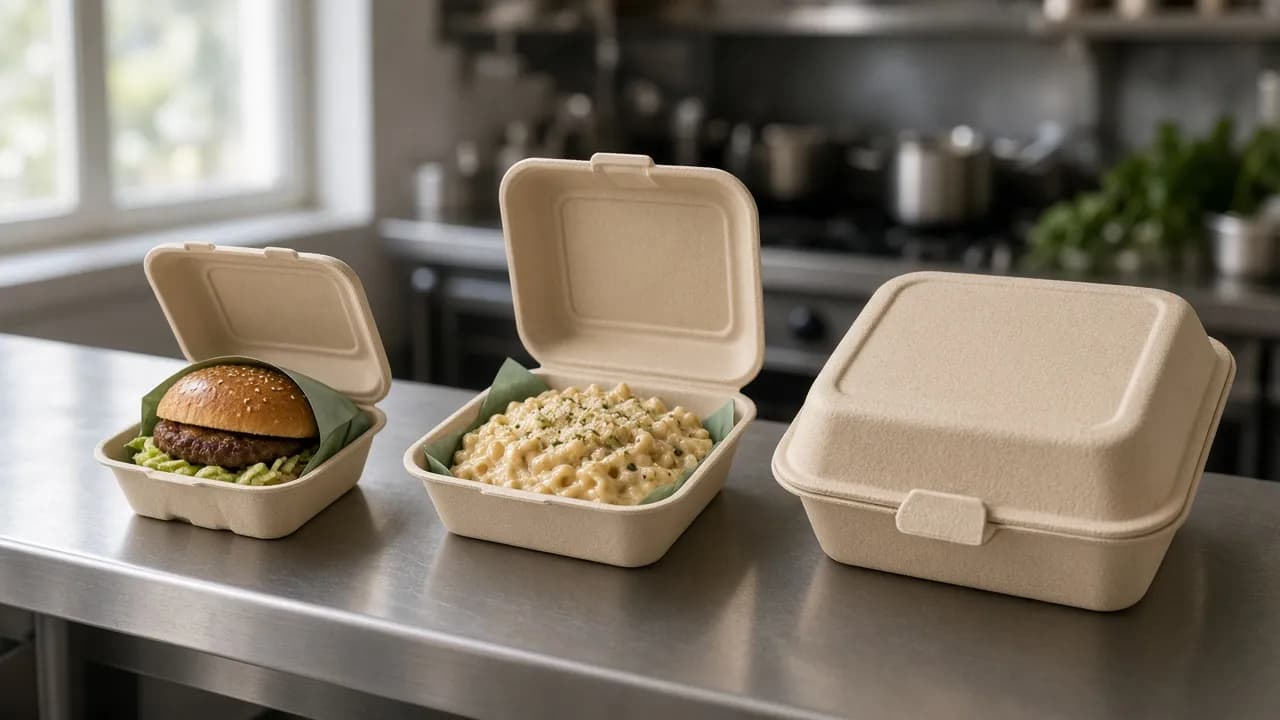
Compostable clamshell containers are one-piece hinged takeout boxes, usually molded from sugarcane bagasse, that close like a shell and break down in a commercial compost facility. They replace foam and plastic clamshells for burgers, entrees, combo plates, and sandwiches, and most come in four sizes: 6 x 6, 8 x 8, 9 x 9, and 9 x 6 inches.
The size on the case is a name, not a measurement. One World Centric clamshell sold as 8 x 8 x 3 lists its real dimensions at 8 13/16 by 8 3/16 by 2 7/8 inches. That is most of an inch longer than the label on one side, and an eighth of an inch shallower.
Safra Distribution stocks kraft bagasse clamshells and clear PLA clamshells in our Fremont warehouse and delivers them on weekly routes across six Bay Area counties. Below is how to pick the size, the material, and the hauler rules before you order.
Compostable clamshell containers in the sizes most takeout kitchens use.
Key facts about compostable clamshells
- Compostable clamshells, bagasse clamshells, and fiber clamshells are usually the same product: a molded plant fiber box with the lid attached.
- A 6 x 6 clamshell usually ships 500 per case, as on this EcoChoice 6 x 6 listing. 8 x 8 and 9 x 9 boxes usually ship 200 to 300 per case.
- Nominal size is not exact. One "8 x 8" lists at 8 13/16 by 8 3/16 inches.
- Heat ratings on public listings disagree: 32 to 176 F on one 8 x 8 fiber clamshell, 190 F on another.
- Clear PLA is rated to 105 F on one maker's chart, so a clear compostable clamshell is a cold-food box.
- California's Health and Safety Code section 109000 (AB 1200) bars PFAS in plant fiber food packaging, and the definition names take-out food containers.
- Public listings read in November 2026 put compostable clamshells at roughly 12 to 66 cents each, depending on size and brand.
Further reading
- What is bagasse? Sugarcane packaging explained
- Wholesale bagasse packaging: trays, bowls, and containers
What is a compostable clamshell?
A compostable clamshell is a takeout box with a base and a lid molded as one piece and joined by a hinge. The lid closes with a tab, a tuck, or a press-fit lock. There is no separate lid to match or run out of.
Most are molded plant fiber: sugarcane bagasse, bamboo, or a blend. They are opaque, stiff, and made for hot food. A smaller group is clear PLA, a plant-based plastic, and those are made for cold food.
The names vary more than the product does. Hinged containers, fiber clamshells, bagasse containers, and bagasse clamshells usually mean the same box. How the pulp becomes a box is covered in our what is bagasse guide.
What sizes do compostable clamshell containers come in?
Four sizes cover most takeout menus. Pick by the meal, not by habit.
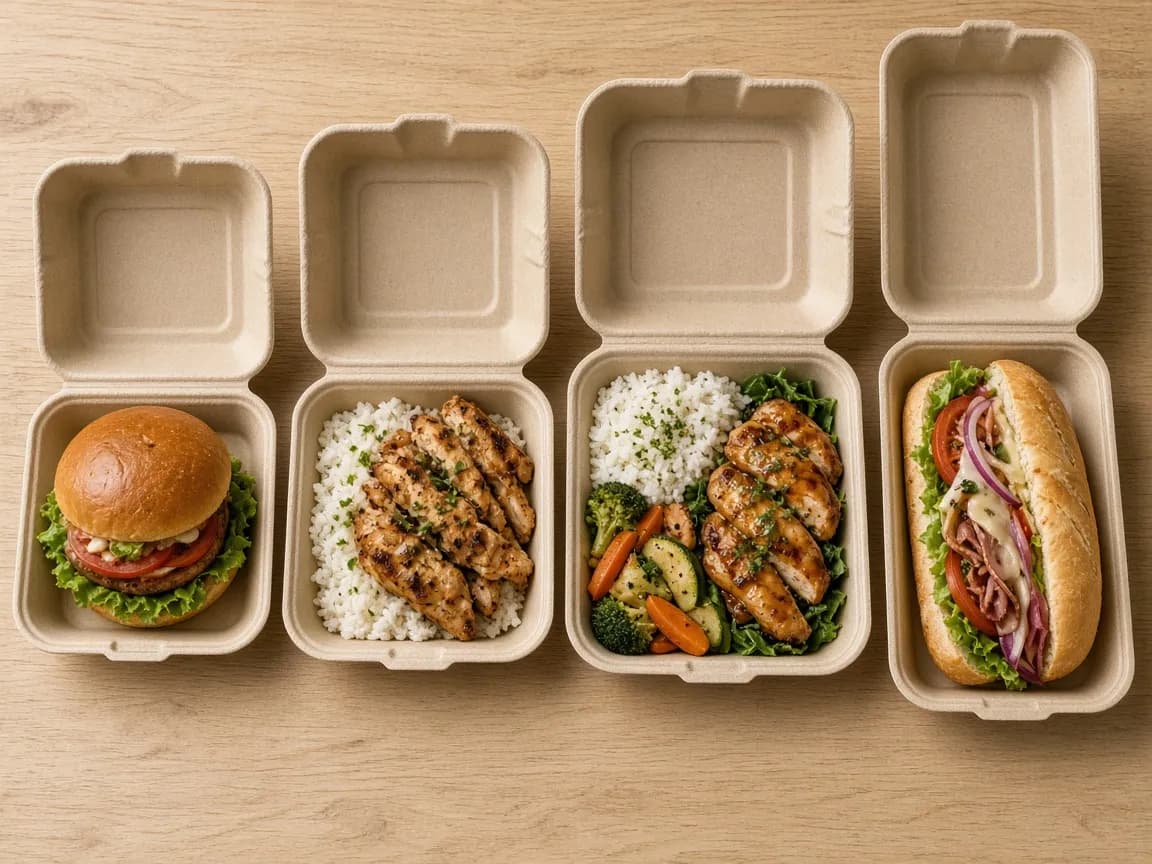
Compostable clamshell sizes side by side, each filled with the meal it fits.
- 6 x 6 x 3. A burger, a breakfast sandwich, fries, a dessert, or a side of rice. Usually 500 per case.
- 8 x 8 x 3. The standard entree box. Pasta, a rice plate, a salad, chicken and a side. Usually 200 to 300 per case.
- 9 x 9 x 3. A large entree or a combo plate, often bought in 3-compartment form. Usually 200 per case.
- 9 x 6 x 3. The hoagie box, for subs, wraps, burritos, and hot dogs. 200 to 500 per case, depending on the brand.
Taco boxes are the specialty size. A 2-taco or 3-taco clamshell is fitted to the order, so the tacos are not riding loose in an entree box.
Safra stocks these bagasse clamshells: the 6 x 6 at 500 per case, the 8 x 8 1-compartment and 8 x 8 3-compartment shallow at 200, the 9 x 6 hoagie and 9 x 6 2-compartment at 250, the 9 x 9 1-compartment, 9 x 9 3-compartment, and 9 x 9 1-compartment laminated at 200, and the 2-taco and 3-taco boxes at 300. We also carry a 6 inch white EU-style hinged container at 500 per case, and clear PLA clamshells in 6 x 6, 8 x 8, and 9 x 5. All of them are listed in our hinged containers collection.
9x9 vs 8x8 vs 6x6 clamshell: which size do you need?
Most kitchens need two or three compostable clamshell sizes, not all four. The mistake is one box for everything. A 9 x 9 under a burger wastes fiber and bag space, and a 6 x 6 under a plate lunch will not close.
- Burger shop. 6 x 6 for burgers, 8 x 8 for a burger with fries.
- Plate lunch or barbecue. 9 x 9 3-compartment for the meat, the rice, and the slaw.
- Indian, Thai, or Chinese takeout. 8 x 8 for single entrees, 9 x 9 3-compartment for combos with rice and a side.
- Salad or grain bowl shop. 8 x 8 if you do not use bowls. For wet salads, a fiber bowl with a lid usually travels better.
- Deli or sandwich shop. 9 x 6 for subs and wraps, 6 x 6 for sides and cookies.
- Taqueria or food truck. The 2-taco or 3-taco box for taco plates, an 8 x 8 for the rest of the menu.
One test settles it. Plate your largest portion into the size you think you need and close the lid. If the lid presses down on the food, go up a size. If the food slides when you tilt the box, go down one.
Further reading
- 32 oz vs 48 oz round container: which size do you need
- Bagasse plates: sugarcane plate sizes and uses
1 compartment or 3-compartment clamshell?
Compartments decide whether a combo plate arrives the way it left the line. They also cost volume, and that part is easy to miss.
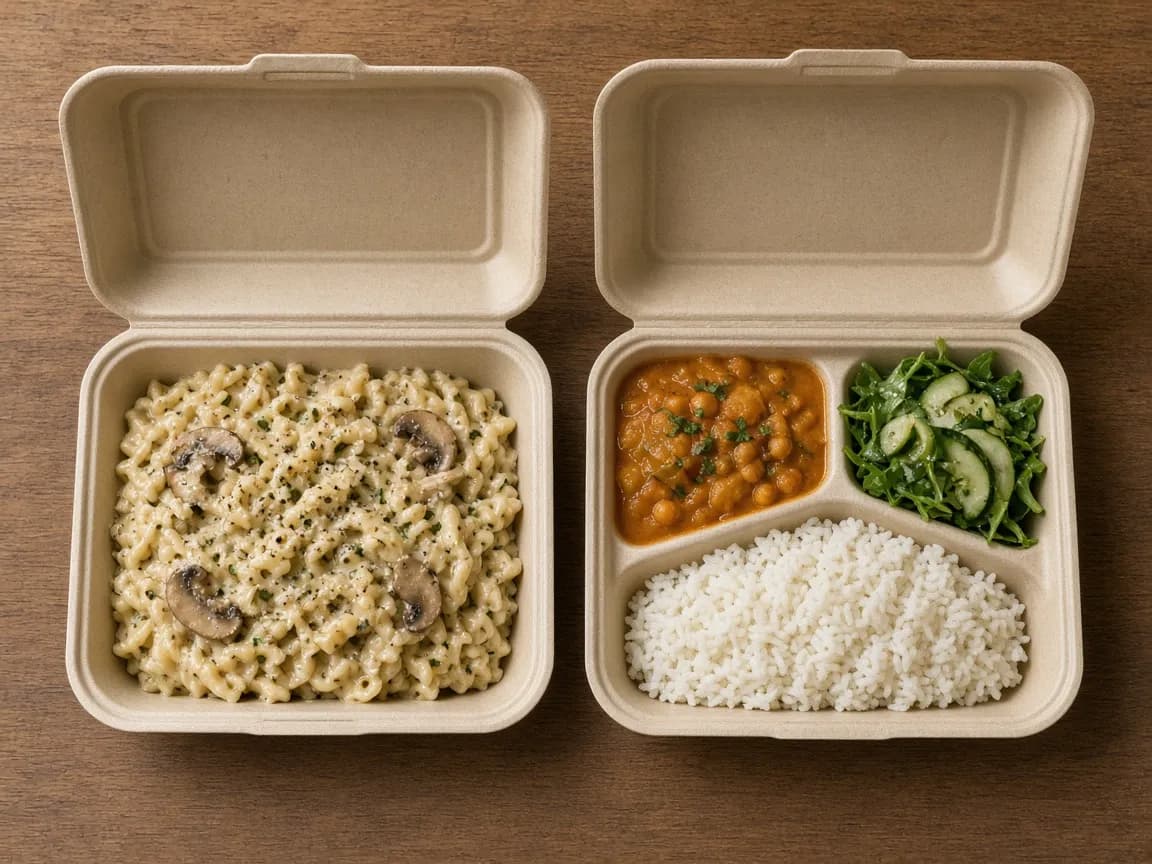
A 1-compartment compostable clamshell for single dishes, a 3-compartment one for combos.
Our own product pages show the trade. The 8 x 8 1-compartment box holds 1,200 ml. The 8 x 8 3-compartment shallow box, same footprint, holds 800 ml. The 9 x 9 3-compartment box holds 1,300 ml, only about 100 ml more than the open 8 x 8.
- 1 compartment. Single dishes: pasta, burgers, fried rice, salads. It holds the most food per box.
- 2 compartment. Common in 9 x 6 boxes, to keep a sandwich apart from chips or fruit.
- 3 compartment. A 3-compartment clamshell is built for combo plates, with the entree in the large section and two sides in the small ones. Sauce stays out of the rice, and the salad stays away from the hot food. The dividers also stiffen the base.
The 3-compartment box is not a bigger box. It is a box that trades space for order. If combo plates are a real share of your tickets, stock it next to the 1-compartment box and portion to its actual capacity, not to the size on the case.
Why do clamshell dimensions not match the label?
Because the label is a category, not a spec. Two boxes sold as "8 x 8" can differ by most of an inch.
The World Centric 8 x 8 x 3 lists actual dimensions of 8 13/16 by 8 3/16 by 2 7/8 inches. Its 9 x 6 x 3 hoagie box measures 9 3/16 by 6 3/8 by 3 1/8 inches. The EcoChoice 9 x 6 x 3 lists 9 by 6 by 3 inches, exactly its name. Same name, different box.
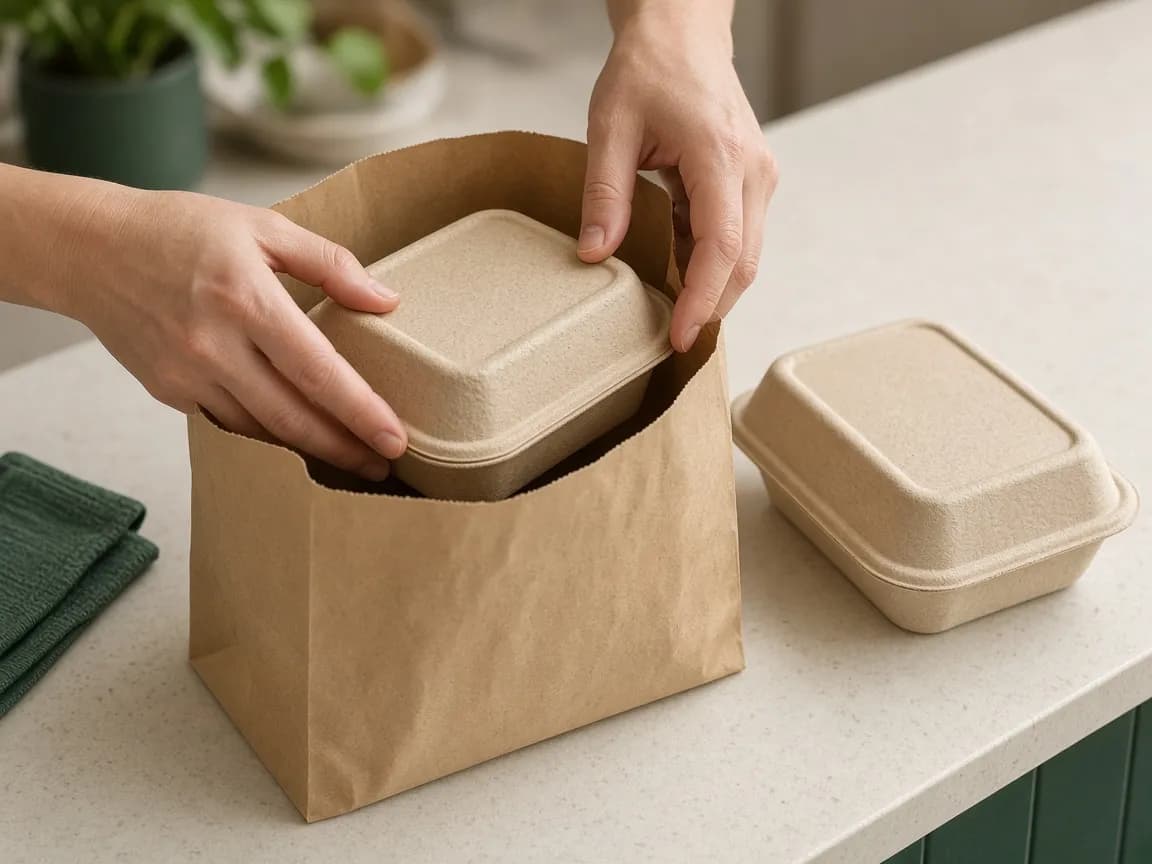
Check that a new compostable clamshell fits your current takeout bag before you switch.
Where the difference shows up:
- Bags. A box that runs long may not sit flat in your current takeout bag.
- Delivery. Insulated delivery bags and stacking racks have fixed widths.
- Portions. A portion that fits one brand's 8 x 8 can overfill another's and keep the lid from locking.
Before you switch brands of compostable clamshell, read the length, width, and depth on the spec sheet. Then put one new box in your bag before you change the standing order.
Further reading
What are compostable clamshells made of?
Most are molded plant fiber. The exceptions matter because they follow different rules.
- Sugarcane bagasse. The most common. Opaque, tan or white, stiff, and good with hot and greasy food.
- Bamboo and fiber blends. The same look and use as bagasse. Some brands mix fibers.
- Laminated fiber. A fiber box with a coated surface, like our 9 x 9 laminated clamshell. Ask your hauler about coated fiber before you switch to it.
- Clear PLA. A plant-based plastic for salads, sandwiches, cut fruit, and the grab-and-go case. Cold food only. Our PLA guide covers the material.
Fiber is the default for hot food. Clear PLA is for cold food customers need to see, and it carries stricter disposal rules, covered below.
Further reading
- Bagasse vs PLA: which compostable material fits your menu
- Compostable foodservice packaging: the complete guide
Are compostable clamshell containers microwave and heat safe?
Fiber compostable clamshells handle hot food and short reheats. The ratings do not agree, and that is the part buyers skip.
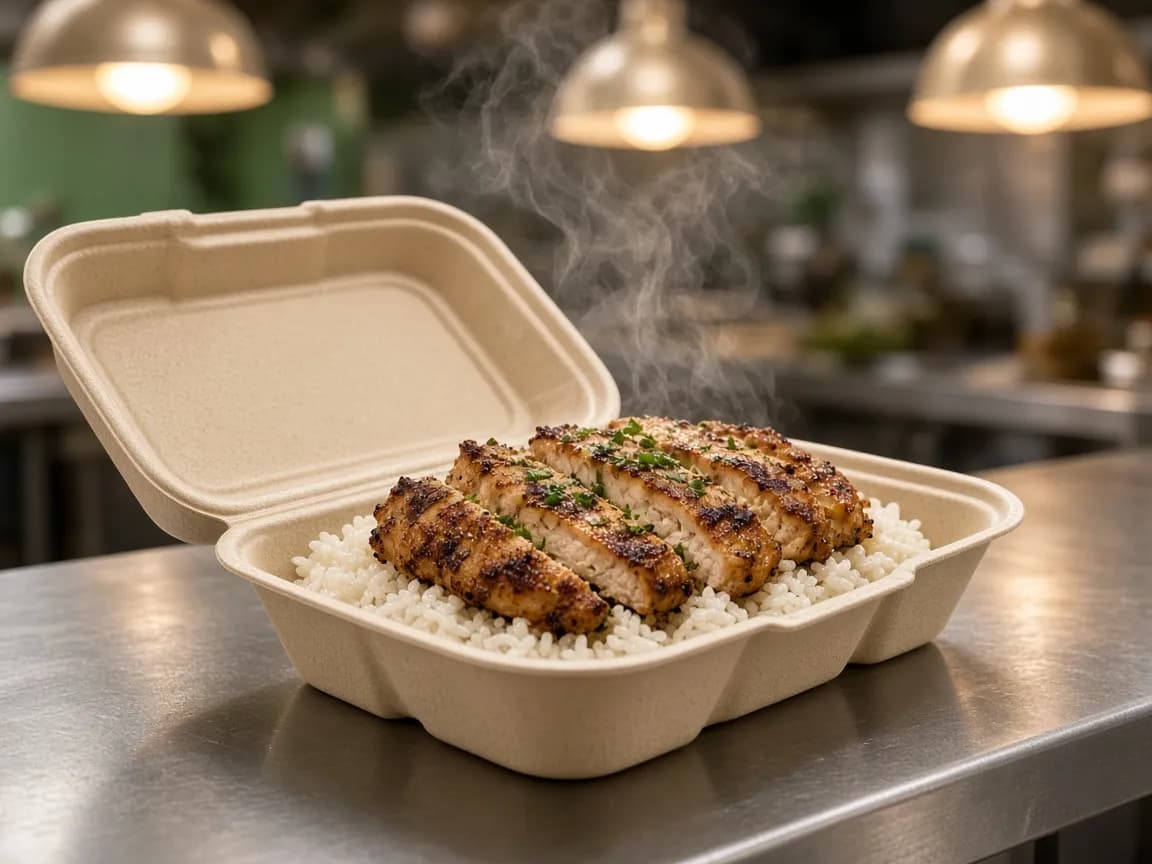
Fiber compostable clamshells hold hot food. Check the rating on the exact box.
- Greenprint rates its 8 x 8 fiber clamshell at 32 to 176 F and marks it microwavable and freezer safe.
- World Centric lists a maximum of 190 F on its 8 x 8 and on its 9 x 6 hoagie box.
- EcoChoice answers a customer question on its 6 x 6 listing with a rating of 14 to 266 F, then recommends foods around 113 F for best performance.
- Clear PLA is rated 0 to 105 F on Pactiv Evergreen's temperature chart. Hot food will soften it.
A spread from 176 F to 266 F tells you the category name means very little. Read the rating on the box you actually buy.
Steam is the other problem. A hot, wet meal in a closed fiber box sweats, and the lid softens on a long route. The same EcoChoice answer calls very wet, liquid-heavy food a leak risk at higher temperatures. Vent the box for a moment before closing it, or move saucy dishes to a lidded bowl.
Do compostable clamshells go in the green bin?
In most of the Bay Area, a plain fiber compostable clamshell goes in the green bin with the food scraps. A clear PLA clamshell often does not.
This is not a question about the box. It is a question about your hauler.
- San Francisco. Recology's What Goes Where list puts natural fiber-based cups, plates, bowls, and utensils, bagasse included, in the compost bin. Compostable plastic is not on that list, and the same page keeps plastic labeled "Compostable" out of the blue bin.
- Central Contra Costa. RecycleSmart sends biodegradable and "compostable" plastics to the landfill, along with plastic-coated food paper.
- San Mateo County. In unincorporated areas and the 16 cities that adopted the county ordinance, compostable plastic is not allowed for most disposable foodware, clamshells included.
- Your city. Check your hauler before you switch. The rules differ from one program to the next.
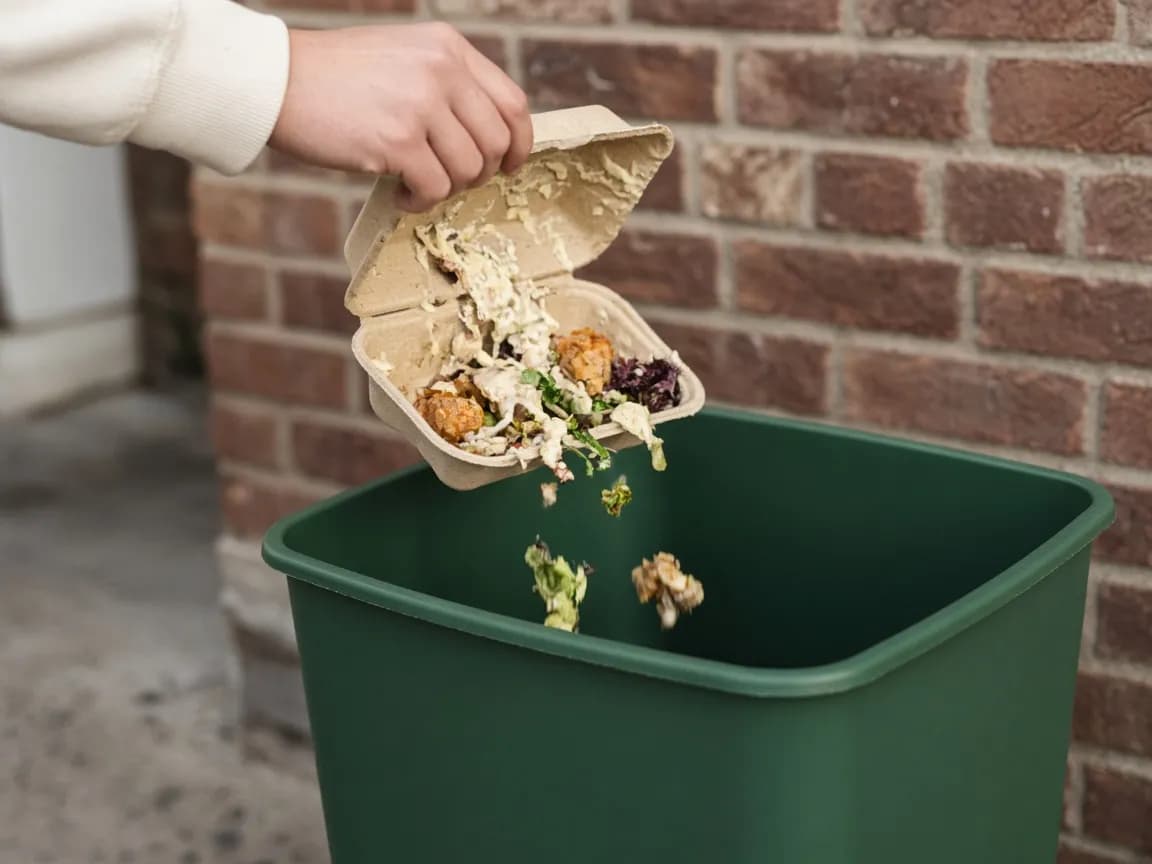
Plain fiber compostable clamshells go in the green bin with the food scraps where fiber is accepted.
The scraps and the fiber box go in together. If you have no compost service at all, our no composter near me guide covers the honest options.
Further reading
- Compostable vs biodegradable vs recyclable: California labels
- San Mateo County foodware ordinance explained
How do you pack a compostable clamshell for delivery?
Most compostable clamshell complaints are about packing, not the box. Five habits fix most of them.
- Do not overfill. Food on the hinge or the rim keeps the lid from locking.
- Vent hot, wet food. Let the steam out for a moment before you close the lid.
- Sauce on the side. Put wet sauces in a portion cup.
- Lock the tab. Press until it clicks or tucks fully, then check it once.
- Pack flat. Keep boxes level in the bag, heaviest at the bottom.
The box is rarely the reason a meal arrives wrong. The packing line usually is. Train the line the day you switch.
What California rules apply to compostable clamshells?
- AB 1200, PFAS. Health and Safety Code section 109000 covers plant fiber food packaging and names take-out food containers. Since January 1, 2023, that packaging cannot contain intentionally added PFAS, or PFAS at or above 100 parts per million total organic fluorine. Look for "no PFAS added" on the spec sheet.
- Compostable labels. A box sold as compostable has to meet California's labeling rules. Our labeling laws guide explains SB 343 and AB 1201.
- SB 54. Producer responsibility rules sit on top of both. See our SB 54 guide.
- San Francisco. Compostable foodware must be certified by BPI or TUV AUSTRIA.
- San Mateo County. Where the ordinance applies, plastic clamshells are out, compostable plastic included, and fiber foodware must be certified compostable and PFAS-free. Our San Mateo County ordinance guide walks through it.
Keep the certificate or spec sheet on file for every compostable clamshell you hand out. When an inspector asks, that sheet is the answer.
Quick answers about compostable clamshells
Are bagasse clamshells the same as compostable clamshells?
Most compostable clamshells are bagasse clamshells. The broader name also covers bamboo fiber boxes and clear PLA clamshells, and those follow different rules.
Are compostable clamshells leakproof?
Fiber holds grease and a moderate sauce. It is not built for soup or a broth-heavy dish. Use a lidded bowl or a soup container for liquids.
Can you microwave a compostable clamshell?
Most fiber clamshells are marked microwavable for short reheats. World Centric puts its unlined fiber products at up to 2 3/4 minutes. A clear PLA clamshell does not belong in the microwave.
Are compostable clamshells freezer safe?
Many fiber clamshells are marked freezer safe, including the Greenprint and World Centric 8 x 8 boxes above. Check the listing for yours.
Can compostable clamshells be custom printed?
Printing directly on molded fiber is less common than printing on bags and cups. Most operators put the brand on a printed bag instead.
How much do compostable clamshells cost?
Compostable clamshell containers run from about 12 cents to about 66 cents each on public listings. Size, compartments, weight, and brand move the price.
Public listings read in November 2026 (no California shipping restriction shown):
- 6 x 6 x 3, 500 per case. EcoChoice at $61.99, about 12 cents each.
- 8 x 8 x 3. Greenprint, 200 per case, at $64.99, about 32 cents. World Centric, 300 per case, at $92.49, about 31 cents.
- 9 x 9 x 3, 3-compartment, 200 per case. EcoChoice at $52.99, about 26 cents. Eco-Products Vanguard at $132.49, about 66 cents.
- 9 x 6 x 3. EcoChoice, 200 per case, at $40.99, about 20 cents. World Centric, 500 per case, at $108.99, about 22 cents.
The 9 x 9 3-compartment line is the one to notice. Two boxes with the same name and the same 200 count list $79.50 apart. Weight does not explain it: the Vanguard case ships at 22.4 lb and the EcoChoice at 20.6 lb, and both list BPI certification and no added PFAS. Test both with your hottest, wettest combo before you pay for the difference.
Safra does not publish case prices online. Existing customers order on Cut+Dry. New accounts can ask for a quote, and we will price clamshells by the sizes you actually use, alongside the rest of the Planet Choice fiber line.
Final thoughts
A compostable clamshell is a one-piece hinged takeout box, usually molded bagasse. Most kitchens need two or three of the four common sizes, plus a 3-compartment box if combo plates are a real share of the tickets. Clear PLA stays with the cold food.
The size on the case is what gets ordered. It is not what decides whether the box works. The real dimensions decide whether it fits your bag, the heat rating decides whether it holds your hottest dish, and your hauler decides whether it ends up in compost or in a landfill.
If you want a second look at the takeout boxes you use today, send us your current list and we will match it line by line.
Related posts
 Sustainability Legislation
Bagasse Plates: Sugarcane Plate Sizes and Uses Explained
Bagasse plates are molded sugarcane fiber plates, most often 6 to 10 inches. Which size fits which food, heat and microwave limits, plate weight, and cost.
Safra12 min read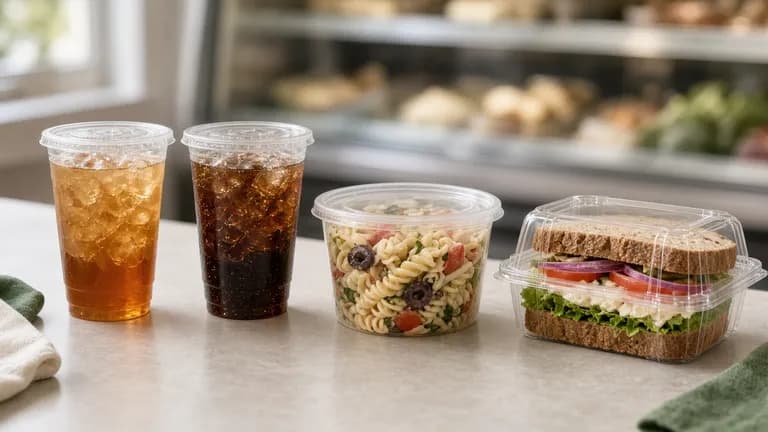 Sustainability Legislation
What Is rPET? Recycled PET Food Containers Explained
rPET is recycled PET, the clear #1 plastic made partly from used bottles. How it is made, whether it is food safe, what it costs, and the rules.
Safra13 min read Sustainability Legislation
What Is PLA? The Plant-Based Plastic in Food Packaging Explained
PLA is a plastic made from fermented plant sugar. Where it shows up in food packaging, how hot it can get, and where it goes after use.
Safra13 min read