
Compostable Foodservice Packaging: The Complete Guide
Complete compostable packaging guide for Bay Area foodservice: BPI vs OK Compost, California labels, materials, green bins, and wholesale buying.
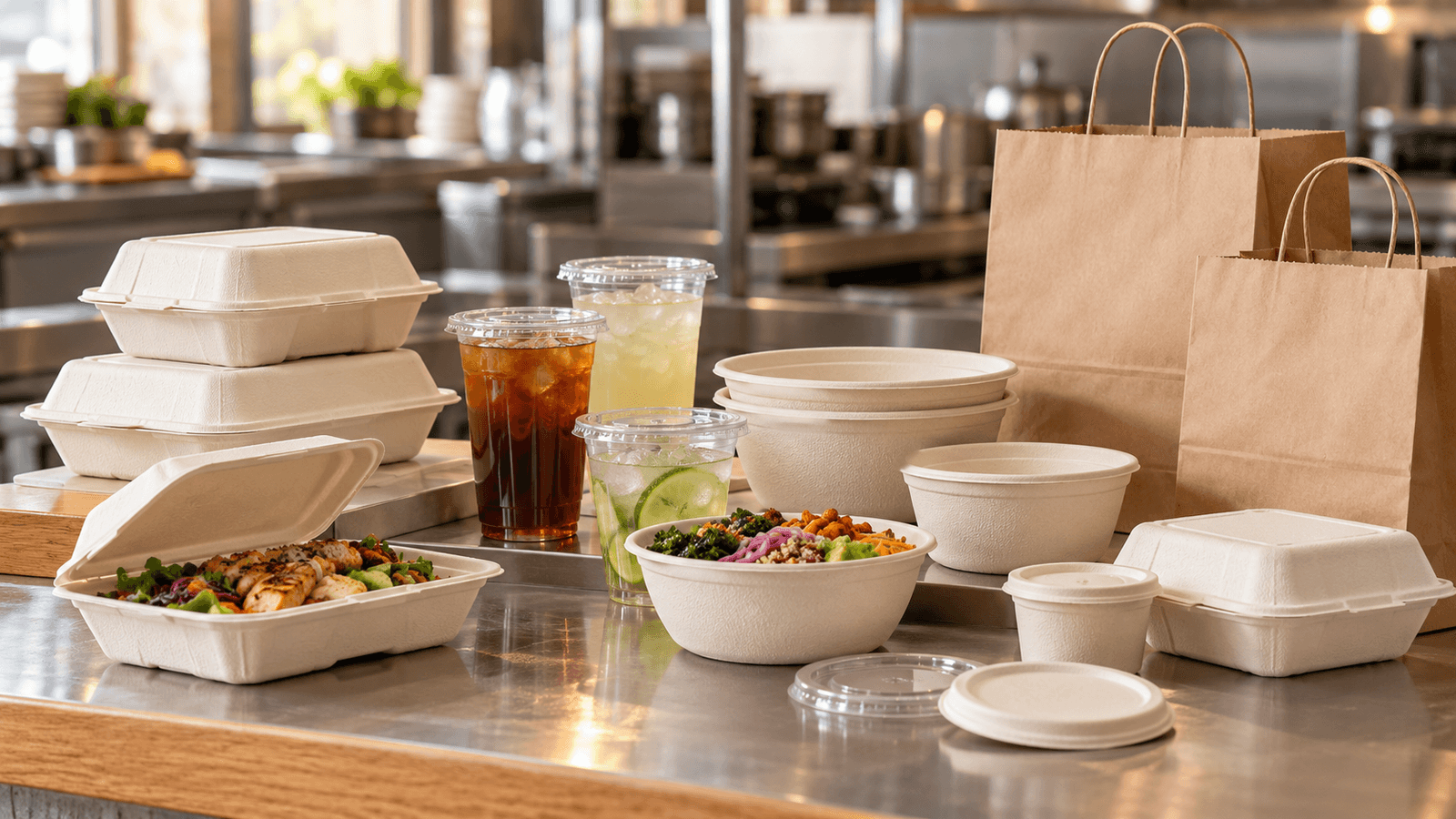
Compostable foodservice packaging is disposable cups, bowls, clamshells, plates, trays, lids, and cutlery built to break down in a commercial compost system under ASTM standards. This compostable packaging guide helps Bay Area restaurants, cafes, caterers, coffee shops, and juice bars pick compostable packaging that holds the food, passes California labels, and has a real green-bin path.
Safra Distribution stocks compostable foodservice packaging from its Fremont warehouse for weekly delivery across six Bay Area counties. Browse the Compostable Collection on Cut+Dry after you become a customer.
Key facts before you buy compostable packaging:
- BPI commercial certification for compostable packaging uses ASTM D6400 as the base standard, with optional ASTM D6868 and D8410 for eligible items.
- Since January 1, 2020, BPI-certified compostable packaging must have no intentionally added fluorinated chemicals and test under 100 ppm total fluorine.
- CalRecycle requires compostable plastic products to meet ASTM D6400-19 and plastic-coated fiber products to meet ASTM D6868-19, plus under 100 ppm total organic fluorine.
- "Home compostable" labels in California must meet OK compost HOME certification requirements.
- Bay Area green-bin rules split compostable packaging by material: bagasse and plant fiber are widely accepted; clear compostable plastic often is not.
- Typical case packs for compostable packaging: 1,000 PLA cold cups (common 12/16 oz), 200 to 300 bagasse clamshells, about 300 fiber bowls, and 500 to 1,000 bagasse plates.
- Live Safra case pricing for compostable packaging sits behind Cut+Dry sign-in. Ask for a quote at your volume; case pricing moves with size, material, and order volume.
Further reading on labels and materials
- Compostable vs biodegradable vs recyclable in California
- Bagasse vs PLA compostable material
- BPI certified vs OK Compost HOME
What is compostable foodservice packaging?
Compostable foodservice packaging is packaging meant to disintegrate and biodegrade in a commercial compost facility on an industrial timeline. Compostable packaging is not the same as "biodegradable," "plant-based," or "recyclable." Those words get kitchens into trouble under California truth-in-labeling rules.

Compostable packaging formats: cups, bowls, clamshell, plate, and lids on stainless.
What belongs in a working compostable packaging program:
- Cups. Clear PLA cold cups for iced drinks; PLA-lined paper hot cups for coffee. See compostable cold cups and lids in bulk and compostable hot cups wholesale.
- Bowls and trays. Molded fiber and bagasse bowls for hot entrees and rice bowls. See fiber bowls by the case.
- Clamshells and hinged boxes. Bagasse hinged containers for takeout compostable packaging. See wholesale bagasse packaging.
- Plates and taco boxes. Dense pressed fiber compostable packaging for hot, greasy service.
- Lids and cutlery. Matching fiber or CPLA only where your city and hauler allow that compostable packaging.
- Paper bags for carryout. Kraft bags are often recyclable or landfill when food-soiled, not automatic compostable packaging. Specs live in how to choose brown paper bags and food-safe kraft paper bags wholesale.
If a SKU cannot show a current BPI listing plus a fluorine report for fiber, treat the compostable packaging claim as incomplete.
What belongs in a compostable packaging guide for restaurants?
A useful compostable packaging guide answers four questions: Will the compostable packaging hold the food? Will the hauler take it? Can you legally call it compostable in California? Can you reorder compostable packaging by the case without drama?
Checklist for every compostable foodservice packaging SKU:
- Food job. Hot, cold, greasy, wet, clear display, or microwave reheat.
- Material. Bagasse or plant fiber for hot food; PLA for cold clear cups; PLA-lined paper for hot cups. Full split: bagasse vs PLA.
- Certification. BPI commercial listing for the exact compostable packaging SKU, not just a brand logo.
- PFAS / fluorine. Fiber compostable packaging needs a total organic fluorine report under 100 ppm for California and BPI.
- Local ordinance. San Mateo County bans most compostable plastic foodware and requires certified fiber compostable packaging.
- Hauler acceptance. Check the written list for your city. A BPI mark on compostable packaging does not equal green-bin acceptance.
- Case pack and lid match. Buy bases and lids from the same compostable packaging line.
- Storage. PLA softens in hot vans. Fiber compostable packaging needs dry shelving off the floor.
- Paper trail. Keep certificates for campus buyers, inspectors, and RFPs that require compostable packaging proof.
- Reorder path. One account for compostable packaging plus kraft bags beats three parcel vendors.
Further reading on buying paths
How do BPI and OK Compost labels work for compostable packaging?
Certification is how compostable packaging claims stay defensible. In North America, BPI commercial compostability certification is the mark most Bay Area buyers recognize for compostable packaging.

Fiber bowls next to blank cert paperwork used when reviewing compostable packaging claims.
What BPI checks on compostable packaging:
- ASTM D6400 as the base standard for industrial aerobic composting.
- Optional ASTM D6868 for plastic-coated fiber and ASTM D8410 for eligible cellulosic fiber.
- Eligibility limited to items tied to food scraps and yard trimmings.
- No intentionally added fluorinated chemicals, total fluorine under 100 ppm, and a formulation review (rule effective January 1, 2020).
- Artwork review so the BPI mark is present on the item.
- A public database so you can verify each compostable packaging SKU is still certified.
OK compost HOME and BPI Home differ from commercial compostable packaging. California law says any consumer product labeled "Home Compostable" must meet OK compost HOME requirements. BPI also launched Home Compostability Certification based on NF T 51-800, with commercial BPI certification as a prerequisite. Most restaurant compostable foodservice packaging is sold for commercial composting, not backyard piles. See BPI vs OK Compost HOME.
Practical rule: ask for the BPI certificate or listing URL for each compostable packaging line on the PO.
What do California laws require for compostable packaging labels?
California treats compostable packaging claims as regulated marketing. Rules that hit compostable foodservice packaging buyers:
AB 1201 / CalRecycle labeling for compostable packaging.
- Compostable plastic products must meet ASTM D6400-19.
- Compostable plastic-coated fiber products must meet ASTM D6868-19.
- Total organic fluorine under 100 ppm.
- Labels that distinguish compostable packaging from noncompostable lookalikes.
- Products designed to associate with recovery of food scraps and yard trimmings.
- Beginning June 30, 2027 (after a CalRecycle extension for products with synthetic substances), compostable packaging with synthetic substances must also meet the USDA National Organic Program agricultural-input pathway on the extended timeline. That hits bioplastics such as PLA hardest.
AB 1200: PFAS in plant-fiber food packaging.
- Since January 1, 2023, food packaging made mostly of paper, paperboard, or plant fiber cannot contain intentionally added PFAS or 100 ppm or more total organic fluorine.
- That covers bagasse bowls, fiber trays, and many plates sold as compostable packaging.
SB 54: packaging producer responsibility.
- SB 54 shifts packaging end-of-life responsibility upstream. Food businesses still need compostable packaging that can meet the compostability pathways producers expect.
Local foodware ordinances.
- San Mateo County requires certified compostable, PFAS-free fiber for most disposable foodware and bans PLA and CPLA for most uses.
- Check your city before advertising compostable packaging on menus or delivery apps.
Word-by-word split: compostable vs biodegradable vs recyclable in California.
Which compostable foodservice packaging materials should you stock?
Most Bay Area kitchens need a mix of compostable packaging, not one green SKU. Match compostable foodservice packaging to the dish.
Bagasse and plant fiber (hot, greasy, green-bin friendly).
- Molded sugarcane bagasse or mixed plant fiber for clamshells, bowls, plates, trays, and taco boxes.
- Typical heat rating around 200 F on many World Centric plant-fiber lines; short microwave reheats on unlined items.
- Best default compostable packaging when food is hot or your hauler rejects plastic-looking cups.
- Start with what is bagasse, then wholesale bagasse and Planet Choice vs World Centric.
PLA bioplastic (cold, clear display).
- Clear cups, deli containers, portion cups, and many clear lids as cold-service compostable packaging.
- Typical cold rating about 0 F to 105 F on Pactiv Greenware PLA; store below about 110 F out of sun.
- Strong for iced drinks; weak for hot soup and many Bay Area green bins that reject this compostable packaging.
- Pair with bagasse vs PLA and paper cups vs plastic cups.
PLA-lined paper hot cups.
- Paperboard with a thin PLA lining. Treat as compostable packaging only when the cup is certified and your hauler accepts that format.
- Specs: compostable hot cups wholesale.
CPLA lids and utensils.
- Crystallized PLA for higher heat lids. Still compostable plastic under many local compostable packaging rules. Confirm before a "fully compostable" place setting in San Mateo County.
What does not qualify as compostable packaging:
- PET, PP, and foam lookalikes with green ink.
- "Biodegradable" claims without ASTM and fluorine paperwork.
- Recycling chasing arrows on PLA cups. That is not a recyclable claim for curbside programs.
Is compostable packaging accepted in Bay Area green bins?
Certification and green-bin acceptance are different. Compostable packaging can be BPI-certified and still land in garbage if your hauler cannot process it.

A Bay Area green compost cart near a kitchen door with fiber compostable packaging.
How Bay Area programs often treat compostable packaging:
- Fiber and bagasse. Natural fiber cups, plates, bowls, and bagasse containers are widely listed as compost where food-soiled paper belongs. This is the safer compostable packaging bet across most routes.
- Clear PLA. Many programs send plastic-looking compostable packaging to landfill. San Jose sends compostable and biodegradable plastics to garbage. Central Contra Costa RecycleSmart rejects compostable plastic cups and utensils. San Francisco Recology What Goes Where emphasizes natural fiber foodware and BPI compostable bags, not a blanket PLA pass.
- San Mateo County. Compostable plastic foodware is largely banned, so fiber compostable packaging is the compliance path.
If you have no reliable commercial composter, read no composter near me before you pay a premium for compostable packaging that never leaves the trash stream.
Buyer move: get the hauler rule in writing, then stock compostable foodservice packaging that matches that rule city by city.
How do you buy compostable foodservice packaging wholesale?
Wholesale compostable packaging works when case packs, lids, certificates, and delivery match the kitchen.

Cases of compostable packaging stacked for wholesale delivery from a Fremont-style warehouse.
Steps that keep a compostable packaging program alive:
- Map the menu to formats. Hot entrees to bagasse; iced drinks to PLA cold cups; coffee to PLA-lined hot cups; salads to fiber bowls.
- Lock lid pairs. Order the bowl and lid from one compostable packaging line.
- Pull certificates before the first invoice. BPI listing URL and fluorine report for fiber compostable packaging.
- Set case math. Example packs: 1,000 cold cups, 200 to 300 clamshells, about 300 fiber bowls. Convert compostable packaging counts to pieces per day.
- Store by material. PLA away from heat. Fiber compostable packaging dry and off the floor.
- Price on cost per piece. A 200-count and a 300-count case differ. Safra does not publish a public price list; ask for a quote at this volume through /become-a-customer.
- Consolidate. One Fremont weekly route for compostable packaging, kraft bags, and other disposables usually beats scattered parcel freight. See Sysco alternatives.
Safra Distribution stocks Planet Choice bagasse as a core fiber line, with World Centric and Fineline fiber filling gaps, plus compostable PLA cold cups, lids, and PLA-lined hot cups. Service covers San Francisco, San Mateo, Santa Clara, Alameda, Contra Costa, and Santa Cruz from the Fremont warehouse, often with one-case minimums, samples on the next delivery, and BPI certificates on file for compostable packaging.
Browse the Compostable Collection on Cut+Dry once you have an account.
Further reading on cups and bowls
- Compostable cold cups and lids in bulk
- Fiber bowls: compostable bowls by the case
- Compostable hot cups wholesale
Compostable packaging FAQ
What is the difference between compostable packaging and biodegradable packaging?
Compostable packaging must meet timed industrial standards such as ASTM D6400 or D6868 plus California fluorine and labeling rules. "Biodegradable" alone is not a safe California claim for compostable foodservice packaging.
Is BPI-certified compostable packaging always accepted in my green bin?
No. BPI proves commercial compostability. Your hauler decides which compostable packaging enters the green cart. Fiber usually wins; PLA compostable packaging often does not.
Is compostable foodservice packaging PFAS-free?
Fiber compostable packaging in California must meet AB 1200 fluorine limits, and BPI requires no intentionally added fluorinated chemicals plus an under-100 ppm fluorine test. Ask for the report per SKU.
Can I use the same compostable packaging in every Bay Area city?
Not safely. San Mateo County fiber rules and PLA bans differ from San Francisco, San Jose, and Contra Costa lists. Stock compostable packaging for the strictest city you serve, or split SKUs.
Where do kraft paper bags fit in a compostable packaging guide?
Kraft bags solve carryout. They are not automatic compostable packaging. Spec them with food-safe kraft paper bags and brown paper bag sizes beside your compostable foodservice packaging line.
How do I get wholesale pricing for compostable packaging?
Become a customer to see live Safra case pricing for compostable packaging on Cut+Dry, or ask for a quote at your volume. Pricing usually returns within one business day.
Final thoughts
Compostable foodservice packaging only works when the material matches the dish, the certificate matches California law, and the hauler matches the SKU. Use this compostable packaging guide as the hub: fiber compostable packaging for hot food and most Bay Area green bins, PLA compostable packaging for cold clear cups where allowed, BPI plus fluorine paperwork on every compostable packaging claim, and honest paths when no composter will take the item.
Safra Distribution keeps compostable packaging in stock in Fremont so Bay Area kitchens can reorder cups, bowls, clamshells, and lids on one weekly route. Start with the Compostable Collection on Cut+Dry after you become a customer, or ask for a quote at your volume.
Further reading across the cluster
Related posts
 Sustainability Legislation
SB 54 Packaging Law in Plain English: What It Means for Food Businesses
What the SB 54 packaging law requires, who counts as a producer, and what Bay Area food businesses need to buy differently now.
Safra6 min read Sustainability Legislation
AB 1276 Compliance Checklist: Accessories and Condiments By Request Only
A step-by-step AB 1276 compliance checklist for accessories and condiments by request only, built for Bay Area restaurant and cafe counters.
Safra5 min read Sustainability Legislation
There's No Composter Near Me, So What's the Point? The Honest Answer
Real answer on compostable packaging when there's no composter near me: what SB 1383 actually requires and what still gets landfilled.
Safra5 min read