
Fiber Bowls
Fiber bowls by the case: ounce sizes, BPI compostability, California PFAS rules, and how Bay Area kitchens buy wholesale.
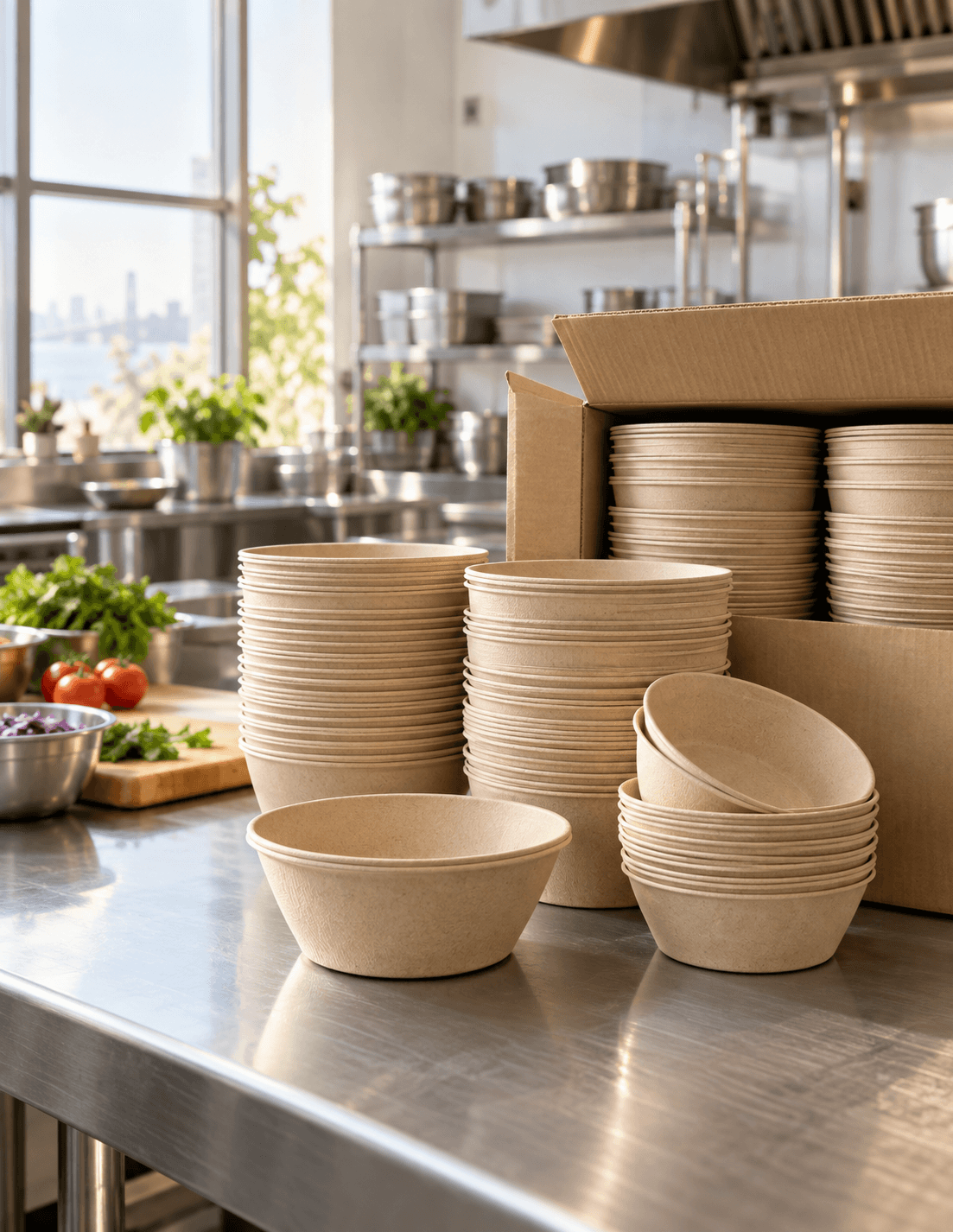
Fiber bowls are molded plant-fiber serving bowls sold by the case for foodservice takeout, catering, and cafe service. They hold hot or cold food, come in common ounce sizes, and can qualify as commercially compostable when the SKU is BPI listed and your hauler accepts that format.
Key facts Bay Area buyers use when they shop fiber bowls by the case:
- Common fiber bowls sizes run about 6 oz, 12 oz, 16 oz, 24 oz, 32 oz, and 48 oz, with round, oval, square, and burrito molds.
- Case packs for compostable fiber bowls often land at 300, 400, 500, or 1,000 pieces, depending on ounce size and brand.
- California AB 1200 (since Jan 1, 2023) bans plant-fiber food packaging with intentionally added PFAS or total organic fluorine at or above 100 ppm.
- Most compostable fiber bowls are certified to ASTM D6868 and listed by BPI for industrial composting, not backyard piles.
- Safra Distribution stocks fiber bowls from its Fremont warehouse for Bay Area weekly delivery, often at a one-case minimum.
- Live Safra case prices sit behind Cut+Dry sign-in; public market listings for fiber bowls by the case are orientation only until you get a quote.
- Foam foodware sales ended in California on Jan 1, 2025, so fiber bowls and other compostable containers now carry more of the entree and bowl business.

Fiber bowls by the numbers: ounce range, case packs, BPI, and the California PFAS limit.
Operators who type fiber bowls into search usually need case counts, ounce sizes, and a clear PFAS path before they care about brand stories. This page is built as that category briefing: specs first, then compliance, then how to buy fiber bowls by the case from a local wholesale route.
What are fiber bowls in foodservice?
In a kitchen purchase order, fiber bowls mean disposable bowls pressed from plant fiber such as sugarcane bagasse, wheat straw, or other unbleached agricultural fiber. They replace foam and many plastic bowls for soups, salads, grain bowls, poke, burrito bowls, and catering sides.
They are not the same as thin paper souffle cups or heavy ceramic. Wall weight, grease resistance, and lid fit decide whether a fiber bowl survives a delivery window.
Safra Distribution is a family-owned wholesale packaging distributor in Fremont, CA. We stock compostable fiber bowls alongside bagasse trays and hinged packs so Bay Area operators can pull cases on a weekly route instead of waiting on a national catalog.
Further reading: What is bagasse and wholesale bagasse packaging.
What sizes of fiber bowls should you stock?
Buyers who search fiber bowls almost always need an ounce ladder, not a brand pitch. Match the bowl to the menu job, then lock the case pack and lid.

Fiber bowls size ladder: common compostable fiber bowls from 6 oz to 48 oz by the case.
A practical size ladder for fiber bowls by the case looks like this:
- 6 oz fiber bowls: sides, dipping sauces, kids portions. Public packs often list about 1,000 per case.
- 12 oz fiber bowls: soup cups, small salads, oatmeal. Cases often 500 to 1,000.
- 16 oz fiber bowls: everyday cafe grain bowls, ice cream, snacks. World Centric style listings often show 500 per case.
- 24 oz fiber bowls: entree bowls, poke, stews. Cases commonly 300 to 500; buy the matching lid SKU.
- 32 oz fiber bowls: burrito bowls and large salads. Round or square molds; cases often 300 to 400.
- 48 oz fiber bowls: family share and catering. Cases around 300; plan dry storage because freight is bulky.
PrimeWare and similar NPFA molded fiber lines also publish 12, 20, 24, and 32 oz bowls with BPI marks and no intentionally added PFAS. Treat manufacturer case counts as market context, then confirm the exact SKU on your Safra quote.
Further reading: 32 oz vs 48 oz round container and Planet Choice vs World Centric containers.
Are compostable fiber bowls microwave and freezer safe?
Most commercial compostable fiber bowls are marketed for hot and cold food, short microwave reheats, and freezer storage. That claim is SKU specific.
Do a kitchen test before you print microwave safe on a menu sticker. Fill the wettest, hottest dish you serve. Hold it for your real delivery window. Check softening, corner leaks, and lid fog.
Grease and sauce matter more than brand logos. Very wet entrees may need a PLA-laminated fiber bowl or a fiber base with a clear lid your hauler still accepts. A fiber lid keeps the package in the organics stream when your facility takes it.

Compostable fiber bowls stacked beside bagasse takeout pieces on a dry kitchen counter.
How do PFAS rules affect fiber bowls in California?
Since January 1, 2023, California AB 1200 bans the sale of plant-fiber food packaging that contains intentionally added PFAS or PFAS at or above 100 ppm total organic fluorine. Bowls, trays, and other plant-fiber foodware sit inside that definition.

Fiber bowls PFAS and compostability FAQ: AB 1200, BPI, and hauler acceptance.
What that means for compostable fiber bowls on your PO:
- Ask for the total organic fluorine (TOF) report for the exact SKU, not just a brand brochure.
- Prefer lines marketed with no intentionally added PFAS (sometimes labeled NPFA or no added PFAS).
- Keep certificates on file. Inspectors and campus buyers ask for them.
- CalRecycle SB 1335 style criteria also use a 100 ppm total fluorine proxy for state foodservice packaging lists.
Further reading: compostable vs biodegradable vs recyclable labels and California plastic labeling laws.
Are fiber bowls BPI certified compostable?
Often yes, when the SKU is listed. BPI certification for molded fiber foodware typically references ASTM D6868 (fiber products, including coated fiber). Plastic compostables use ASTM D6400.
BPI listing is commercial compost territory. It is not a backyard OK compost HOME mark. Most fiber bowls break down in industrial heat with turning, not in a cool backyard pile.
Before you advertise compostable fiber bowls on packaging or menus:
- Pull the BPI certificate number for that SKU.
- Confirm your city or hauler accepts certified fiber foodware in the green bin.
- Do not call fiber bowls recyclable. SB 343 style rules police that claim.
- Remember SB 1383 requires organics separation, but facilities set acceptance lists locally.

Certification marks that show up on fiber bowls and bagasse: BPI, ASTM D6868, ASTM D6400, and home compost marks.
Further reading: BPI certified vs OK compost HOME and no composter near me.
How much do fiber bowls by the case cost?
Safra does not publish a public price list. Live fiber bowls by the case pricing sits in the Compostable Collection on Cut+Dry after you sign in. When catalog dollars are not visible yet, use market ranges as orientation, then ask for a quote at your volume.
Public wholesale and manufacturer listings in September 2026 put common molded fiber and bagasse bowl formats roughly here:
- 12 oz NPFA molded fiber round bowls: public distributor lists around the mid $30s per case of 1,000 pieces (about 8 packs of 125), depending on freight.
- 24 oz NPFA oval fiber bowls: public web prices have shown about $99 per case of 250 (2 packs of 125) on some retail-style listings.
- 32 oz bagasse or fiber bowls: public ranges in related Safra research sat about $46 to $132 per case of 300 (about 15 to 44 cents each), with certification and wall weight explaining most of the spread.
- World Centric direct-store fiber bowls (for example 16 oz and 32 oz square) publish pack and case prices that move with size; treat those as market context, not Safra delivered pricing.
Three drivers move fiber bowls pricing more than the logo: BPI testing, wall weight, and freight cube. Fiber is bulky. A local program of 10 or more cases a month usually lands better than a one-off pull.
Browse the Compostable Collection on Cut+Dry or become a customer for a line-by-line quote on fiber bowls by the case.
How do fiber bowls compare to bagasse bowls and plastic?
Fiber bowls is the buyer phrase. On the shelf, the material may be sugarcane bagasse, wheat straw fiber, or another plant fiber. Bagasse bowls are a subset of fiber bowls.
Compared with plastic or foam bowls:
- Heat: quality fiber bowls handle hot fill when wall weight is right; PLA cups stay cold-only.
- Compost path: certified fiber can enter commercial compost where accepted; EPS foam is banned for sale in California foodservice contexts tied to SB 54 timelines.
- Look: natural tan or off-white fiber reads compostable on the counter without a green ink logo.
- Cost: fiber usually costs more per piece than foam did; you buy compliance and customer messaging with that premium.

A compostable fiber bowl plated with a grain salad beside kraft packaging on a cream surface.
Further reading: sushi trays wholesale and Amazing Packaging and Kelly Spicers.
What lids and storage rules keep fiber bowls working?
Lids decide whether fiber bowls survive delivery. A loose lid turns a burrito bowl into a bag of rice. Stock lids as a paired SKU, not an afterthought.
Practical lid and storage rules for compostable fiber bowls:
- Buy the lid that matches the rim, not just the ounce size printed on the case.
- Fiber lids keep more of the package in the organics stream when your facility accepts them.
- Clear PET or anti-fog lids sell food better but may be rejected by some Bay Area haulers even when the fiber bowl base is accepted.
- Store fiber bowls somewhere dry, away from the dish pit and steam. Moisture softens edges before the first use.
- Keep cases off concrete floors. A pallet or shelf keeps the bottom sleeves from wicking.
- Rotate stock FIFO. Fiber is stable, but dusty open sleeves look tired on the expo line.
If you mix Planet Choice bagasse bowls with World Centric fiber bowls, label shelves by footprint. Staff grab the wrong lid when brands share a shelf without a map.
Further reading: San Mateo County foodware ordinance and SB 54 packaging law for food businesses.
Which fiber bowls brands do Bay Area buyers compare?
Search demand for fiber bowls often lands on World Centric, PrimeWare-style NPFA molded fiber, and sugarcane bagasse lines such as Planet Choice. The right pick is the mold that fits your menu, not the loudest green claim.
World Centric fiber bowls show up in public catalogs at sizes such as 6 oz (often 1,000/case), 16 oz (often 500/case), 24 oz (often 500/case), and 32 oz square (often 400/case). Spec sheets stress unbleached plant fiber with no added PFAS and commercial compostability where facilities exist.
PrimeWare NPFA molded fiber bowls publish BPI marks, ASTM D6400 and/or D6868 language, FDA food-contact claims, and microwave or freezer guidance on common 12 to 32 oz SKUs. Case packs are often multi-sleeve (for example 8 packs of 125 for a 12 oz round).
Planet Choice bagasse bowls cover many of the same jobs with sugarcane fiber molds Safra already routes weekly. When a buyer says fiber bowls, they may mean any of these families. Start with the ounce size and lid, then pick the brand that matches certificates and case geometry.

Compostable fiber bowls and related packaging staged on a kitchen counter for a wholesale line review.
Further reading: Planet Choice vs World Centric and the Compostable Collection on Cut+Dry.
How should Bay Area kitchens buy fiber bowls wholesale?
A clean buying path for fiber bowls by the case keeps samples ahead of pallets:
- Map the three bowl sizes you burn every week (for example 12, 24, and 32 oz) and whether each needs a lid.
- List any campus, hauler, or ordinance constraints (BPI only, SF Approved lists, San Mateo County fiber rules).
- Become a Safra customer so you can see live case pricing and place orders.
- Ask for samples on the next Bay Area delivery and run the wet-hot test in your kitchen.
- Start with one-case minimums on winning fiber bowls SKUs, then lock a weekly Fremont route.
- Reorder from the Compostable Collection on Cut+Dry once the mix is stable.
One-case starts matter. Fiber bowls take shelf space. Weekly delivery from Fremont keeps dry storage honest without tying cash in a pallet you have not tested.

Assorted compostable fiber bowls with paper bags and foodservice packaging in a flat lay.
What FAQ do buyers ask about fiber bowls?
Are fiber bowls the same as bagasse bowls?
Not always. Bagasse bowls are molded sugarcane fiber. Fiber bowls is the broader search term that also covers wheat straw and other plant-fiber molds. Ask for the material on the spec sheet.
Can I put fiber bowls in my backyard compost?
Usually no. BPI listed compostable fiber bowls are built for commercial facilities. Home piles are cooler and slower. Confirm your hauler path instead.
Do fiber bowls need lids?
Soups, stews, and delivery orders need a matching lid. Buy the lid SKU with the bowl. Mixing brands without a lid map is the most common stocking mistake.
What is the minimum order for fiber bowls by the case?
Many Safra SKUs are one-case friendly for Bay Area accounts. Ask for a quote if you need a mixed pallet or custom print later.
Where do I see live fiber bowls pricing?
Sign in to the Compostable Collection on Cut+Dry after you become a customer. Public ranges in this article are orientation only.
Final thoughts
Fiber bowls win when the ounce size, lid, BPI mark, and PFAS paperwork all match the menu. The size ladder and California rules above are free on purpose so you can write a clean PO.
What a free chart cannot do is keep compostable fiber bowls on your shelf every Monday. Samples on the next delivery, one-case starts, weekly Bay Area routes from Fremont, and certificates on file turn the decision into supply.
Browse fiber bowls and related compostable foodware in the Compostable Collection on Cut+Dry, or become a customer to get live case pricing for fiber bowls by the case.
Related posts
 Food Containers
Planet Choice vs World Centric: Which Compostable Containers Fit Your Kitchen?
Compare Planet Choice vs World Centric compostable containers for Bay Area kitchens: formats, case packs, BPI and PFAS, lids, and how to choose.
Safra12 min read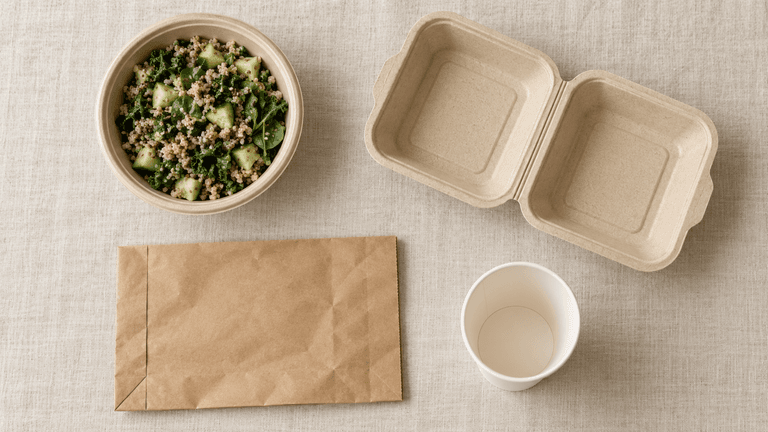 Food Containers
Wholesale Bagasse Packaging: Trays, Bowls and Containers
Every bagasse format that ships by the case, what it costs wholesale in September 2026, the three ways to buy it, and how to size a first order.
Safra14 min read Food Containers
What Is Bagasse? The Sugarcane Packaging Material Explained
Bagasse is the fiber left after sugarcane is pressed for juice. Here is how it becomes food packaging, what it can do, what it costs, and the rules.
Safra13 min read