
New California Compostable Labeling Laws: What Do They Mean for your Restaurant?
SB 343's chasing-arrows ban takes effect October 4, 2026, and AB 1201 tightens compostable claims. Here's what California restaurants need to know before ordering their next case of to-go packaging.
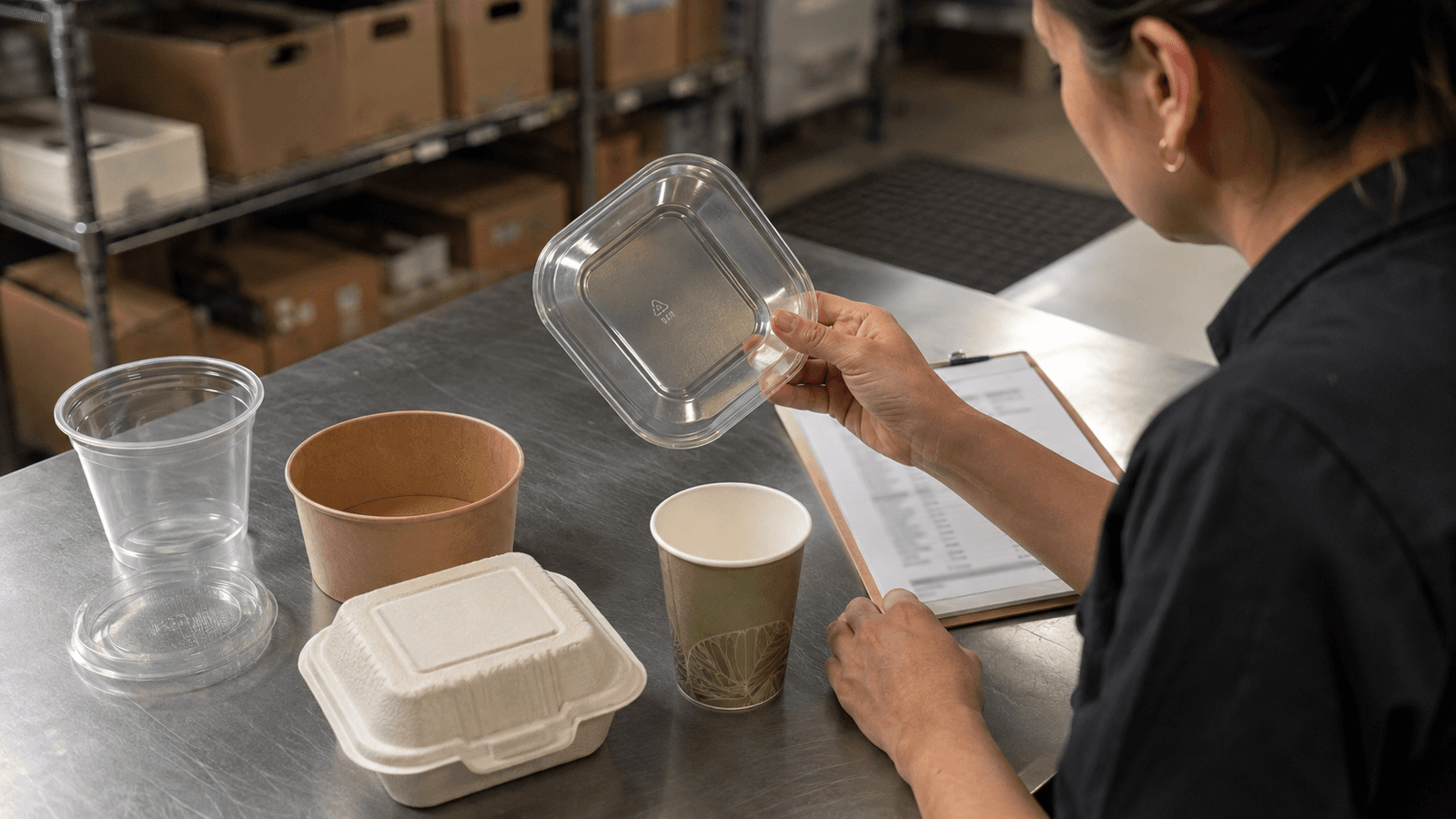
If you run a restaurant, cafe, or catering operation in California, the labels on your to-go containers are about to matter in a way they never have before. A pair of state laws, SB 343 and AB 1201, is rewriting the rules for when packaging can carry the chasing-arrows recycling symbol or be called compostable. The first major compliance deadline arrives October 4, 2026, and packaging that doesn't meet the new standards can legally be considered deceptive advertising in California.
Here's a plain-English breakdown of what these laws require, the deadlines that affect food businesses, and how to make sure the packaging you hand to customers keeps you on the right side of the rules.
Why California Changed Its Labeling Rules
For decades, almost any plastic product could display the chasing-arrows symbol alongside its resin identification code, whether or not that material was ever actually recycled in California. Studies repeatedly found that most plastic food service items placed in blue bins ended up in landfills anyway, because local facilities had no market for them. Regulators call this greenwashing: labels that make products look more environmentally friendly than they are.
California's response, administered by CalRecycle (the state's recycling authority), is a set of truth-in-labeling laws that tie environmental claims to what actually happens to the material after your customer tosses it.
SB 343: The Truth in Recycling Law
What it does: SB 343, signed in 2021, restricts the use of the chasing-arrows symbol, and any other claim of recyclability, to products and packaging made from materials that are genuinely collected, sorted, and turned into new products in California. Displaying the symbol on anything else is considered a deceptive or misleading environmental claim under state law.
How recyclability is decided: CalRecycle published its final Material Characterization Study on April 4, 2025, identifying which material types and forms are routinely recycled across the state. That publication started an 18-month compliance clock.
The deadline that matters: Products manufactured after October 4, 2026 must comply. If a cup, clamshell, or film wrap is made of a material that didn't make CalRecycle's list, it can no longer carry the chasing arrows or a recyclable claim in California.
What this means for restaurants: Many common food service plastics, particularly polystyrene and mixed or flexible plastics, are not routinely recycled in California. After the deadline, suppliers will either relabel those products or pull them from the California market. If you're stocking packaging that leans on a recyclability claim, now is the time to ask your supplier whether it will still be compliant next year.
AB 1201: Tighter Rules for Compostable Claims
Compostable packaging is the natural alternative for food service. Food-soiled packaging generally can't be recycled anyway, and compostable fiber products can go straight into the green bin with food scraps. But California holds compostable claims to a high standard, too. Under AB 1201 and the state's compostable product requirements, a product sold in California may only be labeled compostable if it:
- Meets recognized scientific standards. ASTM D6400 for compostable plastics (like PLA-lined cups) or ASTM D6868 for plastic-coated fiber products (like lined paper bowls).
- Contains less than 100 parts per million of total organic fluorine. Effectively a ban on intentionally added PFAS, the forever chemicals once common in grease-resistant packaging.
- Is clearly distinguishable from non-compostable products, so composting facilities and consumers can tell them apart at a glance. Compostable bags, for example, must use green coloring, green bands, or prominent compostable lettering, and must not display a chasing-arrows symbol.
- Home compostable claims require separate OK compost HOME certification.
The next deadline: Beginning June 30, 2027, compostable products sold in California must be made from materials that qualify as allowable agricultural organic inputs under the USDA's National Organic Program. CalRecycle granted a two-year extension (to that 2027 date) for products with synthetic components that meet all other requirements, while federal regulators work out how compostable packaging fits into organic compost standards. Certified fiber-based products are the safest long-term bet under this rule.
The Bigger Picture: SB 54
Behind both labeling laws sits SB 54, the Plastic Pollution Prevention and Packaging Producer Responsibility Act. By 2032, essentially all single-use packaging sold in California must be either recyclable or compostable, with a 25% reduction in plastic packaging overall. The direction of travel is unmistakable: California is phasing out packaging that can't honestly claim an end-of-life pathway. Restaurants that switch to certified compostable packaging now won't have to switch again later.
A Compliance Checklist for Food Businesses
- Audit your current packaging. Pull a sample of every container, cup, lid, bag, and wrap you use. Note any chasing-arrows symbols, recyclable claims, or compostable and biodegradable wording.
- Ask your supplier for certifications. Compostable items should carry BPI certification or documented ASTM D6400/D6868 compliance, and should be PFAS-free. Biodegradable on its own is not a lawful claim in California; treat it as a red flag.
- Watch the October 4, 2026 date. Packaging manufactured after that date must meet SB 343's recyclability rules to carry the chasing arrows. Existing inventory made before the deadline can still be used.
- Prefer certified compostable for food-contact items. Food-soiled packaging rarely gets recycled regardless of material, and compostables align with California's organics recycling law (SB 1383), which already requires food businesses to separate organic waste.
- Keep documentation. If a claim on your packaging is ever questioned, your supplier's certifications are your paper trail.
The Takeaway for Bay Area Restaurants
These laws put the compliance burden on manufacturers and suppliers, but the packaging sitting in your storeroom is what your customers see, and mislabeled products will be disappearing from the market over the next year. The simplest path through SB 343, AB 1201, and SB 54 is the same one: certified compostable packaging from a supplier who can show you the paperwork.
Safra Distribution supplies Bay Area restaurants with certified compostable to-go containers, cups, and custom paper bags that meet California's labeling standards: ASTM-certified, PFAS-free, and clearly labeled for the green bin. If you're not sure whether your current packaging will still be compliant after October 2026, reach out through our contact page and we'll walk through your lineup with you, or browse our compostable collection to get ahead of the deadline.
This article is for general information and isn't legal advice; see CalRecycle's plastic labeling page at calrecycle.ca.gov/plastics/labeling for the current requirements.
Related posts
 Sustainability Legislation
SB 54 Packaging Law in Plain English: What It Means for Food Businesses
What the SB 54 packaging law requires, who counts as a producer, and what Bay Area food businesses need to buy differently now.
Safra6 min read Sustainability Legislation
AB 1276 Compliance Checklist: Accessories and Condiments By Request Only
A step-by-step AB 1276 compliance checklist for accessories and condiments by request only, built for Bay Area restaurant and cafe counters.
Safra5 min read Sustainability Legislation
There's No Composter Near Me, So What's the Point? The Honest Answer
Real answer on compostable packaging when there's no composter near me: what SB 1383 actually requires and what still gets landfilled.
Safra5 min read