
Bagasse vs. PLA: Which Compostable Material Is Right for Your Business?
Bagasse vs PLA compared for foodservice: heat ratings, Bay Area compost acceptance, California labeling rules, and when to choose each by the case.
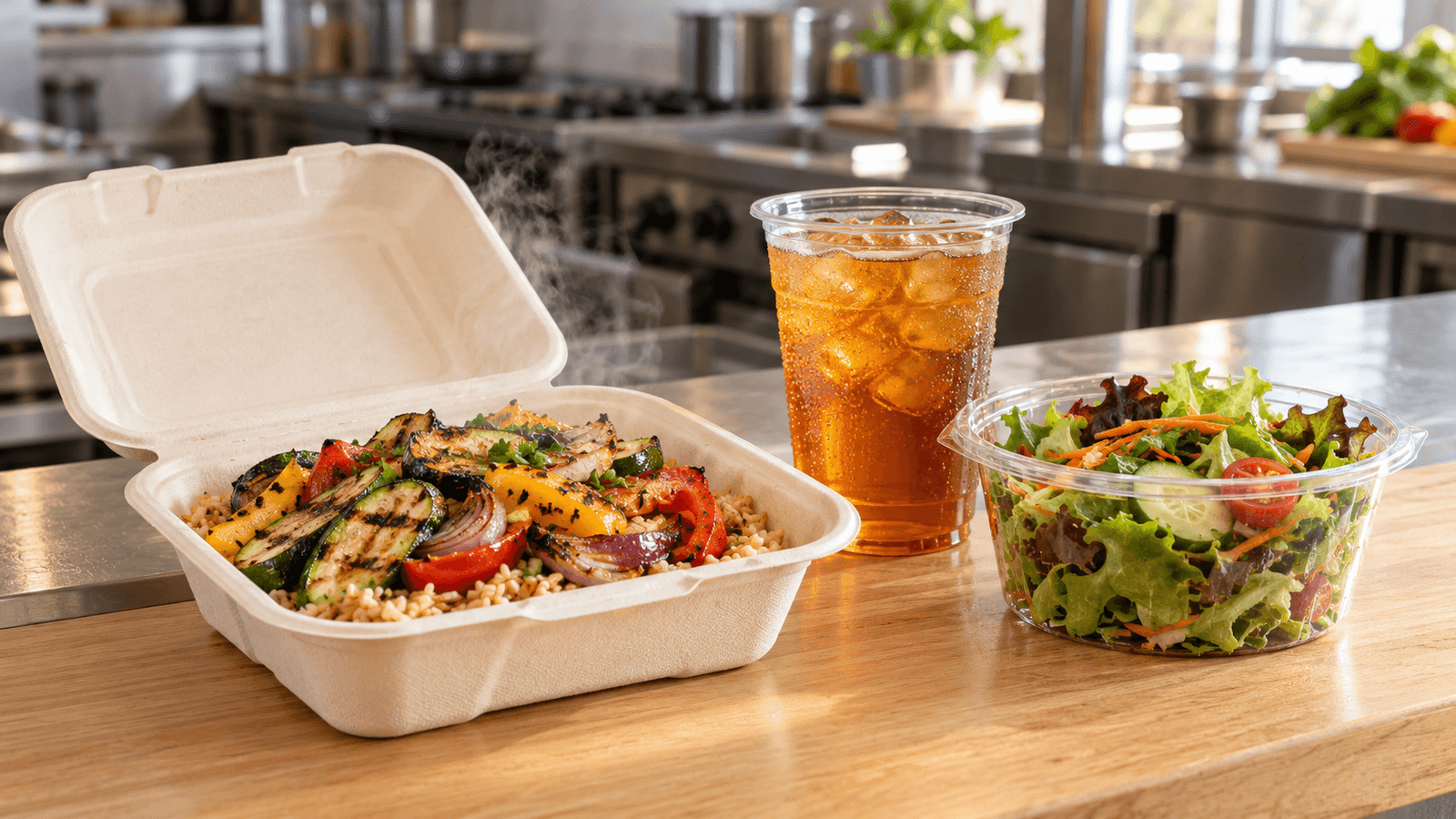
Saturday dinner rush. The curry goes into a clear compostable container, and by the time the driver picks it up the lid has slumped and the base has warped. Same week, a juice bar orders fiber cups and nobody can see the color of the drinks. Both kitchens bought "compostable." Both picked the wrong material for the job.
Bagasse vs PLA is the choice between two compostable foodservice materials: bagasse, a molded fiber made from pressed sugarcane pulp, and PLA (polylactic acid), a clear bioplastic made from fermented plant sugars. Bagasse handles hot, greasy food; PLA handles cold food and drinks you want customers to see.
This guide is for Bay Area restaurants, cafes, caterers, and juice bars deciding bagasse or PLA for each item on the menu. It covers heat limits, green bin acceptance, California law, and how to buy both by the case. Safra Distribution stocks both materials in Fremont for weekly Bay Area delivery.
Key facts about bagasse vs PLA before you order:
- Clear PLA cold cups are rated from 0 F to 105 F by Pactiv Evergreen, and World Centric says to store PLA below 110 F, out of direct sunlight.
- World Centric rates its molded plant fiber, including bagasse, for hot food up to 200 F, with microwave reheats of up to 2 3/4 minutes for unlined items.
- BPI certifies both materials for commercial composting, using ASTM D6400 as the base standard, with no intentionally added fluorinated chemicals and under 100 ppm total fluorine since January 1, 2020.
- Under ASTM D6400, a compostable item must leave no more than 10 percent of its dry weight on a 2 mm sieve after 12 weeks, and 90 percent of its carbon must biodegrade within 180 days.
- San Mateo County's foodware ordinance bans compostable plastic, including PLA, TPLA, CPLA, and PHA, for most disposable foodware and requires certified fiber.
- Typical case packs: 1,000 PLA cold cups in the 12/14 oz size, 200 to 300 bagasse clamshells, 300 fiber bowls, and 500 to 1,000 bagasse plates.
Further reading on bagasse basics
What is the difference between bagasse and PLA?
The difference is fiber versus plastic. Bagasse is pressed plant fiber, closer to paper. PLA is a true plastic that happens to come from plants.

Bagasse on the left, PLA on the right: opaque molded fiber for hot food, clear bioplastic for cold display.
What bagasse is.
- The fibrous pulp left after sugarcane is crushed for juice, a byproduct of sugar production.
- Mixed with water, molded under heat and pressure, then dried into plates, bowls, trays, and clamshells.
- Opaque, natural tan or bleached white, slightly textured. No resin and no lamination in a plain bagasse tray.
- Grease resistance comes from dense pressing. Our bagasse explainer walks through the full process.
What PLA is.
- Polylactic acid, a polyester made from lactic acid. NatureWorks, a major PLA maker, says it ferments dextrose or sucrose from cassava, corn starch, sugar cane, or sugar beets.
- Molded or thermoformed like PET plastic, so it looks and feels like a clear plastic cup.
- Used for cold cups, deli containers, clear lids, portion cups, and the thin lining inside compostable paper hot cups.
- CPLA is a crystallized, heat-tolerant version used for hot cup lids and cutlery.
So the PLA vs bagasse compostable question is not about which is "greener." It is about which one survives your food and your hauler.
How do bagasse vs PLA compare side by side?
Here is bagasse vs PLA at a glance, attribute by attribute. Read it as a quick spec sheet for your order guide.
- Raw material. Bagasse: sugarcane fiber left after juicing. PLA: plant sugars fermented into a bioplastic resin.
- Look. Bagasse: opaque, tan or white. PLA: crystal clear, like PET.
- Heat. Bagasse: hot food up to about 200 F. PLA: up to about 105 to 110 F. CPLA lids: up to 200 F per World Centric.
- Microwave. Bagasse: short reheats on many SKUs. PLA: no.
- Freezer. Bagasse: yes on most lines. PLA: rated down to 0 F on Pactiv Greenware cups.
- Grease and sauce. Bagasse: good, with some sweating under hot food. PLA: fine for cold dressings and salads.
- Certification. Both: BPI to ASTM D6400 for commercial composting. Fiber can also be assessed under ASTM D6868 or D8410.
- Bay Area green bin. Bagasse: widely accepted. PLA: rejected by several haulers and banned in San Mateo County foodware.
- Recycling. Bagasse: not a recyclable. PLA: not recyclable at curbside even with a number 7 on it.
- Best jobs. Bagasse: clamshells, bowls, plates, trays, taco boxes. PLA: cold cups, salad and deli containers, clear lids.
Further reading on compostable labels
How do bagasse and PLA handle heat, grease, and cold?
Heat is where bagasse vs PLA stops being a debate. Put hot soup in a PLA deli cup and it softens. Put an iced drink in a bagasse cup and nobody sees the drink.

Bagasse holds the hot, saucy food; the clear PLA cup handles the iced drink.
Manufacturer heat ratings:
- Clear PLA cups and containers. Pactiv Evergreen's product temperature chart lists PLA at 0 F to 105 F. Its Greenware line is sold for "icy cold drinks and cool condiments."
- CPLA. The same chart lists crystallized PLA at 0 F to 226 F, which is why hot cup lids use CPLA, not plain PLA.
- PLA-lined paper. Pactiv lists PLA-coated paperboard at 0 F to 185 F. World Centric rates its PLA-lined paper hot cups and bowls to 220 F.
- Bagasse and plant fiber. World Centric rates plant fiber for foods up to 200 F, microwave safe for short periods, and freezer safe. Its foodservice catalog notes fiber can handle higher heat for short oven use, but test first.
Grease and moisture:
- Bagasse resists oil through dense pressing, not a fluorinated coating. Hot food can make a fiber bowl "perspire," so vent the lid for steamy dishes.
- For very wet or saucy food, look for a PLA-lined fiber clamshell, or keep sauces in a separate portion cup.
- PLA does not absorb grease at all. The limit is heat, not oil.
Storage counts too. A case of PLA cups left in a hot delivery van or a sunny window can deform before it ever reaches the line. Bagasse does not care about a warm storeroom.
Further reading on fiber containers
Are bagasse and PLA both compostable in the Bay Area?
On paper, yes. Both can earn BPI certification. In the green bin, bagasse vs PLA gets a very different answer depending on your hauler.
What Bay Area haulers and cities say:
- San Francisco. Recology San Francisco's What Goes Where page lists "natural fiber-based cups, plates, bowls, utensils (Bamboo, wood, Bagasse)" as compost. The only compostable plastic it names as compost is BPI-certified bags.
- Central Contra Costa. Republic Services' RecycleSmart program says compostable plastics such as cold cups and utensils do not break down in its compost process and belong in the landfill cart. Uncoated, textured fiber containers are accepted; shiny coated paper is not, per RecycleSmart.
- San Jose. The city says compostable and biodegradable plastics go in the garbage, and that PLA marked number 7 is not recyclable.
- San Mateo County. Compostable plastic is not allowed for most foodware at all, so the bagasse or PLA choice is made for you: fiber.
Why the split? Composters run short cycles and screen out anything that looks like plastic. A clear PLA cup looks exactly like a PET cup on a sorting line. A tan bagasse clamshell looks like food-soiled paper, which composters want.
The honest summary: bagasse is the safer compostable bet across the Bay Area. PLA is compostable where your hauler confirms it, and landfill everywhere else. Our post on what to do when there is no composter near you covers the same split.
Further reading on Bay Area rules
What do California laws say about bagasse vs PLA?
Four California rules shape the bagasse vs PLA decision. None bans PLA statewide, but each one adds paperwork.
AB 1200: PFAS in plant-fiber packaging.
- Under AB 1200, since January 1, 2023, food packaging made mostly of paper, paperboard, or plant fiber cannot contain intentionally added PFAS or 100 ppm or more total organic fluorine.
- That covers bagasse directly. Ask for the total organic fluorine test report on each bagasse SKU.
AB 1201: what "compostable" on a label means.
- CalRecycle says compostable plastic products must meet ASTM D6400-19 and plastic-coated fiber products must meet ASTM D6868-19.
- Every product labeled compostable must also test under 100 ppm total organic fluorine and look different from noncompostable items. That is why many PLA cups carry a green stripe or "compostable" printing.
- A third requirement, that compostable products be allowable inputs under the USDA National Organic Program, was pushed to June 30, 2027 for products with synthetic substances, as BioCycle reported. That one mostly affects bioplastics like PLA.
SB 343: recycling claims.
- SB 343 bars the chasing arrows or other recyclability claims unless an item meets California's recyclability criteria, for products made after October 4, 2026.
- A federal court issued a preliminary injunction blocking enforcement on July 14, 2026. Either way, a PLA cup is not a recyclable, so do not market it as one. See our SB 343 and AB 1201 guide.
Local foodware ordinances.
- San Mateo County requires fiber foodware certified compostable and PFAS-free by BPI or CMA, and bans PLA, CPLA, and other compostable plastics for most items.
- Plastic lids are allowed there only if your local hauler accepts them, so check before you pair a bagasse bowl with a PLA lid.
When should you choose bagasse or PLA?
Pick by the food, then the hauler, then the look. Most kitchens end up running both.
Choose bagasse when:
- The food is hot: entrees, soup, rice, curry, fried food, or anything over 110 F.
- You reheat in the microwave or hold under a heat lamp for short periods.
- You operate in San Mateo County, or your hauler rejects compostable plastic.
- You want the compost claim most likely to hold up in a Bay Area green bin.
- The item is a clamshell, bowl, plate, tray, or taco box.
Choose PLA when:
- The item is cold: iced drinks, smoothies, salads, cut fruit, parfaits, and cold sauces.
- Visibility sells the product, like grab-and-go cases and juice bars.
- Your hauler has confirmed in writing that it accepts PLA, or you run a closed system such as a campus or venue with its own composter.
- You need a clear lid over a fiber base and the city allows it.
Use both when:
- A bagasse bowl or tray gets a clear lid for display, as with sushi trays. Check the lid rule in your city first.
- A cafe runs PLA cold cups at the bar and bagasse clamshells in the kitchen. Our paper vs plastic cups guide covers the cup side.
- A caterer uses bagasse plates for hot buffet lines and PLA cups for cold drinks.
If you are still torn on bagasse or PLA for one item, run the food test: fill one sample of each with the real dish at service temperature, hold it 30 minutes, and check for warping, leaks, and condensation.
Further reading on compostable cups
How do you buy bagasse and PLA packaging wholesale?
Buying bagasse and PLA wholesale is mostly about case packs, lids, and storage.

Bagasse clamshells and PLA cup sleeves shelved off the floor in a cool, dry storeroom.
Know your pack counts:
- PLA cold cups: Pactiv Greenware packs 1,000 per case for 12/14 oz and 16 oz, 600 for 24 oz, and 300 for 32 oz.
- Bagasse clamshells: usually 200 to 300 per case, depending on size.
- Fiber bowls: World Centric's 48 oz round bowl ships 300 per case.
- Bagasse plates: 500 to 1,000 per case.
Buying checklist:
- Match lids to bases. Buy the bowl and lid from the same line. Lids rarely cross-fit between factories.
- Ask for certificates. A BPI listing per SKU, plus a total organic fluorine report for fiber items.
- Store PLA cool. Under 110 F and out of sun, away from ovens and delivery doors.
- Store everything off the floor. Dry shelving keeps bagasse rigid and cases clean.
- Set a reorder point. Daily use times days between deliveries, plus one week of safety stock.
Pricing: Safra's live case prices are not shown publicly. Ask for a quote at this volume; case pricing moves with size, material, and order volume. Compare quotes on cost per piece, since a 200-count and a 300-count case are different buys.
Why buy bagasse and PLA from Safra Distribution?
Safra Distribution is a family-owned food packaging distributor in Fremont, CA. We stock bagasse and PLA side by side so a Bay Area kitchen can cover hot and cold on one route.
What you get:
- Planet Choice bagasse as the core line. Trays, bowls, hinged clamshells, plates, and taco boxes from one fiber family, as our Planet Choice vs World Centric comparison explains.
- World Centric and Fineline fiber to fill gaps. Folding boxes, specific footprints, and approved-vendor SKUs.
- Compostable PLA cups and lids. Cold cups and lids in matching sizes, plus PLA-lined hot cups.
- Weekly delivery in six counties. San Francisco, San Mateo, Santa Clara, Alameda, Contra Costa, and Santa Cruz, from our own Fremont warehouse, per our service areas page.
- Often one-case minimums. Try bagasse or PLA on one item without a pallet commitment.
- Samples on the next delivery. Run the 30-minute food test in your own kitchen.
- Compostable, PFAS-free options with BPI certificates on file. Paperwork ready for inspectors, campus buyers, and San Mateo County rules.
Browse the Safra Compostable Collection on Cut+Dry, then become a customer to see live case pricing. Learn more about Safra.
Further reading on Safra packaging lines
Bagasse vs PLA FAQ
Is bagasse better than PLA?
For hot food, yes. Bagasse handles about 200 F and is more widely accepted in Bay Area green bins. For cold drinks and clear display, PLA is the better tool.
Can PLA go in the microwave?
No. PLA softens above about 105 to 110 F. Use bagasse or another fiber container for anything you reheat.
Is PLA compostable in the Bay Area?
Only where your hauler accepts it. Republic's RecycleSmart and the City of San Jose send compostable plastic to the landfill, and San Mateo County bans it in most foodware.
Is bagasse PFAS-free?
In California it must be under AB 1200, and BPI certification also requires no intentionally added fluorinated chemicals. Ask for the test report per SKU.
Can I put a PLA lid on a bagasse bowl?
Often, if the lid fits and your city and hauler allow it. In San Mateo County, plastic lids are allowed only if local haulers accept them.
Final thoughts
The bagasse vs PLA choice comes down to temperature and the green bin. Bagasse for hot, greasy, and anything headed to a Bay Area compost cart. PLA for cold, clear, and only where your hauler confirms it composts. Most menus need both, matched item by item.
Safra Distribution stocks Planet Choice bagasse, World Centric and Fineline fiber, and compostable PLA cups and lids in Fremont, with weekly routes across six Bay Area counties, often one-case minimums, samples on the next delivery, and BPI certificates on file. Ask for a quote at your volume through /become-a-customer, usually answered within one business day, or browse the Compostable Collection on Cut+Dry.
Further reading
Related posts
 Food Containers
Sysco Alternatives for Foodservice Packaging and Disposables
Compare Sysco alternatives for cups, lids, containers, and bags: broadliners, cash and carry, online, and local Bay Area packaging distributors.
Safra13 min read Food Containers
Compostable Hot Cups Wholesale
Compostable hot cups wholesale for Bay Area cafes: PLA-lined sizes, BPI and PFAS notes, lids, case packs, and Safra delivery.
Safra13 min read Food Containers
Imperial Dade Is Now Imperial Brady: What It Means for Your Packaging Supply
Imperial Dade is now Imperial Brady after the BradyPLUS merger. What Bay Area packaging buyers should check on invoices, accounts, and local supply options.
Safra11 min read