
32 oz Round Container vs 48 oz Round Container: What's Better for Your Food Needs?
32 oz vs 48 oz round containers compared for California kitchens, plus why compostable is the smart switch.
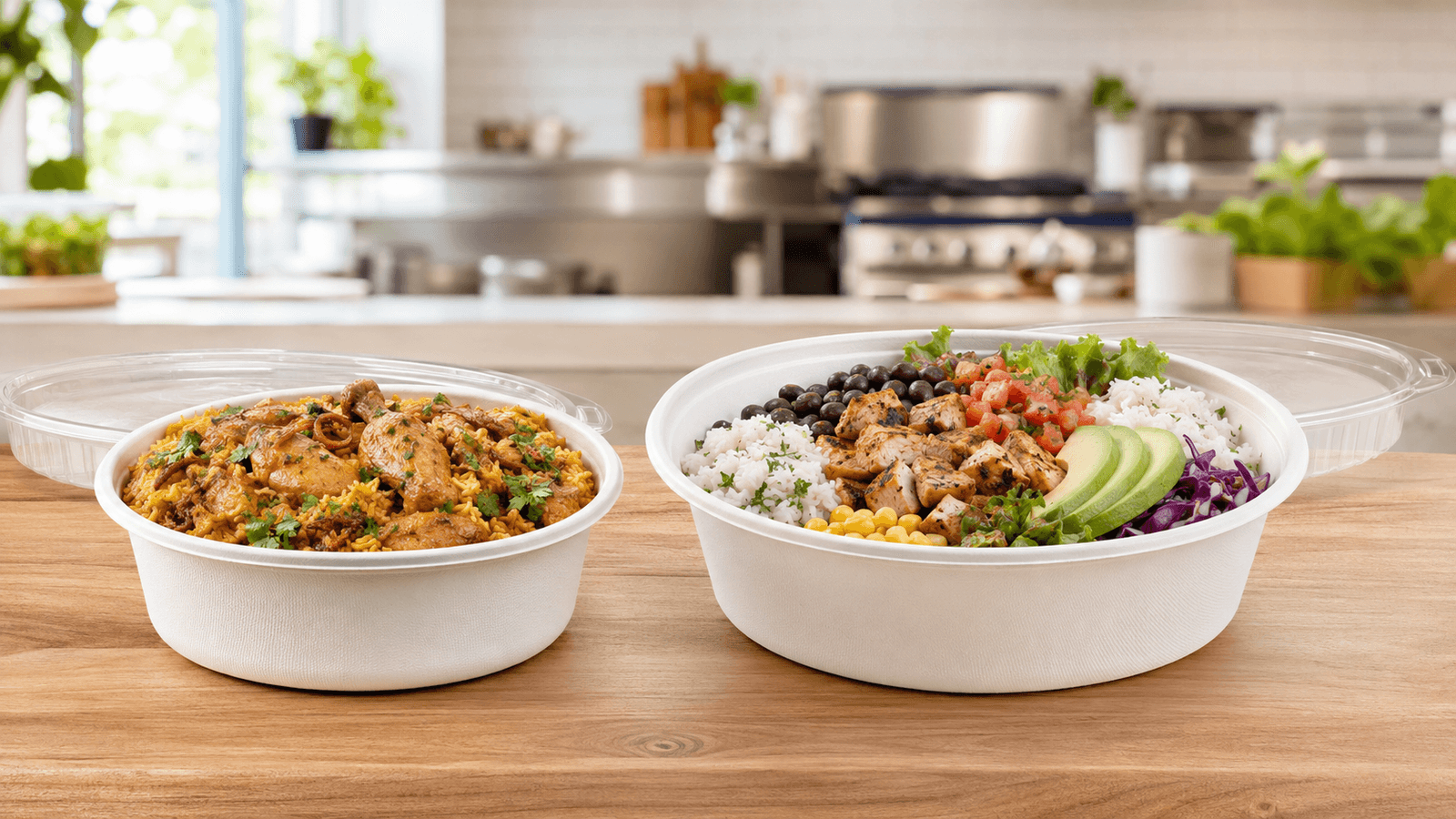
Kitchens all around California keep coming back to the same reliable food container: the round bowl. The real debate is size. Some chefs want the 48 oz round container for the larger portion and the room it gives for plating, while others find the 32 oz round container does the job just fine, and saves the restaurant money on food cost.
The right call depends on what you are serving. Rice dishes like biryani, fried rice, and adobo pack densely into a 32 oz round container and still satisfy a customer, thanks to a heat resistant build and raised lid made to be filled edge to edge. The 48 oz round bowl shows up more often across California kitchens because of the versatility it offers for plating and keeping ingredients separate.
Where the 32 oz Round Container Shines
The 32 oz round container is built for dense, hearty dishes that hold their shape: curries over rice, noodle bowls, stews, grain bowls, braised meats. These dishes do not need extra room to look appealing. They need a container that holds heat, seals tightly, and presents the food as one complete meal.
There is also a real financial argument here. When your kitchen plates into a 32 oz round container, portioning naturally tightens to fit the vessel, and food cost per order drops without the customer ever feeling shorted. A full 32 oz bowl looks generous, while a half full 48 oz bowl looks like something is missing. A container filled to the lid beats a larger one with empty space every time.
The 32 oz round container also wins on storage for high volume operations, since smaller containers stack deeper into the same shelf space in a back of house that is already competing for room.
Where the 48 oz Round Container Earns Its Place
The 48 oz round container is the workhorse of California kitchens for a reason. The extra capacity is not really about serving more food. It is about serving food the right way.
Composed dishes need space. A poke bowl with separated toppings, a burrito bowl with distinct sections of rice, beans, protein, and salsa, or a salad that should not arrive compressed all benefit from the wider footprint of the 48 oz round bowl. The extra headroom keeps ingredients from bleeding into each other in transit, so the customer opens the lid to a plated dish, not a shaken one.
The 48 oz size is also the natural choice for family style portions, shareable entrees, and meal prep customers who expect leftovers. Orders meant for more than one person belong in one larger bowl, not split across two containers, which costs twice the packaging and looks worse on arrival.
How to Optimize Serving Sizes Across Your Menu
The mistake most kitchens make is standardizing on one container size for everything, instead of mapping the menu to the packaging.
Start by splitting your menu into two groups. The first is dense, saucy, and self contained: rice plates, curries, pastas, stews. These belong in the 32 oz round container, filled properly, with the raised lid giving sauce and steam somewhere to go. The second is composed, layered, or fresh: bowls with toppings, salads, dishes where presentation drives repeat orders. These belong in the 48 oz round container, where the food has room to arrive the way it left the kitchen.
Next, portion to the container, not to the scoop. A consistent fill line in a 32 oz round container is the fastest portion control system you will ever implement, and it costs nothing. Customers notice inconsistency far more than they notice a generous portion.
Finally, run the math on your top ten dishes. If a dish consistently leaves empty space in a 48 oz round bowl, moving it to the 32 oz saves you on packaging and food cost while improving how the dish presents. If a dish is getting crushed into a 32 oz container, the upgrade to 48 oz protects the quality your kitchen worked to produce. Small packaging decisions, multiplied across hundreds of orders a week, move real money.
Why You Should Switch to Compostable Containers
Whichever size fits your menu, the material matters just as much as the volume. California has been steadily tightening rules on single use plastic food ware. SB 54, the state's Plastic Pollution Prevention and Packaging Producer Responsibility Act, requires covered single use packaging and plastic food service ware sold in California to be recyclable or compostable. Our post SB 54 Packaging Law in Plain English: What It Means for Food Businesses breaks down what that means for a working kitchen. Switching your round containers to compostable now means you are ahead of where the rules are heading instead of scrambling to catch up later.
The practical case is just as strong as the regulatory one. Modern compostable round bowls are made from plant based fibers that handle heat, resist leaks, and hold up to sauces and oils, so you are not trading performance for sustainability. They go from kitchen to delivery bag to microwave without failing, and they break down in composting instead of sitting in a landfill. Not every "compostable" claim on the market means the same thing, so we stock containers that carry real BPI certification, tested to ASTM D6400 standards. Our post BPI Certified vs OK Compost HOME: Which Certification Does Your Food ware Need covers the difference.
Then there is the customer. Diners in California pay attention to packaging, and a compostable container says something about your restaurant before the first bite. For takeout and delivery, your packaging is your dining room, and a sturdy, well filled, compostable round bowl tells the customer that the same care went into everything around the food.
So Which Container Is Better for Your Food Needs?
There is no single winner, and that is the point. The 32 oz round container is better for dense dishes, tighter food costs, and high volume takeout. The 48 oz round container is better for composed bowls, shareable portions, and menus where presentation drives loyalty. Most successful kitchens stock both and assign each dish to the size that serves it best. What should not be a debate is the switch to compostable. Between California regulations, customer expectations, and the performance of modern compostable food ware, there is no longer a reason to stay on plastic.
At Safra Distribution, we supply restaurants across the Bay Area with compostable round containers in both 32 oz and 48 oz sizes, along with custom paper bags and everything else your takeout program needs. If you are ready to optimize your serving sizes and make the switch to compostable products, browse our containers at safradistribution.com/#collections or reach out through safradistribution.com/become-a-customer and we will help you match the right containers to your menu.
Related posts
 Food Containers
What Is Bagasse? The Sugarcane Packaging Material Explained
Bagasse is the fiber left after sugarcane is pressed for juice. Here is how it becomes food packaging, what it can do, what it costs, and the rules.
Safra13 min read Food Containers
Sushi Trays Wholesale: Bulk Options for Takeout and Retail
Which sushi tray sizes to stock, what PET, OPS, and fiber trays cost per case, and the two California rules that change what goes in the bag.
Safra7 min read Food Containers
Amazing Packaging San Jose: What Happened? | Safra
Amazing Packaging was acquired by Kelly Spicers in 2026. Here's what Bay Area buyers should check before their next packaging order.
Safra4 min read