
What Is PLA? The Plant-Based Plastic in Food Packaging Explained
PLA is a plastic made from fermented plant sugar. Where it shows up in food packaging, how hot it can get, and where it goes after use.
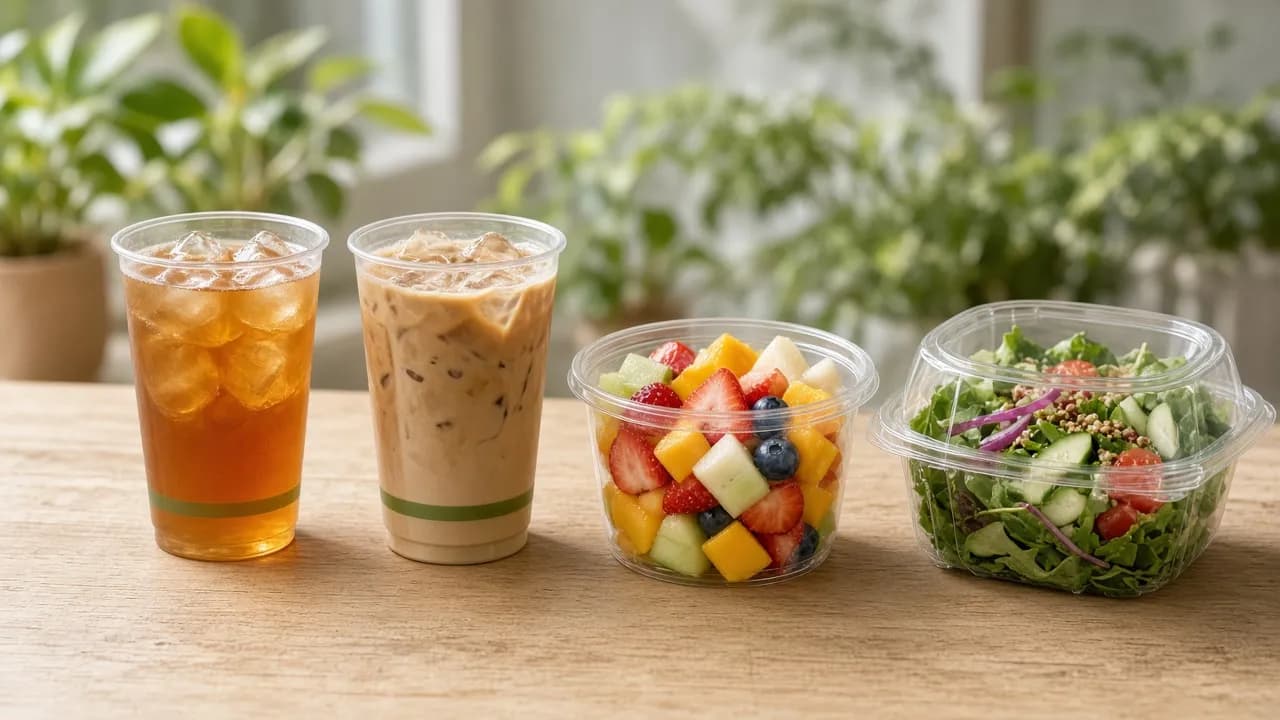
PLA (polylactic acid) is a plastic made from fermented plant sugar, most often corn. In food packaging it is the clear material in compostable cold cups, deli containers, clamshells, and flat lids, and the thin coating inside many compostable paper bowls.
That is the short answer to what is PLA. The longer answer is less tidy. A clear compostable cup and a clear PET cup look almost identical on a counter. One is rated to about 105 F, the other to about 150 F. One is plant-based and sold as compostable. In much of the Bay Area, that one still ends up in the landfill.
Plant-based is not the same as plastic-free. PLA is still a plastic.
Safra Distribution stocks clear PLA cups, lids, deli containers, and clamshells in our cold cups, deli containers, and hinged containers categories, and delivers them on weekly routes from our Fremont warehouse. Our 9 to 24 oz clear cups are Planet Choice. What follows is what the material is, what it can handle, and where it ends up after the customer is done with it.
PLA is the clear plastic in most compostable cold cups and deli containers.
Key facts about PLA
- PLA is made from lactic acid fermented from the sugars of cassava, corn starch, sugar cane, or sugar beets, according to NatureWorks, the largest maker.
- One packaging maker's temperature chart rates clear PLA at 0 to 105 F. Heat-treated CPLA is rated to 226 F, and paperboard coated with PLA to 185 F.
- World Centric tells buyers to store PLA below 110 F and out of direct sunlight.
- PLA cold cups and deli containers break down in 2 to 4 months in commercial composting, per the same World Centric FAQ. Home composting is not recommended.
- Compostable plastics meet ASTM D6400, a standard written for municipal and industrial compost facilities.
- PLA is often marked resin #7, and San Jose says it is not recyclable.
- San Mateo County's foodware ordinance does not allow compostable plastic such as PLA for most disposable foodware.
Further reading
What is PLA made of?
PLA is made of plant sugar that has been turned into plastic. The chain from field to cup runs in four steps.
- Crop. NatureWorks makes its Ingeo PLA from the sugars in cassava, corn starch, sugar cane, or sugar beets, depending on what grows near the plant. Industrially sourced corn is what it uses today.
- Sugar. The corn is milled and the starch is pulled out as glucose.
- Lactic acid. The glucose is fermented into lactic acid.
- Polymer. A chemical process links the lactic acid into long chains and forms them into resin pellets.
Vegware, a compostable packaging maker, lays out the same path: corn starch to glucose, glucose to lactic acid, lactic acid to polymer pellets. From that point on, the pellets run on a factory floor much like any other plastic resin.
This is where the easy story breaks down. The word plant makes people think of paper or fiber. A PLA cup is neither. It is a plastic that started in a cornfield, and that origin does not change how a sorting line or a compost facility treats it.
How is PLA made into food packaging?
The pellets are processed on the same kinds of machines that make PET and polypropylene packaging. That is why the finished cup looks so familiar.
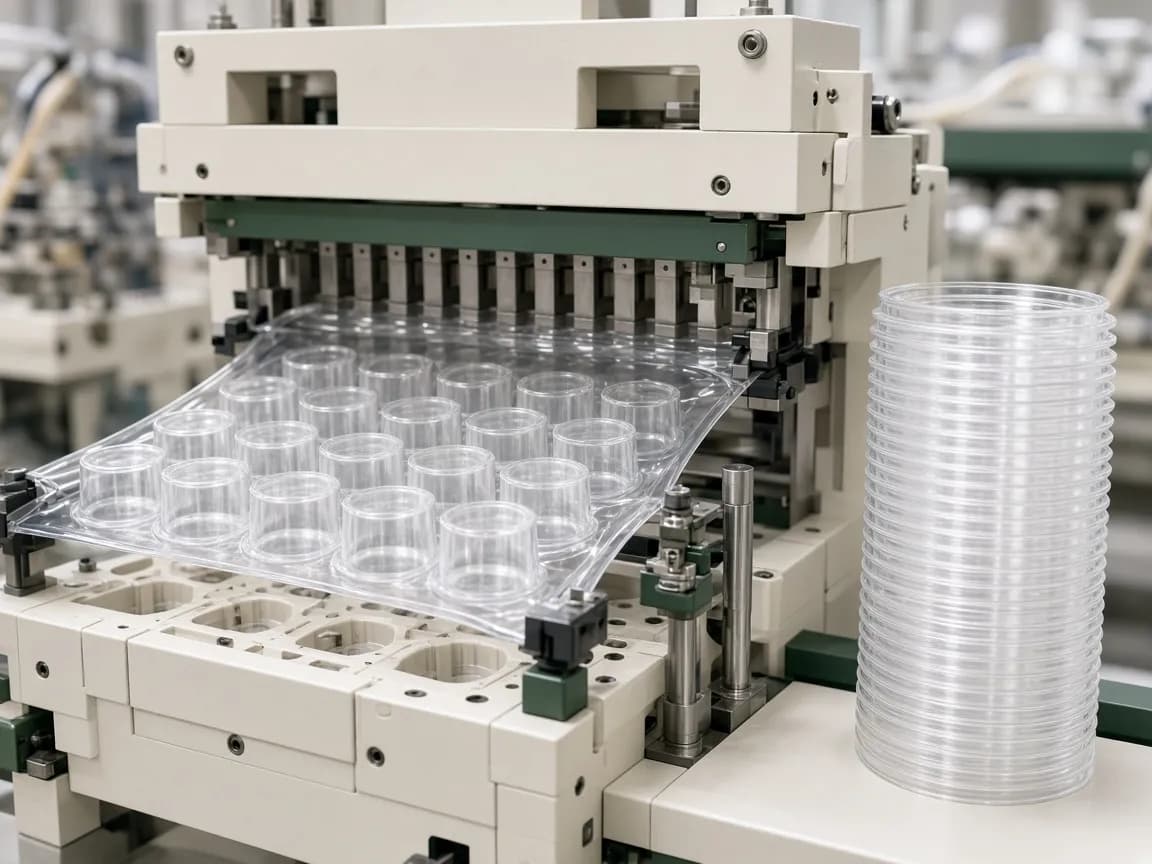
PLA sheet is thermoformed into cups and containers, much like PET.
- Thermoforming. The resin is extruded into a clear sheet, heated, and pressed into cups, deli containers, and clamshells.
- Injection molding. Molten resin, usually the heat-treated CPLA version, is shot into molds for lids and cutlery.
- Film. Thin film becomes the clear window on sandwich wedges and bakery boxes. We carry a paper sandwich wedge with a PLA window.
- Coating. A thin layer is laminated onto paperboard so a paper bowl can hold a wet salad or a sauce. Our 16 oz kraft rectangular bowl is one example.
Because it is made like PET, PLA looks like PET. Most customers cannot tell the two cups apart at a glance. Clear compostable cups often carry a green band, and the Planet Choice cups on our shelves do. That band is often the only thing a customer at the bin has to go on.
Further reading
Where is PLA used in food packaging?
PLA shows up in clear cold items and in thin linings. In a typical cafe or deli, that means a short list.
- Clear cold cups for iced coffee, iced tea, smoothies, and juice. Our clear 16 oz cup is the everyday size.
- Flat lids for those cups. One 98 mm flat lid fits our 9, 12, 16, 20, and 24 oz cups.
- Deli containers and bowls for cold sides, pasta salad, and cut fruit, like the 16 oz round deli container and the 32 oz round bowl.
- Portion cups for dressing and sauce, such as the 2 oz clear portion cup in our portion cups category.
- Clamshells for salads, sandwiches, and fruit, from 6 x 6 in up to the 8 x 8 in clamshell.
- Coatings and windows on paper bowls, bento boxes, sushi trays, and sandwich wedges, including several items in the Planet Choice fiber line.
Notice what is missing: hot food. Our product pages for clear PLA deli containers, bowls, and clamshells say to use them for cold food only. For hot food, operators move to coated paper, molded fiber such as bagasse, or CPLA lids.
How hot can PLA get?
Clear PLA is a cold-use material. Pactiv Evergreen's temperature chart puts it at 0 to 105 F, well under PET at 150 F and polypropylene at 212 F.
/
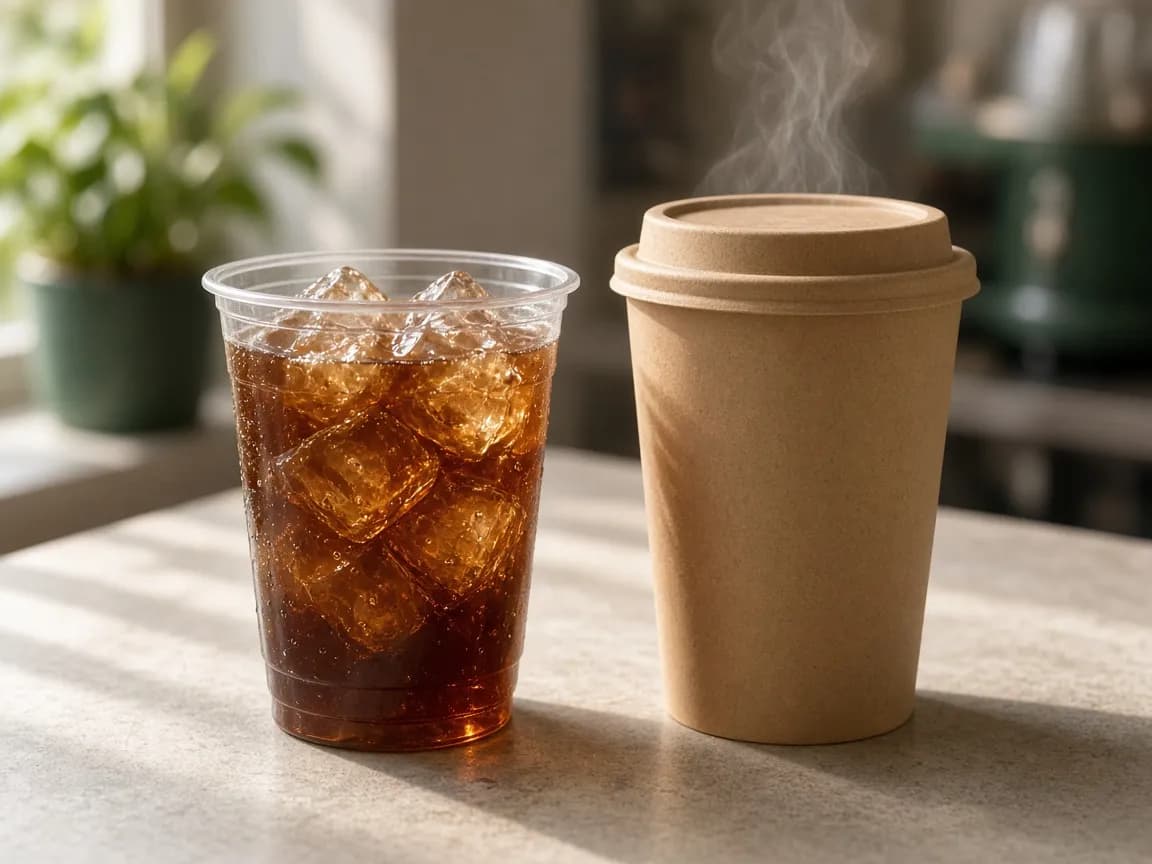
Clear PLA is for cold drinks. Hot drinks belong in paper cups.
The same chart shows how far the material moves once it is changed:
- Clear PLA. 0 to 105 F. Vegware says PLA is best for cold use up to about 105 F.
- CPLA. 0 to 226 F. This crystallized version is used for hot cup lids and cutlery.
- Paperboard coated with PLA. 0 to 185 F, because the paper carries the heat and the coating only holds the liquid.
Heat matters in storage, too, and this is the part kitchens miss. World Centric tells buyers to keep PLA below 110 F and out of direct sunlight. A Bay Area delivery van in September, or a dry storage shelf next to the fryer, can warp a case of cups before a single drink is poured. A warped lid that will not snap on is a spilled drink and a remade order.
Clear PLA does not belong in a microwave. Its rating tops out around 105 F. Our bagasse vs PLA guide covers heat use in more detail.
Further reading
- Bagasse vs PLA: which compostable material fits your menu
- Fiber bowls and compostable bowls by the case
What PLA cup sizes are there, and which fits which drink?
Clear PLA cold cups come in the familiar cold cup sizes. Our cold cups category carries them from 5 oz to 24 oz.
/up
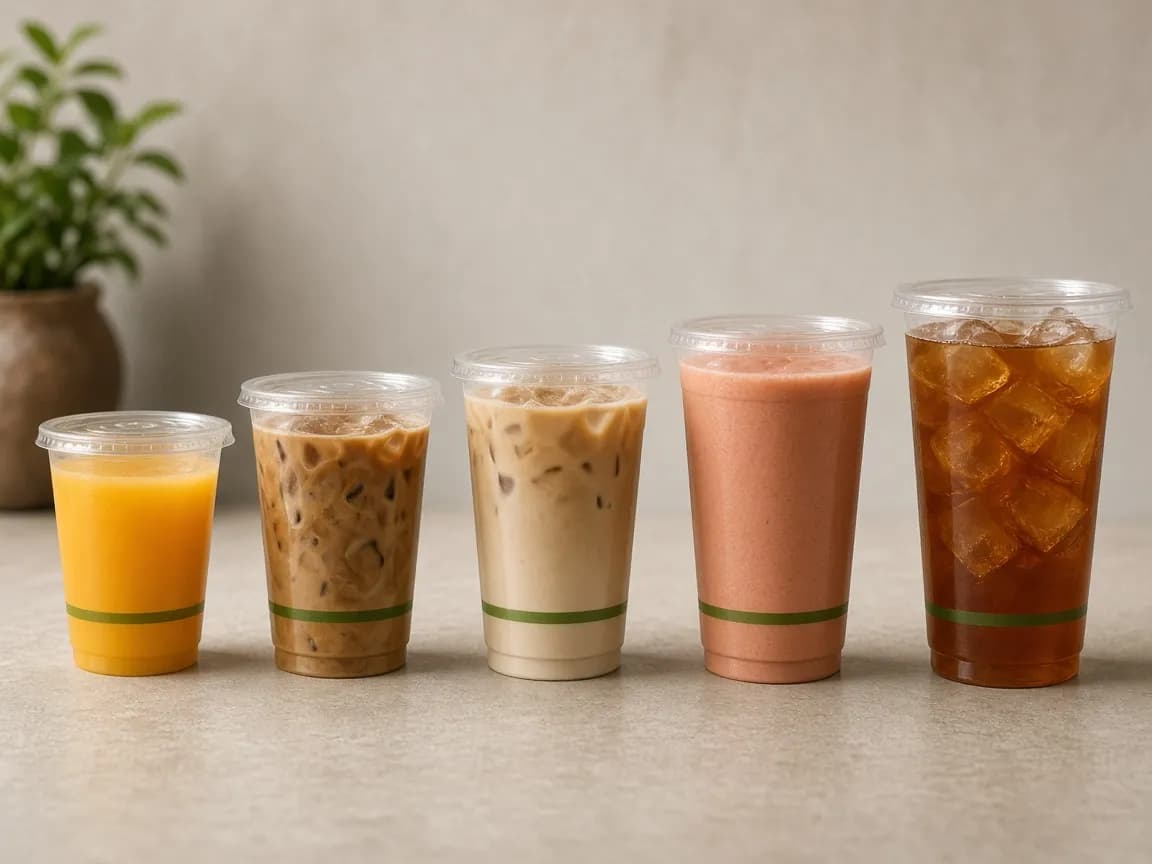
Clear PLA cold cups side by side, from a small juice to a large iced tea.
- 5 oz. Water at the counter, juice and smoothie samples, kids' drinks. 2,000 to a case.
- 9 oz. Juice, iced tea, lemonade, and water. 1,000 to a case.
- 12 oz. Iced coffee, cold brew, and fresh juice. 1,000 to a case.
- 16 oz. The standard iced latte, smoothie, or lemonade. 1,000 to a case.
- 20 oz. Larger iced coffees, smoothies, and fruit teas. 1,000 to a case.
- 24 oz. Large iced teas and smoothies. 1,000 to a case.
The lid is where the order goes wrong. A cup from one brand may not fit another brand's lid, even at the same ounce size. On our shelves, the 98 mm flat lid fits all five Planet Choice clear cups from 9 to 24 oz. Order cups and lids as a matched pair, the same way our 32 oz vs 48 oz container guide treats bowls and lids.
Is PLA compostable?
Yes, in a commercial compost facility. Not in most backyards. And not in every Bay Area green bin.
ASTM D6400 is the standard compostable plastics are tested against. It is written for municipal and industrial facilities that run hot. BPI, the main North American certifier, certifies products to ASTM standards. World Centric puts its PLA cold cups and deli containers at 2 to 4 months in commercial composting and does not recommend home composting.
The lab result is not the problem. The truck route is. Here is what Bay Area haulers and counties say:
- San Francisco (Recology). The What Goes Where list names natural fiber cups, plates, bowls, and utensils made of bamboo, wood, or bagasse for the compost bin. It does not list compostable plastic.
- Central Contra Costa (RecycleSmart). The business green bin page lists biodegradable and "compostable" plastics as landfill items.
- San Jose. Compostable and biodegradable plastics go in the garbage container.
- San Mateo County. The foodware ordinance bans compostable plastic, naming PLA and TPLA, for most disposable foodware, and requires natural fiber-based foodware instead.
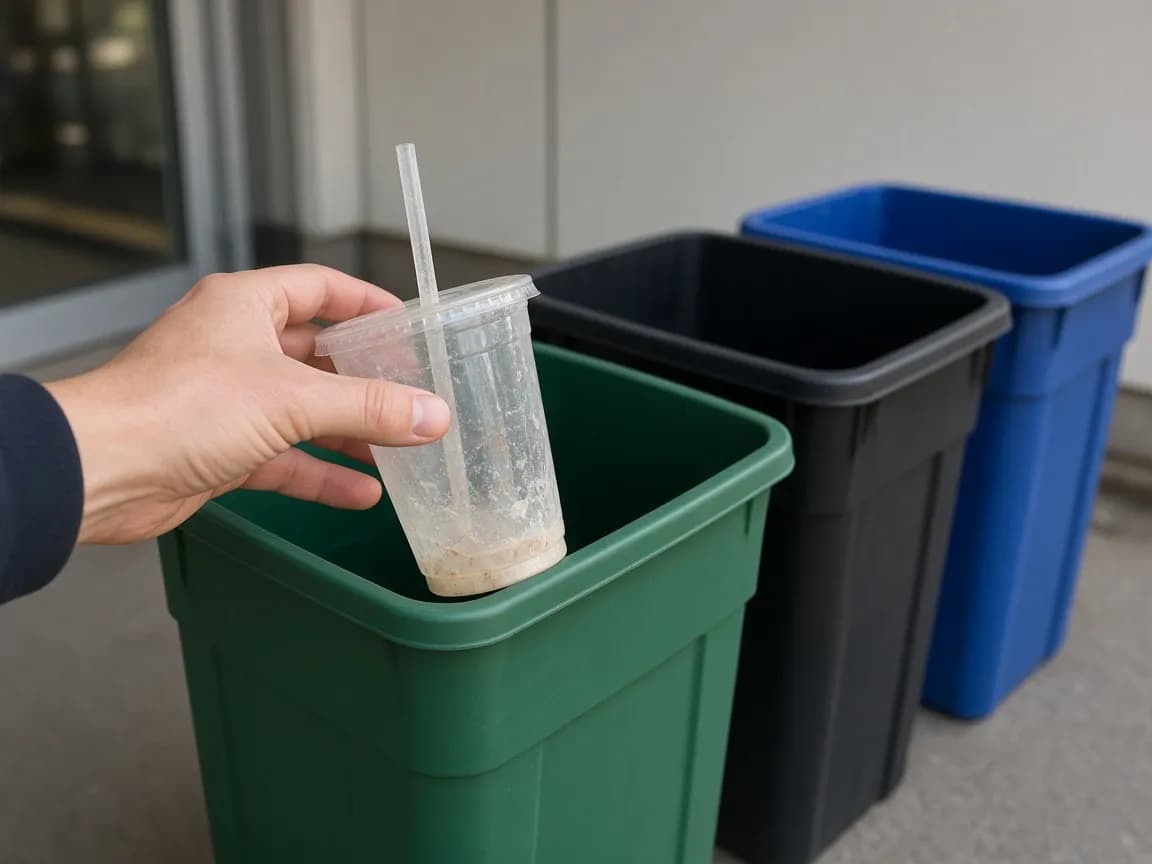
Where PLA goes depends on your hauler, and in much of the Bay Area it is not the green bin.
So a certified compostable cup can still end up in a landfill, because that is where the local rules send it. That does not make the cup a mistake. It makes the hauler the deciding factor. If your area has no composting for it at all, our no composter near me guide walks through what that means for your order.
Further reading
Is PLA recyclable?
In practice, no. San Jose's guide says plant-based plastics such as PLA are often marked #7 but are not recyclable, and it sends compostable plastic to the garbage.
The material can be recycled back into new PLA. Vegware points to a recycler in Belgium that does it. That requires separate collection, and that collection does not exist for restaurant waste in the Bay Area today.
Keep PLA cups out of the blue bin, and do not tell customers otherwise. A clear cup in a recycling load looks like PET to a person and acts like a contaminant to the sorting line. A small sign at your bins showing a clear cup and the right bin for your city costs almost nothing and saves the argument.
Further reading
Is PLA safe for food?
Yes, when the grade is made for food contact. NatureWorks lists its Ingeo grades under FDA food contact notifications FCN 178 and FCN 475, each covering all food types within set conditions of use.
That clearance belongs to a specific grade from a specific maker. It is not a blanket promise for every clear cup on the market. Ask for the compliance letter on what you buy, and keep clear PLA within its cold-use rating.
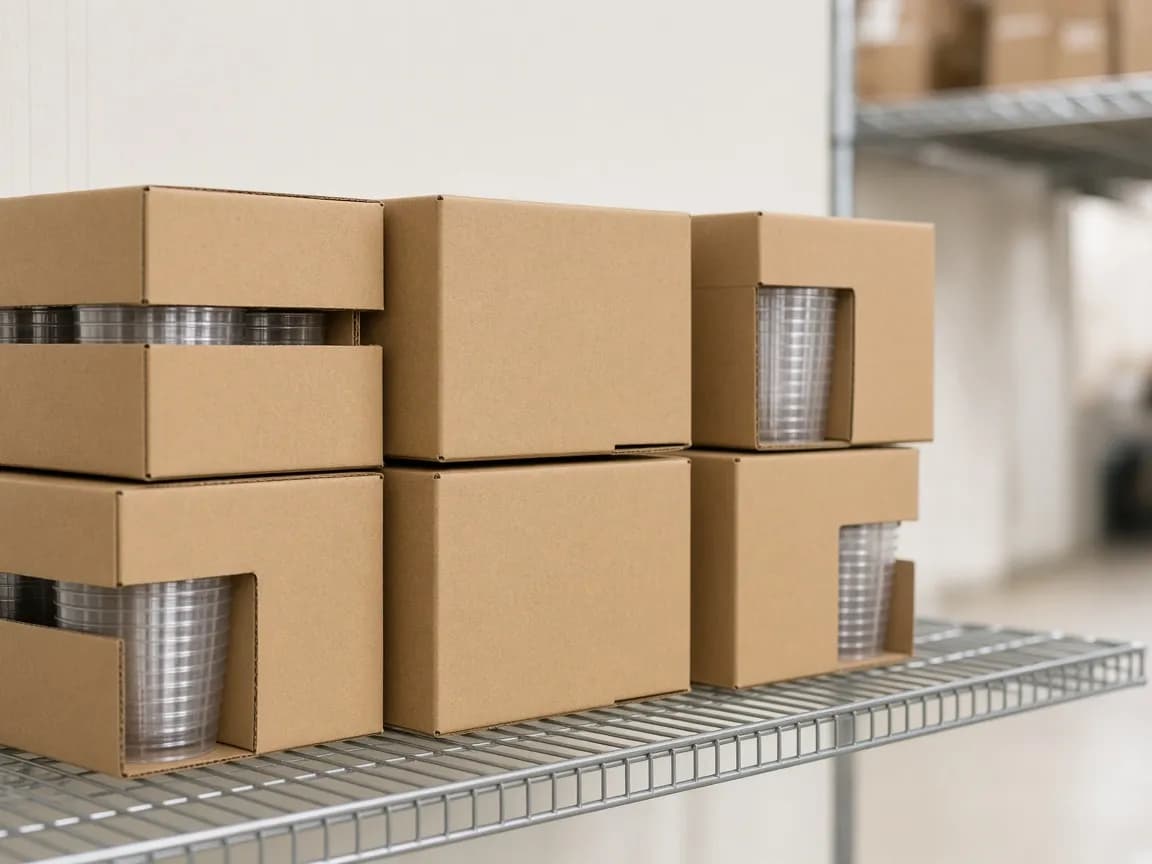
Store PLA cool and out of the sun so cups and lids do not warp.
PFAS is a separate question. California's PFAS law covers food packaging made in substantial part of paper, paperboard, or other plant fiber, and since January 1, 2023 it has barred intentionally added PFAS and PFAS at 100 parts per million or more, measured as total organic fluorine. A PLA-coated paper bowl is mostly paperboard. A clear PLA cup is plastic, not fiber. Either way, anything labeled compostable in California must stay under 100 ppm total organic fluorine, so ask for the spec sheet.
What California rules apply to PLA?
Three sets of rules decide how PLA food packaging is sold, labeled, and handed out in California. Only one of them is about the material.
- Compostable labeling (AB 1201). CalRecycle requires compostable plastic products to meet ASTM D6400, to stay under 100 ppm total organic fluorine, and to be labeled in a way that sets them apart from non-compostable products. A further requirement, that compostable products be allowed as an organic farming input, was extended to June 30, 2027. BioCycle notes it mainly affects compostable bioplastics, which is the group PLA belongs to.
- Recyclability claims (SB 343). A product that is not widely recycled cannot carry the chasing arrows. Our California plastic labeling laws guide covers it.
- Local foodware ordinances. San Francisco requires compostable foodware to be BPI or TUV certified and prohibits PLA straws. San Mateo County bars compostable plastic for most foodware where its ordinance applies.
SB 54 adds producer responsibility on top of all three. Our SB 54 guide explains what it means for a food business.
The rule most likely to catch a Bay Area cafe is not the state one. It is the local one. A PLA cup that is fine to sell in Fremont can still be the wrong cup for a shop in a San Mateo County city that adopted the county ordinance.
Further reading
Quick answers about PLA
Is PLA biodegradable?
It is compostable in a commercial facility. It does not break down quickly in soil, water, or a landfill, so "biodegradable" is a misleading word for it. Our labels guide explains why California restricts that word.
What is the difference between PLA and CPLA?
CPLA is crystallized PLA. A mineral and a fast heating and cooling step raise its heat limit to about 194 F, per Vegware, so it is used for hot cup lids and cutlery. Our compostable cutlery guide covers CPLA in more detail.
Is PLA better than bagasse?
They do different jobs. PLA is clear and for cold use. Bagasse is opaque sugarcane fiber that handles hot food, and San Francisco's compost list names it. Our bagasse vs PLA guide compares them side by side.
Is the PLA in packaging the same as 3D printing PLA?
It is the same base polymer. Food packaging grades are made and cleared for food contact. A printer filament is not, so do not treat it as food safe.
How much does PLA food packaging cost?
PLA food packaging is priced by the case, and the price per piece moves with four things. Compare like with like, or the comparison means nothing.
- Size. A 24 oz cup uses more resin than a 12 oz cup, and a 48 oz deli container more than a 16 oz.
- Brand. Similar clear cups from different brands can price very differently. Compare the same ounce size and case count.
- Lids. The matching lid is a separate case. Budget the cup and lid together.
- Volume. The price per piece drops when you buy by the case, and drops again across several cases.
The cheapest case of cups is not always the cheapest choice. A lid that does not seal costs a drink. A case that warped in a hot van costs the whole case. A clear compostable cup your hauler sends to the landfill costs you the reason you switched.
Existing Safra customers see case pricing for the cold cups and deli containers on Cut+Dry. If you are not a customer yet, ask Safra for a quote at your volume. Many stocked items start at one case, samples can ride the next delivery, and cups, lids, Planet Choice fiber, and bagasse containers come on the same weekly route.
Further reading
- The complete guide to compostable foodservice packaging
- Planet Choice vs World Centric containers
- Compostable cold cups and lids in bulk
Final thoughts
PLA is a plant-based plastic. It makes a clear cold cup, a deli container, and a clamshell that look and feel like PET, and it lines paper bowls so they hold liquid. It is for cold food only, and it needs to be stored cool.
The label says compostable. Your hauler decides whether it is. In San Francisco, central Contra Costa, and San Jose, a clear compostable cup does not go in the green bin, and in San Mateo County it is not allowed for most foodware at all. In those places, molded fiber such as bagasse is often the simpler choice for anything that is not a clear cold cup.
If you want a second look at the cups and containers you buy today, send us your current list and we will match it against our PLA and Planet Choice lines item by item.
Related posts
 Sustainability Legislation
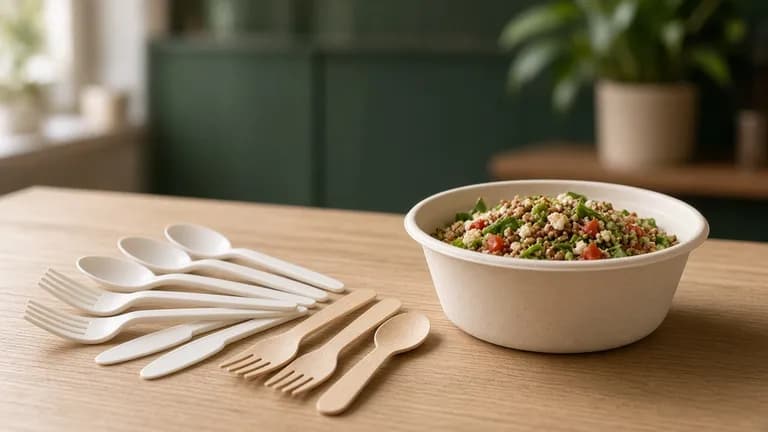
What Is Compostable Cutlery? CPLA, Wood, and Fiber Utensils Explained
Compostable cutlery is mostly CPLA, wood, or plant fiber. What each handles, where the green bin takes it, and the California rules.
Safra13 min read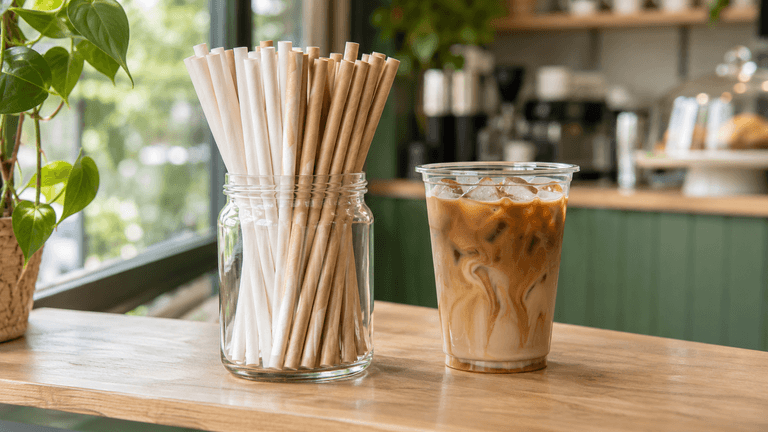 Sustainability Legislation
What Are Paper Straws Made Of? Paper Straws Explained
Paper straws are paper strips wound into a tube with food-safe glue. Here are sizes, PFAS rules, California straw laws, and cost.
Safra10 min read Sustainability Legislation
Is Styrofoam Recyclable in California? What Food Businesses Need to Know
Is Styrofoam recyclable in California? Almost never. Foam foodware is garbage in most cities, and foam cups and clamshells are banned from sale statewide.
Safra5 min read