
What Is Compostable Cutlery? CPLA, Wood, and Fiber Utensils Explained
Compostable cutlery is mostly CPLA, wood, or plant fiber. What each handles, where the green bin takes it, and the California rules.
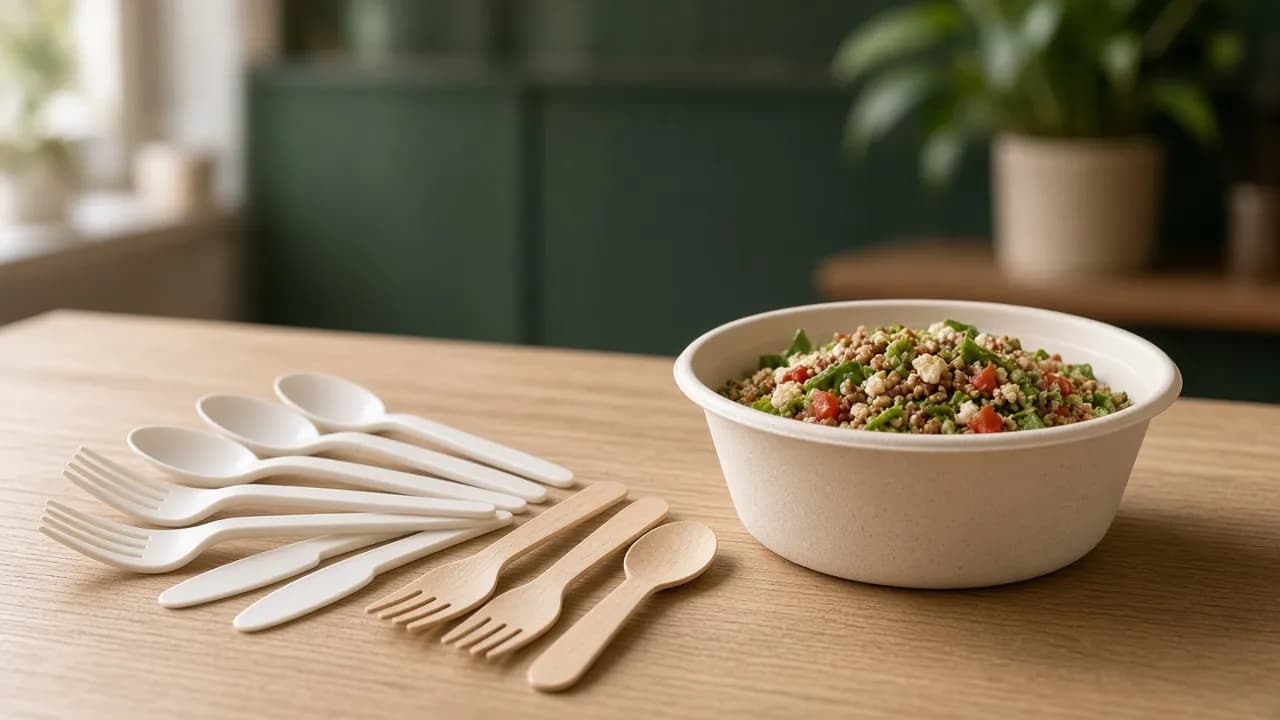
Compostable cutlery is a single-use fork, knife, or spoon made to break down in a commercial compost facility rather than sit in a landfill for decades. Most of what kitchens buy is CPLA, a heat-treated plant-based plastic. The rest is usually birch wood or molded plant fiber.
A plain PLA fork in a bowl of hot noodles will bend. CPLA is the same plastic run through a heat step so it stays rigid to about 194 F. That is why compostable cutlery is made from CPLA and not plain PLA. The heat rating is not the hard part, though. The hard part is whether your hauler will take compostable cutlery in the green bin, and which California rules apply when you hand it out.
Safra Distribution delivers food packaging across six Bay Area counties from a warehouse in Fremont, and our cutlery category lists CPLA, wood, and bamboo fiber forks, knives, and spoons. The word compostable on the box is not the whole answer. The material is.
Compostable cutlery comes in two main looks: white CPLA and natural wood.
Key facts about compostable cutlery
- Plain PLA is best kept to cold use, up to about 105 F. Crystallized PLA, or CPLA, is heat stable to about 194 F, according to Vegware. That gap is the reason compostable cutlery is CPLA.
- Wood and molded fiber compostable cutlery contain no plastic at all.
- San Francisco's hauler, Recology, lists natural fiber utensils made of bamboo, wood, or bagasse on its compost list. RecycleSmart in central Contra Costa County sends "compostable" plastics to the landfill cart.
- California's PFAS law for plant-fiber food packaging names eating utensils by name and sets the limit at 100 parts per million total organic fluorine.
- Under AB 1276, effective June 1, 2022, forks, knives, spoons, and sporks of any material go out only when the customer asks for them.
- San Mateo County's foodware ordinance does not allow CPLA, TPLA, or PLA utensils where it applies. Wood and other fiber-based utensils are allowed.
Further reading
- Bagasse vs PLA: which compostable material fits your menu
- AB 1276 compliance checklist: accessories on request
What is compostable cutlery made of?
Compostable cutlery comes from one of four material families. Each one looks different, feels different in the hand, and gets treated differently once it reaches a compost facility.
- CPLA. Crystallized polylactic acid. PLA is a plastic made from fermented plant sugar, usually corn. CPLA adds a mineral, chalk in Vegware's case, and a fast heating and cooling step so the utensil holds its shape in hot food. Most white or black compostable cutlery is CPLA.
- Plain PLA. The clear material in many cold cups. It softens at low heat, which is why plain PLA is rarely sold as cutlery for hot food.
- Wood. Usually birch, cut and pressed into flat forks, knives, and spoons. Wooden compostable cutlery has no plastic in it.
- Molded plant fiber. Sugarcane bagasse or bamboo fiber pressed into utensil shapes, the same way fiber plates and bowls are made.
Some compostable cutlery blends materials. A TPLA fork is PLA filled with talc. Others mix plant starch with a binder.
This is why the spec sheet matters more than the front of the box. The word compostable tells you very little. The material line tells you how it will handle heat and whether your hauler will take it.
What is CPLA, and how is it different from PLA?
CPLA is crystallized PLA. It is the material behind almost all of the plastic-looking compostable cutlery on the market.
Regular PLA has a low melt point. Vegware, a compostable packaging maker, describes PLA as best for cold use up to about 40 C, or 105 F. To make CPLA, chalk is added and the resin is rapidly heated and cooled during production. Per the same source, the result is heat stable to about 90 C, or 194 F.
That step is the whole difference. It is why compostable cutlery and hot cup lids are made from CPLA rather than plain PLA. A PLA fork in hot noodles bends. A CPLA fork does not.
The easy story ends there, and it is incomplete. CPLA is still a bioplastic. It needs a commercial compost facility to break down, and some Bay Area composters will not accept it at all. For a restaurant, that point matters more than the heat rating.
Further reading
CPLA vs wood vs fiber: which compostable cutlery is best?
There is no single best compostable cutlery. The right one depends on the hottest dish you serve, the hauler that picks up your green bin, and the city your kitchen sits in.
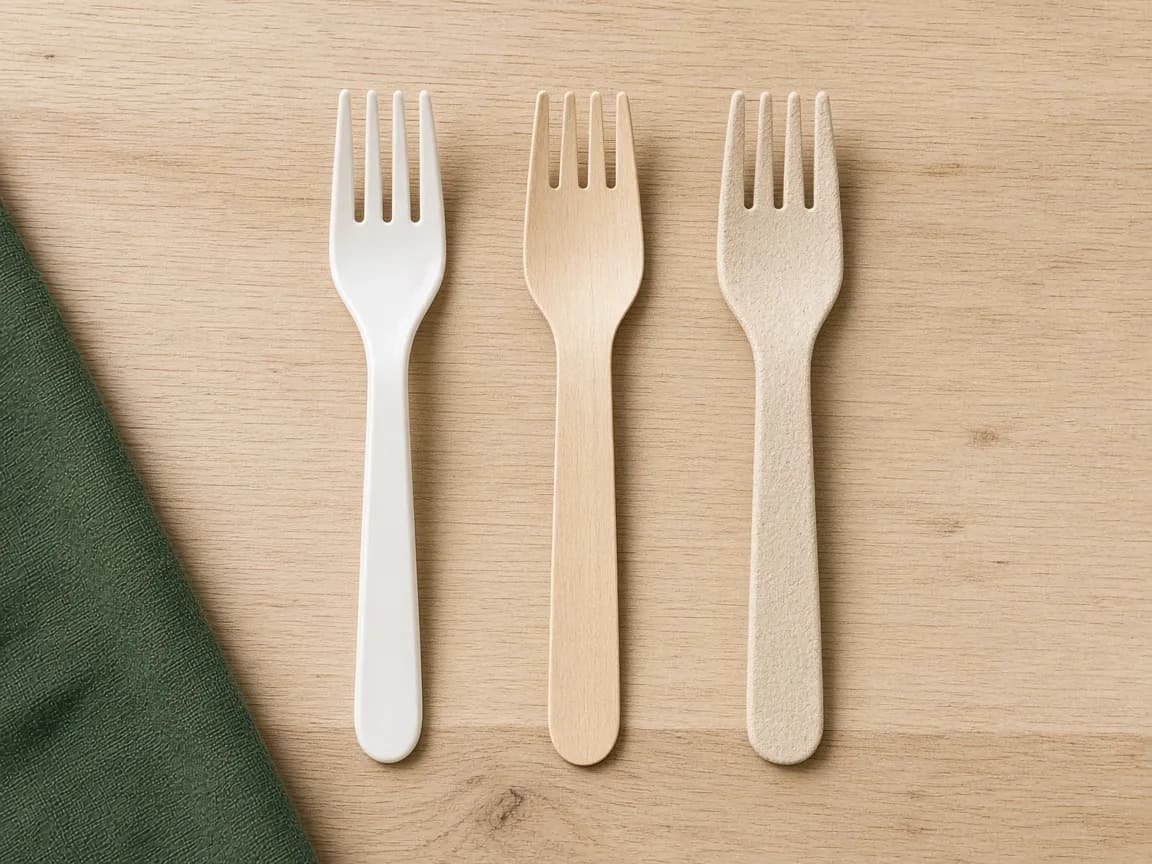
CPLA, wood, and fiber compostable cutlery side by side.
CPLA compostable cutlery
- Feels closest to plastic: smooth, curved, and stiff.
- Handles hot food, because the crystallizing step raises its heat tolerance.
- Comes in white, black, and sometimes natural tones.
- Is a bioplastic, so green bin acceptance depends on your hauler, and it is not allowed under San Mateo County's ordinance.
Wooden compostable cutlery
- Flat and light, with a dry, woody feel that some customers notice.
- Is natural fiber, which San Francisco treats more simply than bioplastic.
- Has a shallow spoon bowl, so it is a weaker choice for broth and soup.
Fiber compostable cutlery
- Molded from bagasse or bamboo fiber, matte and slightly rough.
- Is natural fiber with no plastic.
- Can soften if it sits in liquid for a long time, so test it with your soups before you switch.
Choosing compostable cutlery usually comes down to one question. If your hauler takes only natural fiber, or your kitchen is in San Mateo County, wood or fiber compostable cutlery is the answer. If your menu is soup-heavy and your compost facility takes CPLA, CPLA is the stronger tool.
What sizes and weights does compostable cutlery come in?
Compostable cutlery comes in two common weights and a handful of standard pieces. Buying the wrong weight of compostable cutlery is the easiest mistake to make, and it is the one customers notice first.
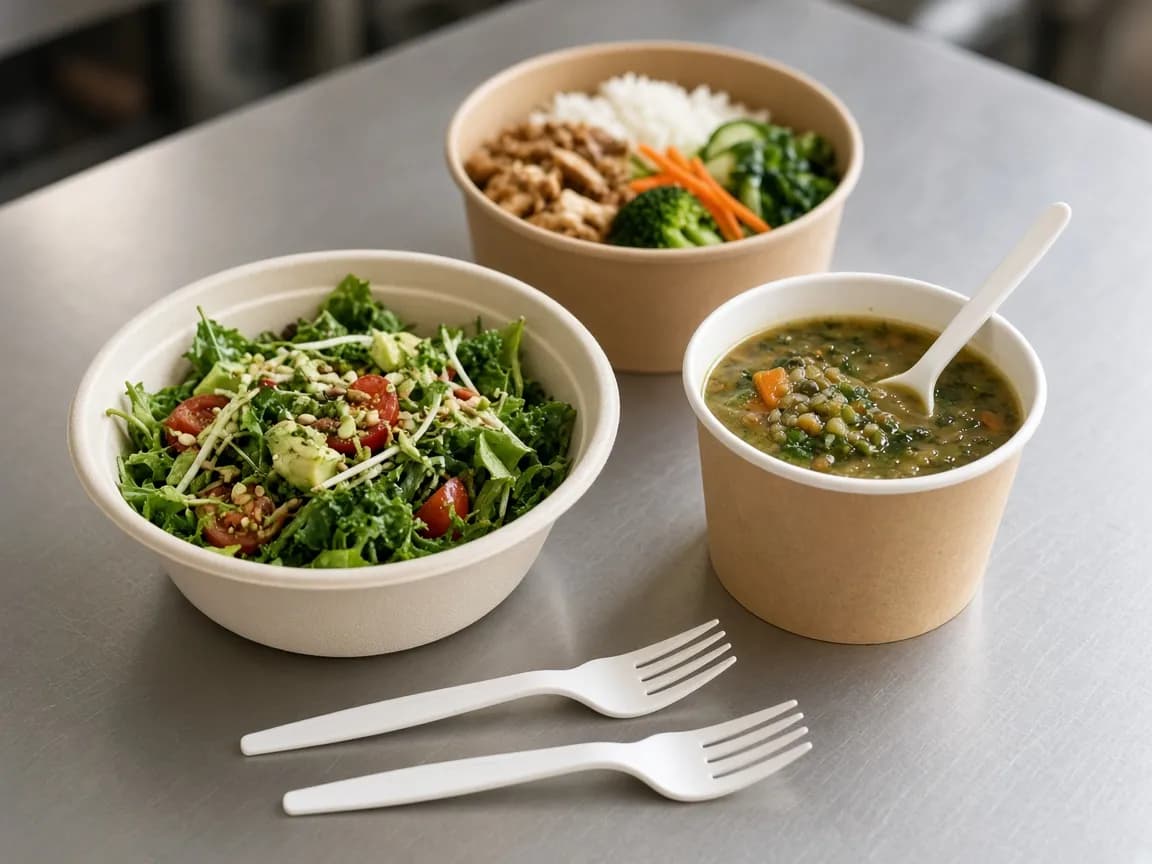
Medium and heavy weight compostable cutlery next to the menu items each one suits.
Weights
- Medium weight. Lighter and uses less material per piece. It works for cake, cut fruit, and soft sides.
- Heavy weight. Thicker handles and tines. It is the safe default for salads, rice bowls, pasta, and anything a customer has to push a fork into.
Pieces
- Fork. About 6 to 6.5 inches, and the piece you will reorder most.
- Knife. About 6.5 to 7 inches. A serrated edge helps with chicken and sandwiches.
- Teaspoon. About 6 inches, for dessert, yogurt, and coffee service.
- Soup spoon. A deeper bowl for broth, chili, and ramen.
- Spork. One piece that does the job of two at a counter with a short menu.
- Cutlery kits. A fork, knife, spoon, and napkin in one wrapper, used for delivery and catering where local rules allow it.
Most loose compostable cutlery ships 1,000 pieces to a case. Wrapped pieces and kits usually pack fewer per case.
The test is simple. Hand a medium fork and a heavy fork to your line cook along with your densest salad. The difference shows up in one bite.
Further reading
Which compostable cutlery fits which menu?
Match compostable cutlery to the hardest thing on your menu, not the average item. A fork that survives your densest dish will survive everything else.
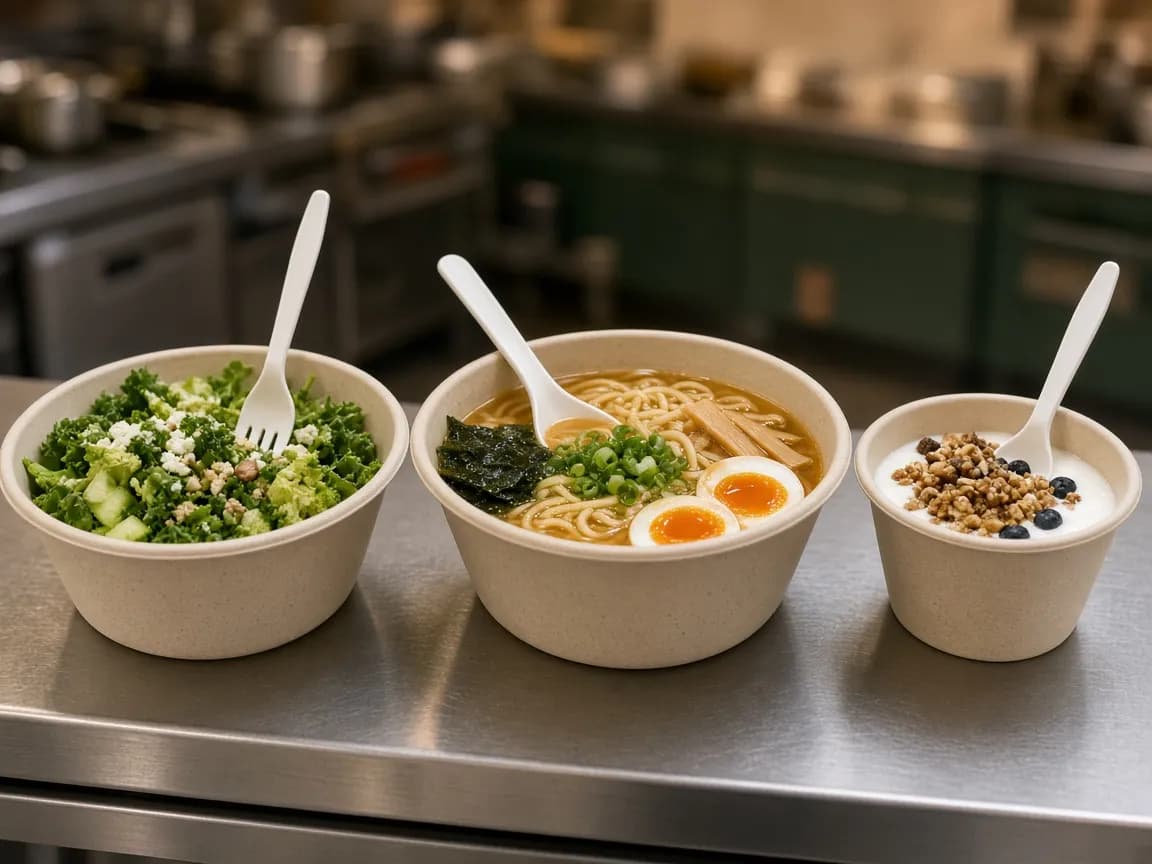
Pick compostable cutlery for the toughest dish on the menu.
- Salad and grain bowl shop. Heavy weight forks. Dense greens and grains bend medium forks.
- Ramen, pho, or soup counter. A deep soup spoon, plus chopsticks. Wooden spoons are shallow for broth, so CPLA is the usual pick where the hauler and the city allow it.
- Burger or sandwich shop. Mostly no cutlery at all. Keep heavy weight knives and forks on hand for salads and sides when a customer asks.
- Cafe and bakery. Medium weight teaspoons and forks for pastries and yogurt cups.
- Catering trays. Heavy weight pieces handed out with the order. Wrapped kits work in most cities, but not in San Mateo County, where utensils cannot be bundled.
- Delivery-heavy kitchen. Cutlery added only when the order asks for it, which state law already requires.
The same logic applies to containers. Pick for the heaviest use and the whole menu works. Our 32 oz vs 48 oz container guide applies that thinking to bowls.
Is compostable cutlery heat resistant?
CPLA and wooden compostable cutlery are heat resistant enough for most hot food. Plain PLA cutlery is not.
- CPLA. Vegware puts crystallized PLA at about 194 F. That covers soup, noodles, and hot entrees.
- Plain PLA. About 105 F. Fine for a cold salad. Not for soup.
- Wood. Wooden compostable cutlery takes heat without going soft, though it can pick up flavor from a sauce if it sits.
- Fiber. Takes heat, but can soften in a long soak, so test it before you switch.
Heat ratings come from each maker, not from one shared standard. If your menu runs very hot, ask for the temperature rating on the exact compostable cutlery you plan to buy. Then test a case on your hottest dish before you change the whole order.
Does compostable cutlery go in the green bin?
It depends on the material and on your hauler. Natural fiber compostable cutlery is widely accepted. CPLA compostable cutlery is not.
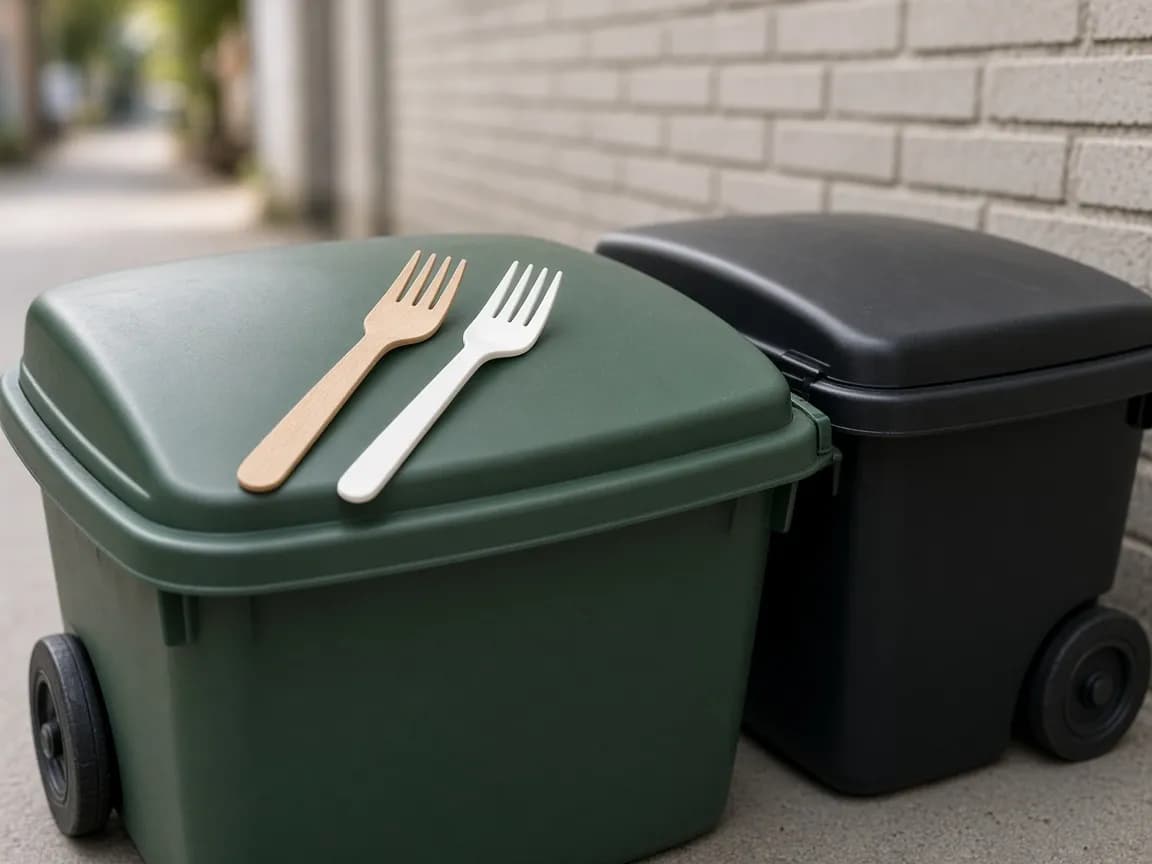
Whether compostable cutlery goes in the green bin depends on the material and your hauler.
This is not a question about the product. It is a question about the facility at the end of the truck route. Two Bay Area haulers show how far apart the answers can be:
- San Francisco (Recology). The What Goes Where list names "natural fiber-based cups, plates, bowls, utensils (Bamboo, wood, Bagasse)" for the compost bin. It does not list compostable plastic utensils.
- Central Contra Costa (RecycleSmart). The business green bin page lists biodegradable and "compostable" plastics as landfill items. A CPLA fork with a compostable logo still goes in the black cart there.
- Everywhere else. Check your city's hauler. Rules change, and the facility that takes your green bin makes the final call.
California is also tightening what can be labeled compostable. CalRecycle extended a key compostable product deadline to June 30, 2027, and the change mostly affects bioplastics like CPLA. Our California plastic labeling laws guide covers SB 343 and AB 1201.
If your area has no compost service at all, compostable cutlery goes in the landfill bin like anything else. Our no composter near me guide walks through what that means for your order.
Further reading
What California rules apply to compostable cutlery?
Four rules decide how a Bay Area restaurant buys and hands out compostable cutlery. Only one of them is about the material itself.
- AB 1276, utensils on request. Since June 1, 2022, state law has barred food facilities from handing out single-use utensils, straws, and condiments unless the customer asks, for dine-in and for third-party delivery orders. Drive-throughs may ask the customer. The rule sits in Public Resources Code 42271, and Section 42270 defines utensils as forks, knives, spoons, and sporks. See our AB 1276 checklist.
- AB 1200, PFAS. California's PFAS law for plant-fiber food packaging lists eating utensils by name. Since January 1, 2023, wood and fiber compostable cutlery cannot contain intentionally added PFAS, or PFAS at 100 parts per million or more measured as total organic fluorine.
- San Francisco foodware rules. SF Environment says utensils are accessories given on request or set out in a self-serve area. It also says utensils made entirely of natural fiber, like wood, do not need BPI or TUV certification. Other compostable foodware does.
- San Mateo County. The county's foodware ordinance page says compostable plastic, including PLA, TPLA, and CPLA, is not allowed, and that covers utensils. Fiber-based materials such as wood and bamboo are allowed. Utensils cannot sit in open grab-and-go bins, and they cannot be bundled, so each fork or spoon goes out on its own. The ordinance applies in unincorporated areas and in the cities that adopted it. See our San Mateo County ordinance guide.
The compostable cutlery rule most kitchens break is not the material rule. It is the first one. A fork tossed into every bag is a violation whether it is CPLA, wood, or polystyrene.
Further reading
Quick answers about compostable cutlery
Is compostable cutlery the same as biodegradable cutlery?
No. Compostable cutlery is tested to break down in a compost facility within a set time. "Biodegradable" has no fixed timeline, and California restricts how it can appear on labels. Our labels guide explains the difference.
Can you compost CPLA cutlery at home?
Usually not. CPLA compostable cutlery is certified for commercial composting, which runs hotter than a backyard pile. Look for a separate home compost mark if that matters to you. Our BPI vs OK Compost Home guide explains both.
Is wooden cutlery compostable?
Plain wooden compostable cutlery is natural fiber, and Recology lists wood utensils for the San Francisco compost bin. Check that it has no plastic coating.
Does compostable cutlery need BPI certification?
CPLA compostable cutlery should carry a third-party certification such as BPI, and San Francisco requires certified compostable foodware. Utensils made entirely of natural fiber, like wood, do not need certification in San Francisco.
Can compostable cutlery go in the microwave?
Compostable cutlery is made for eating, not for heating. Leave compostable cutlery out of the microwave unless the maker says otherwise.
How much does compostable cutlery cost?
Compostable cutlery is priced per case, and the per-piece cost moves with four things. Compare like with like, or the comparison means nothing.
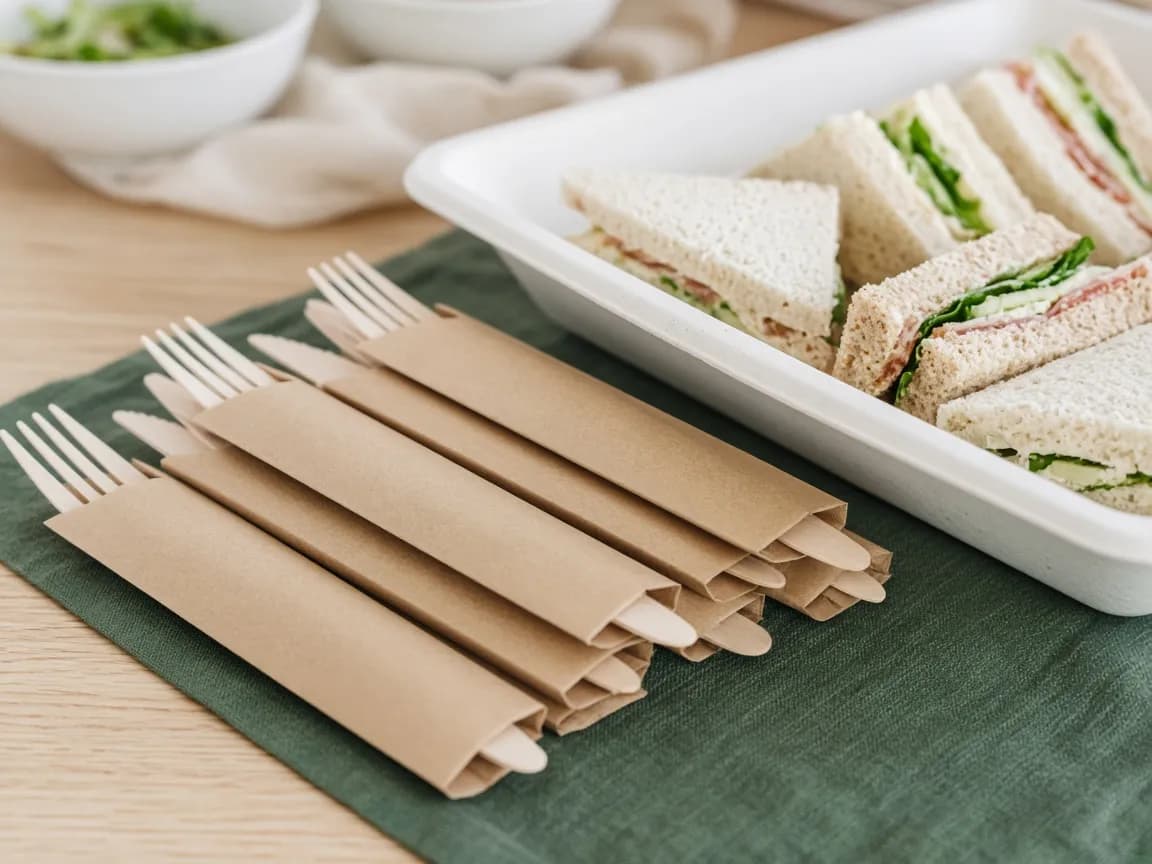
Wrapped compostable cutlery kits suit catering and delivery where local rules allow them.
- Weight. Heavy weight uses more material than medium weight.
- Wrapping. Individually wrapped pieces and kits cost more than loose cutlery in bulk.
- Material. CPLA, wood, and fiber compostable cutlery each price differently, so compare the same weight and the same length.
- Volume. The price per piece drops when you buy by the case, and drops again across several cases.
The cheapest case of compostable cutlery is not always the cheapest choice. A medium fork that snaps in a grain bowl costs you a second fork and an unhappy customer. A CPLA fork your hauler rejects costs you the compost program you paid for.
Safra Distribution delivers on weekly routes from Fremont across six Bay Area counties. Ask for a quote at your volume, and we will price compostable cutlery alongside your containers and cups.
How do you choose compostable cutlery for your restaurant?
Choose compostable cutlery in four steps, in this order.
- Check your hauler and your city. If your green bin takes only natural fiber, or you are in San Mateo County, start with wood or fiber compostable cutlery.
- Check your hottest dish. If it is soup or a hot sauce, make sure the compostable cutlery is CPLA or wood, and ask for the temperature rating.
- Pick the weight. Heavy weight for salads, bowls, and entrees. Medium weight for desserts and soft sides.
- Pick bulk or wrapped. Bulk for a self-serve station where the city allows one. Wrapped pieces for delivery and catering. In San Mateo County, skip CPLA, open bins, and kits.
Then order a case of compostable cutlery, test it against your real menu for a week, and only then change the full order.
Further reading
- The complete guide to compostable foodservice packaging
- Wholesale bagasse packaging: trays, bowls, and containers
- What are paper straws made of?
Final thoughts
Compostable cutlery is mostly CPLA or wood, with molded fiber as a third option. CPLA handles heat and feels like plastic, but it is a bioplastic, and some Bay Area haulers and San Mateo County will not take it. Wood and fiber are the simpler fit where only natural fiber is accepted.
A compostable label does not settle the question. Your hauler does. In California, every utensil also goes out only on request, whatever it is made of.
If you want a second look at the forks and spoons you use today, send us what you buy now and we will match it against our cutlery range line by line.
Related posts
 Sustainability Legislation
What Are Paper Straws Made Of? Paper Straws Explained
Paper straws are paper strips wound into a tube with food-safe glue. Here are sizes, PFAS rules, California straw laws, and cost.
Safra10 min read Sustainability Legislation
Is Styrofoam Recyclable in California? What Food Businesses Need to Know
Is Styrofoam recyclable in California? Almost never. Foam foodware is garbage in most cities, and foam cups and clamshells are banned from sale statewide.
Safra5 min read Sustainability Legislation
Compostable Foodservice Packaging: The Complete Guide
Complete compostable packaging guide for Bay Area foodservice: BPI vs OK Compost, California labels, materials, green bins, and wholesale buying.
Safra11 min read