
What Are Paper Straws Made Of? Paper Straws Explained
Paper straws are paper strips wound into a tube with food-safe glue. Here are sizes, PFAS rules, California straw laws, and cost.
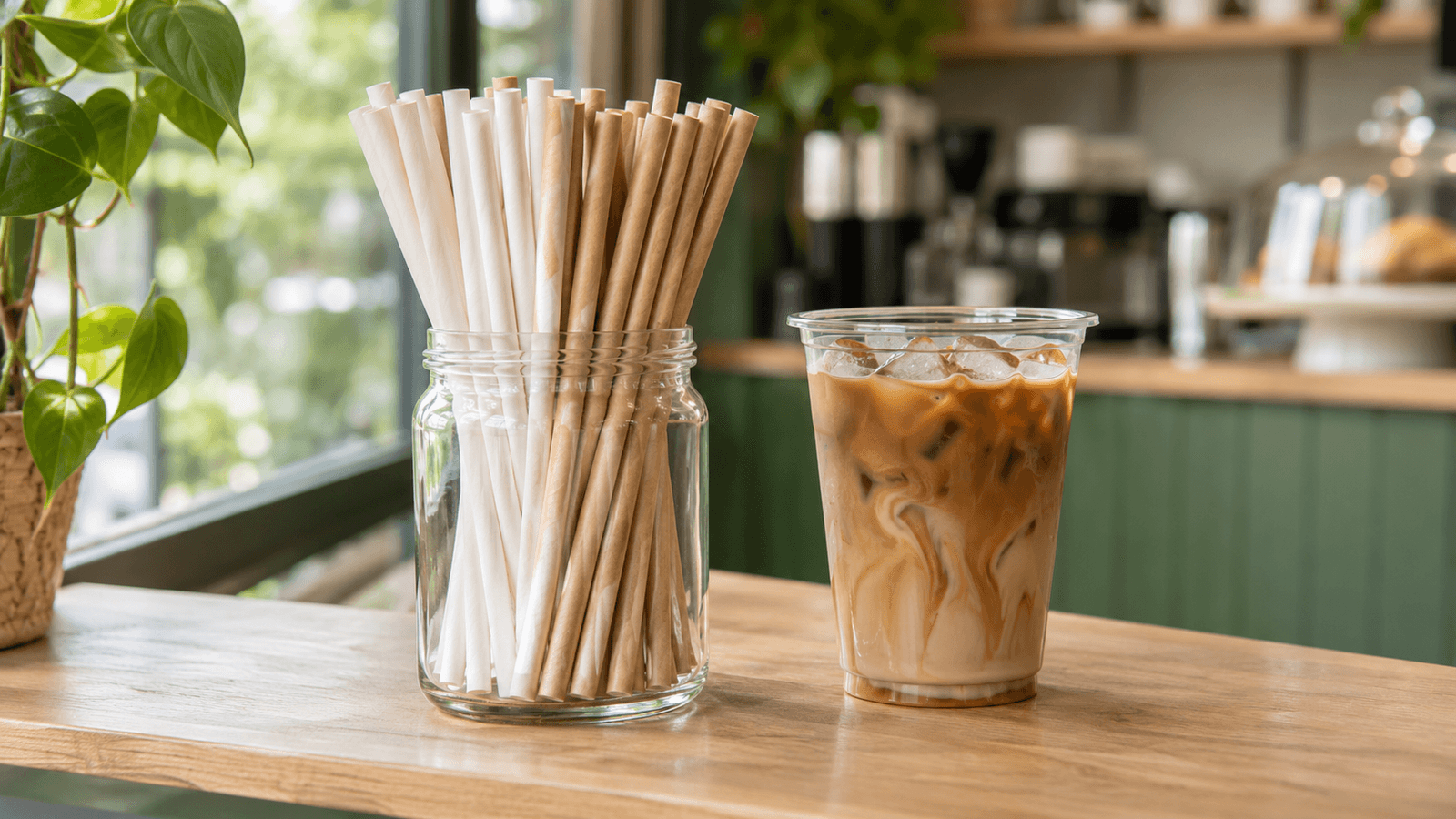
Paper straws are drinking straws made from strips of paper wound into a tube and bonded with food-safe adhesive, usually in three layers. They are the default single-use straw in most Bay Area cafes and restaurants, because California and several local ordinances push operators away from plastic.
This guide explains what paper straws are made of, how they are made, which sizes fit which drinks, the PFAS question, the California and Bay Area straw rules, and whether paper straws go in the green bin. It is written for cafe, boba, bar, and restaurant operators who buy straws by the case.
At Safra Distribution we are a family-owned food packaging and restaurant supplies distributor, delivering across six Bay Area counties from our Fremont warehouse. Straws ride in the same order as the cold cups and lids they go with, so this is the straw primer we would hand a new account.
Paper straws are the default single-use straw in most Bay Area cafes.
Key facts about paper straws
- Most paper straws are built from 3 plies of paper wound around a core and bonded with a small amount of adhesive.
- The first patented paper straw, from 1888, was a strip of paper wound in a spiral and coated with paraffin.
- Common paper straw widths are 6, 8, 10, and 12 mm; only 12 mm passes tapioca pearls.
- A 2023 Belgian study found PFAS in 18 of 20 paper straw brands tested; California's AB 1200 names straws in its PFAS ban.
- Under California's AB 1276, straws of any material are given out only when a customer asks.
- A case of 4,800 BPI-certified 7.75 inch unwrapped paper straws listed at about $172 to $208 on a public wholesale site in November 2026, or about 4 cents each.
Further reading
What are paper straws made of?
Paper straws are made of paper, adhesive, and sometimes ink. That is the whole recipe, and each part matters.
- Paper. Food-grade paper strips, often white or natural kraft. Thicker paper and more plies make a stiffer straw.
- Adhesive. A water-based or hot-melt glue that bonds the plies. The glue is what holds the tube together when it gets wet.
- Ink. Printed paper straws use food-safe inks on the outer ply. Plain white and kraft paper straws skip it.
- Coatings. Some paper straws carry a water-resistant treatment. This is where the PFAS question comes in.
Paper straws are not the same as "plant-based plastic" straws. A PLA straw looks like plastic, behaves like plastic, and is banned in San Francisco even though it is labeled compostable. A paper straw is fiber.
How are paper straws made?
Paper straws are spiral wound, much like a cardboard tube, only smaller and food-grade.

Paper straws are made by winding paper strips around a steel core.
- Printing. For patterned paper straws, the outer paper ply is printed first.
- Cutting. Paper rolls are slit into narrow strips.
- Winding. Strips are wound around a steel core at an angle, with adhesive between each ply. Most paper straws use three plies.
- Cutting to length. The continuous tube is cut into straws.
- Drying. Straws dry so the adhesive cures before packing.
- Packing. Paper straws are boxed unwrapped or individually wrapped in paper sleeves.
The idea is old. Marvin Stone's 1888 patent described a strip of paper wound in a spiral on a spindle, then dipped in paraffin to seal it. Modern paper straws drop the wax and rely on adhesive and ply count instead.
What size paper straw do you need?
Size paper straws by width first, then length. Width decides what can pass through; length decides whether the straw clears the lid.

Paper straw widths side by side, matched to the drink each one fits.
Common paper straw widths and what they fit, per a straw maker's size guide:
- 6 mm. Cocktails, water, soda, and iced tea. US "jumbo" paper straws in 7.75 inch length are usually 6 mm wide.
- 8 mm. Standard soft drinks and iced coffee with a bit more pull.
- 10 mm. Smoothies, thick shakes, frappes, and fresh juice.
- 12 mm. Boba and bubble tea. The only width wide enough for tapioca pearls.
Lengths are simpler. That same guide lists about 146, 200, and 240 mm, or roughly 5.75, 7.9, and 9.4 inches. Short for rocks glasses, standard for most cups, long for 24 oz and taller cups.
Most cafes are covered by two paper straws: a 6 mm standard and either a 10 mm smoothie straw or a 12 mm boba straw. Fewer sizes means fewer half-used cases.
Do paper straws contain PFAS?
Some have. That is why you should ask for a PFAS statement on every paper straw you buy for a California kitchen.
In 2023, researchers at the University of Antwerp tested 39 straw brands sold in Belgium. They found PFAS in 18 of 20 paper straw brands, 4 of 5 bamboo brands, and 3 of 4 plastic brands. Concentrations were low, and the researchers could not say whether the PFAS were added or came from contamination.
California settled the question for straws sold here. AB 1200 lists "straws" in its definition of plant-fiber food packaging and, since January 1, 2023, bans them if they contain:
- Intentionally added PFAS with a functional or technical effect, or
- 100 ppm or more total organic fluorine.
What to ask for: a "no intentionally added PFAS" statement and a total organic fluorine result under 100 ppm for the exact item. BPI-certified paper straws also have to meet BPI's fluorine limit; one 7.75 inch listing shows its BPI certificate number and a no-added-PFAS claim.
Further reading
What are the California and Bay Area paper straw rules?
California and Bay Area rules stack. The strictest one that applies to your location wins.
- AB 1884 (2019). Full-service restaurants may give out plastic straws only on request.
- AB 1276 (2022). Every food facility, for dine-in and delivery apps, gives out straws, utensils, and condiments only when the customer asks. Drive-throughs may ask. Our AB 1276 checklist covers the counter setup.
- San Francisco. Paper straws are acceptable but upon request only. Since January 1, 2020, paper and fiber straws must be certified by BPI or TUV Austria Belgium. Compostable PLA straws are banned. Plastic straws only for a customer who asks because of a disability or medical need.
- City of Alameda. Since 2018, plastic straws are replaced with compostable fiber straws, paper or bamboo, given on request.

Paper straws on request: keep them behind the counter, not in a self-serve cup.
One caution: keep plastic straws available for customers who need them. San Francisco's rule and several county health departments say straws help people with disabilities. "On request" does not mean "never."
Further reading
Paper straws vs plastic straws: which is better?
For a Bay Area operator, paper straws win on compliance; plastic straws win on feel. The honest trade-offs:
- Compliance. Paper straws satisfy San Francisco and Alameda fiber rules. Plastic, including PLA, does not in those cities.
- Durability. Paper straws soften over time in a drink. Plastic does not. Thicker plies and better adhesive help.
- Thick drinks. A 10 or 12 mm paper straw handles smoothies and boba; a thin paper straw collapses under suction.
- End of life. Used paper straws can go in the green bin in many Bay Area cities. Plastic straws are too small to sort in most recycling.
- Cost. Paper straws usually cost more per piece than basic plastic straws.
The middle path many cafes take: paper straws on request, a sip lid for iced drinks so most customers do not need a straw, and plastic straws held back for accessibility requests.
Further reading
How should you store and serve paper straws?
Paper straws are paper, so the back room matters as much as the spec sheet. A case that sits next to the dish machine will not perform like one stored dry.
- Keep cases sealed and off the floor. Humidity softens paper straws and can weaken the adhesive before they ever reach a drink.
- Store away from heat and steam. The dish pit, the espresso machine, and the ice well are the worst spots.
- Rotate stock. Use the oldest case first, especially in a humid summer.
- Serve on request. Under AB 1276 the straw comes out only when the customer asks, which also means fewer wasted paper straws.
- Hand out wrapped paper straws for delivery. A loose straw in a delivery bag is a hygiene complaint waiting to happen.
- Pair with the right lid. A sip lid or a straw-slot lid that matches the straw width keeps the drink from leaking around a wide boba straw.
Train the counter on the "ask first" step so every shift handles paper straws the same way.
Do paper straws go in the green bin?
Usually yes, if the paper straw is certified or uncoated and your hauler takes it. As with all compostable foodware, the hauler decides.
- City of Alameda. StopWaste's RE:Source guide lists uncoated food-soiled paper foodware as organics, and the city calls compostable fiber straws compliant foodware.
- San Francisco. Recology accepts natural fiber-based cups, plates, bowls, and utensils in the compost cart; certified paper straws are part of the compostable foodware the city requires.
- Everywhere else. Check your hauler's list before you print "compostable" on a menu board.

Used paper straws go in the green bin in many Bay Area cities; check your hauler.
Under SB 1383, every California jurisdiction must provide organics collection to businesses, so the green-bin path exists. Labeling a paper straw "compostable" also has to meet CalRecycle's compostable labeling rules, including under 100 ppm total organic fluorine.
Further reading
- What to do when there is no composter near you
- Compostable vs biodegradable vs recyclable: California labels
Quick answers about paper straws
How long do paper straws last in a drink?
It depends on ply count, adhesive, and drink. Thicker three-ply paper straws hold up longer; test your own drink at your longest normal sip time.
Are paper straws biodegradable?
Paper straws are fiber, but "biodegradable" is a restricted marketing word in California. Look for a compostable certification instead.
Are wrapped or unwrapped paper straws better?
Wrapped paper straws are more hygienic for self-serve and delivery. Unwrapped paper straws cost less and suit a behind-the-counter, on-request setup.
Can paper straws go in hot drinks?
Paper straws are mostly sold for cold drinks. Check the listing before you use them in hot drinks.
What do paper straws cost per case?
Paper straws cost a few cents each. A public wholesale listing read on November 2, 2026 put a common format here:
- 7.75 inch jumbo unwrapped paper straws, 6 mm, 4,800 per case, BPI certified: about $172 per case in white and $208 in black, or about 4 cents each.

Paper straws are sold by the case in inner boxes of several hundred.
Four things move paper straw pricing: width, wrapping, color or print, and certification. Wider boba paper straws and individually wrapped paper straws cost more per piece.
Safra Distribution carries paper straws and delivers them on weekly routes from Fremont across six Bay Area counties. Ask for a quote at your volume, because case pricing moves with size, wrap, and order size.
How do you choose paper straws?
A good paper straw buy comes down to six checks.
- PFAS statement. "No intentionally added PFAS" and a total organic fluorine result under 100 ppm.
- Certification. BPI or TUV Austria if you operate in San Francisco, and a certificate number you can look up.
- Width. 6 mm for standard drinks, 10 mm for smoothies, 12 mm for boba.
- Length. Long enough to clear your tallest cup and lid.
- Wrapped or unwrapped. Wrapped for delivery and self-serve, unwrapped for on-request behind the counter.
- Hauler acceptance. Confirm your city takes paper straws in the green bin.
Most cafes end up with two paper straws and a sip lid that cuts straw use. Boba shops add a 12 mm straw and often a wrapped version for delivery.
Final thoughts
Paper straws are a small item with a lot of rules attached. Buy certified, PFAS-free paper straws in the two widths your menu needs, keep them behind the counter for customers who ask, and keep a plastic option for accessibility.
If you are re-quoting, start with the straw you use most. Get the PFAS statement and the certificate number, check the width against your thickest drink, and confirm your hauler takes it.
Questions about paper straws for a cafe, a boba shop, or several locations? Send us what you use today and we will match it line by line.
Further reading
Related posts
 Sustainability Legislation
Is Styrofoam Recyclable in California? What Food Businesses Need to Know
Is Styrofoam recyclable in California? Almost never. Foam foodware is garbage in most cities, and foam cups and clamshells are banned from sale statewide.
Safra5 min read Sustainability Legislation
Compostable Foodservice Packaging: The Complete Guide
Complete compostable packaging guide for Bay Area foodservice: BPI vs OK Compost, California labels, materials, green bins, and wholesale buying.
Safra11 min read Sustainability Legislation
SB 54 Packaging Law in Plain English: What It Means for Food Businesses
What the SB 54 packaging law requires, who counts as a producer, and what Bay Area food businesses need to buy differently now.
Safra6 min read