
Bagasse Plates: Sugarcane Plate Sizes and Uses Explained
Bagasse plates are molded sugarcane fiber plates, most often 6 to 10 inches. Which size fits which food, heat and microwave limits, plate weight, and cost.
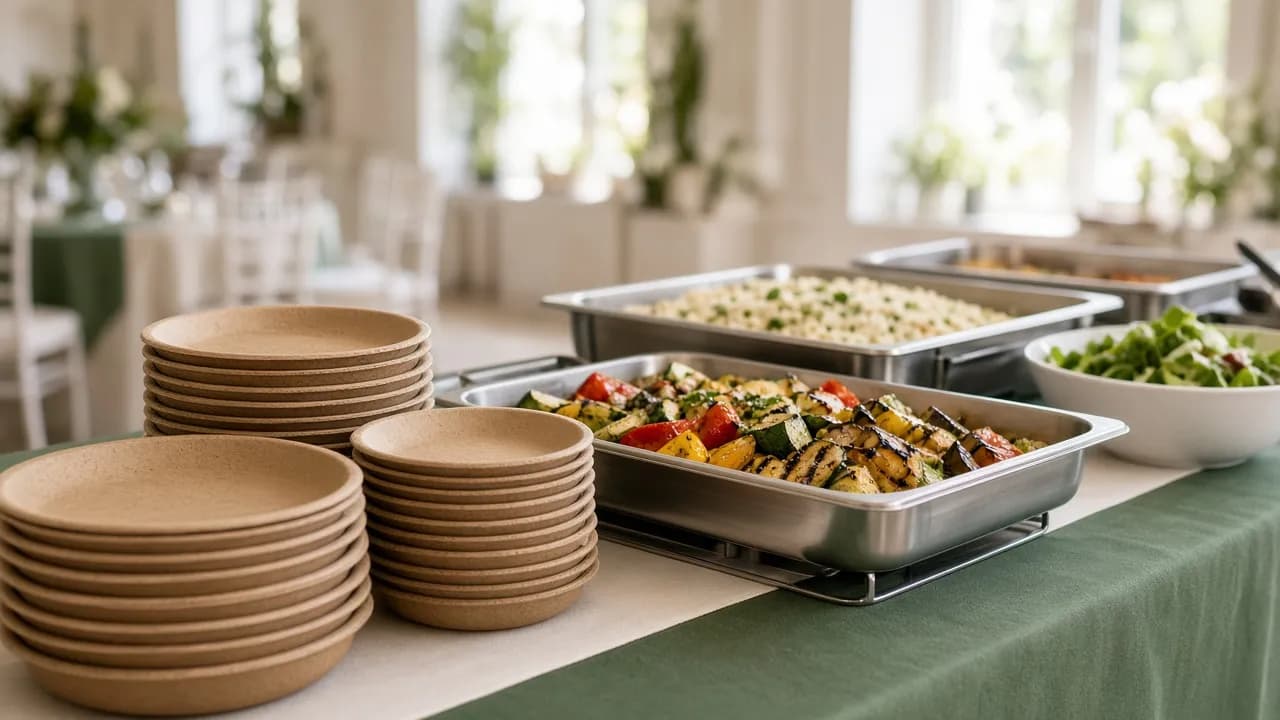
Bagasse plates are disposable plates molded from sugarcane fiber, the pulp left over after the cane is crushed for juice. They come round, oval, or divided into compartments, most often from 6 to 10 inches across, and they are commercially compostable where your hauler takes fiber.
Two of them can look identical and still be different products. A 500-count case of EcoChoice 9 inch bagasse plates lists at a shipping weight of 17 lb. A 500-count case of Fineline 9 inch bagasse plates lists at 24.1 lb. Same size, same material, about 40 percent more fiber in the heavier case.
That weight shows up in two places: how the plate holds a full dinner, and what the case costs.
Safra Distribution stocks Planet Choice kraft bagasse plates in our Fremont warehouse and delivers them on weekly routes across six Bay Area counties. What follows is which size fits which food, how hot they can go, how many you need for an event, where they go after the meal, and what public listings charge for a case.
Bagasse plates in the sizes most caterers stock.
Key facts about bagasse plates
- Bagasse plates and sugarcane plates are the same product. Bagasse is the fiber left after sugarcane is pressed.
- Small plates usually ship 1,000 per case. A 9 or 10 inch plate usually ships 500 per case, as on this EcoChoice 9 inch listing.
- One 9 inch listing rates its plate at 32 to 176 F. World Centric lists its plant fiber products at up to 200 F.
- Two 500-count cases of 9 inch bagasse plates list at 17 lb and 24.1 lb shipping weight. Plate weight is the spec most buyers skip.
- California's Health and Safety Code section 109000 (AB 1200) bars PFAS in plant fiber food packaging, and the definition names disposable plates.
- Public listings read in November 2026 put bagasse plates at roughly 4 to 25 cents each, depending on size, weight, and brand.
Further reading
- What is bagasse? Sugarcane packaging explained
- Wholesale bagasse packaging: trays, bowls, and containers
What are bagasse plates?
A bagasse plate is a molded fiber plate made from sugarcane pulp. It is matte, slightly textured, and stiffer than it looks. Kraft plates are a natural tan.
The easy comparison is a paper plate. That comparison is incomplete. A basic paper plate is a thin pressed sheet, and many are coated to stop grease. A bagasse plate is molded thick from wet pulp, so it holds its shape under a full entree without a plastic layer.
You will also see them sold as sugarcane plates, sugarcane fiber plates, or plant fiber plates. Some brands blend bagasse with bamboo or other fiber. The use at the table is the same.
How the pulp is pressed and molded is covered in our what is bagasse guide. This page stays on picking and using the plate.
What sizes do bagasse plates come in?
Most bagasse plates come in four round sizes: 6, 7, 9, and 10 inches. Oval platters and 3-compartment plates fill out the line. Pick by the food, not by habit.
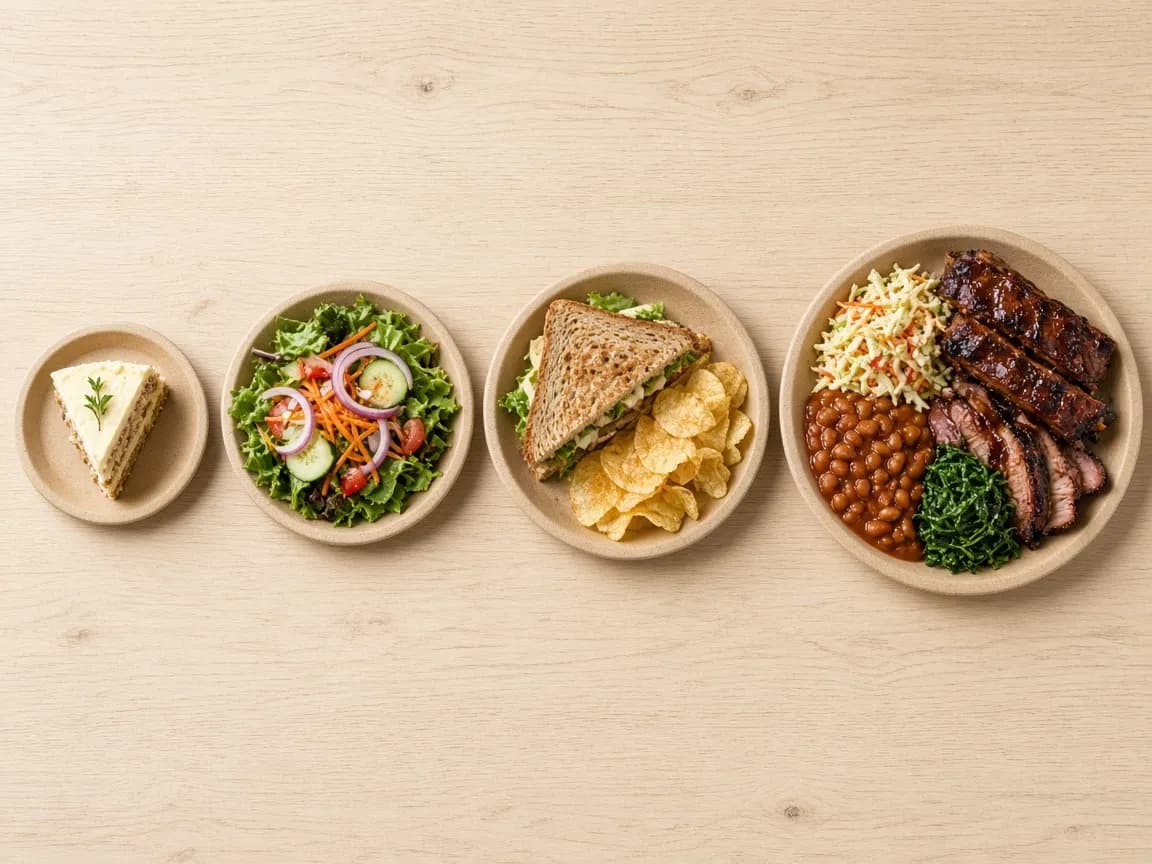
Bagasse plate sizes side by side: dessert, side, entree, and full plate.
- 6 inch. Dessert, a slice of cake, cookies, appetizers. Usually 1,000 per case.
- 7 inch. Salad, a side, bread, small plates. Usually 1,000 per case.
- 9 inch. The lunch plate. A sandwich and a side, pasta, a slice of pizza. Usually 500 per case.
- 10 inch. A full dinner plate for buffets, barbecue, and heavy catering menus. Usually 500 per case.
- 10 and 12 inch oval. Long items and shared food: a sandwich and chips, ribs, a sampler.
Safra stocks seven of these in kraft: the 6 inch round and 7 inch round at 1,000 per case, and the 9 inch round, 10 inch round, 10 inch round 3-compartment, 10 inch oval, and 12 inch oval at 500 per case. The full set sits in our dinnerware collection.
Check the exact diameter on any listing. A 9 inch plate from one maker is not always a 9 inch plate from another.
6 vs 9 vs 10 inch bagasse plates: which should you stock?
Most kitchens need two sizes, not four. The mistake is buying one plate for everything, because a 10 inch plate under a cookie wastes money and a 6 inch plate under a plate lunch spills.
- Cafe or bakery. 6 inch for pastries, 9 inch for sandwiches.
- Lunch counter. 9 inch only. It holds a sandwich and a side.
- Barbecue or plate lunch. 10 inch 3-compartment. The meat, the rice, and the slaw stay apart.
- Catering buffet. 10 inch for the main line, 6 or 7 inch for dessert and salad.
- Pizza shop. 9 inch for slices. Skip the 6 inch unless you sell dessert.
- Passed appetizers. 6 inch only.
One test settles it. Put your heaviest plated item on a 9 inch and a 10 inch plate and carry each across the room. If food rides up on the rim of the 9 inch, you need the 10.
Further reading
Bagasse plates vs paper plates vs plastic plates
The price comparison makes bagasse look expensive. The bin comparison changes the answer.
- Bagasse vs paper. A basic paper plate is thinner and can fold under a full entree. Coated paper plates can carry a plastic or wax layer, and StopWaste tells Alameda County residents to keep shiny or plastic-lined paper out of the green bin. A plain bagasse plate has no liner to argue about.
- Bagasse vs plastic or foam. Plastic and foam plates are light and cheap. They also go to the landfill. In unincorporated San Mateo County and the 16 cities that adopted its model ordinance, plastic is not allowed for most disposable foodware, compostable plastic included.
- Bagasse vs reusable. Reusables win where you can wash them. For drop-off catering, takeout, and events without dish service, that option does not exist.
This is not a choice between a cheap plate and a green plate. It is a choice about which plate your city lets you hand out and your hauler lets you throw away.
Round, oval, or compartment plates?
Shape decides how food sits, how plates stack, and how many complaints you get about sauce in the rice.
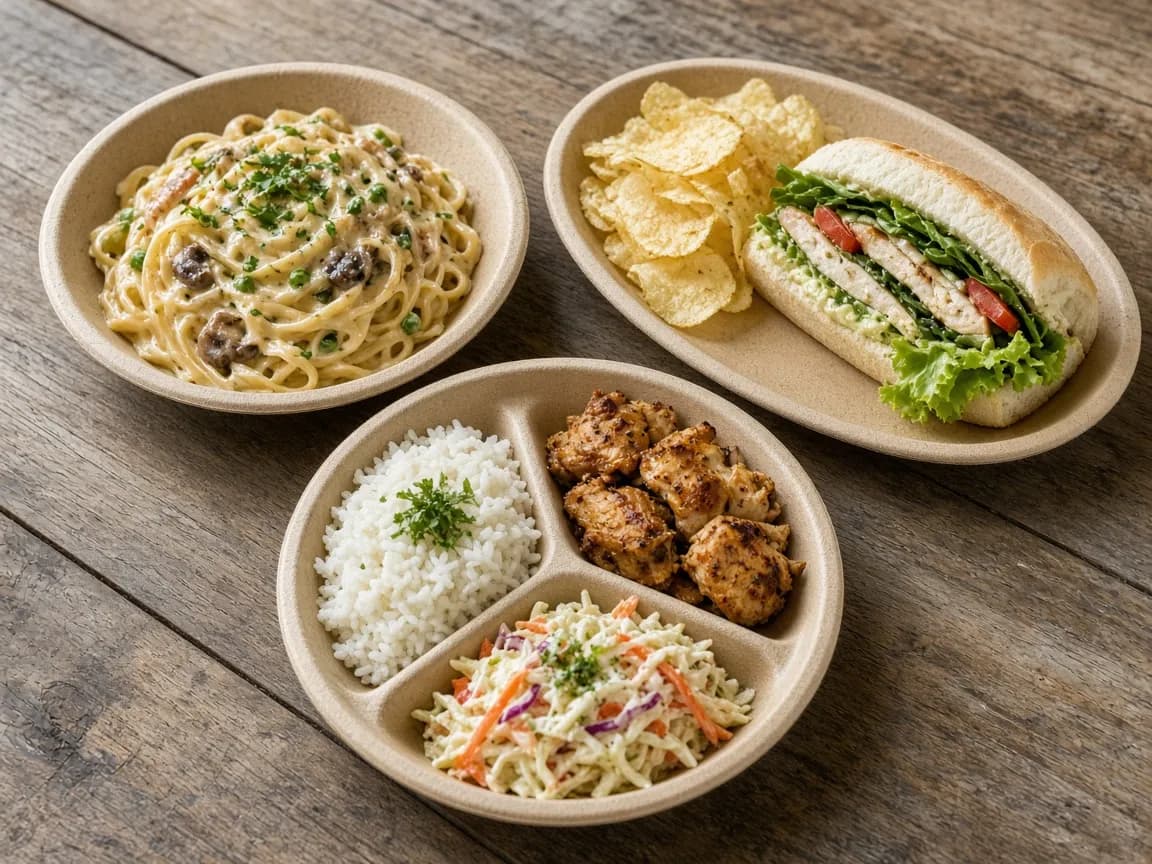
Round, oval, and 3-compartment bagasse plates each suit a different menu.
- Round. The default. They stack tight and work for almost any food.
- Oval. Better for long items and shared food. A 12 inch oval carries a sandwich and chips or a rack of ribs without hanging over the edge.
- Compartment plates. A 3-compartment plate keeps wet and dry food apart. Barbecue, rice plates, and kids' meals are the prime example. The dividers also stiffen the plate.
If you run one menu with sauces and sides, compartment plates cut leaks. If you run several menus, round plates are the most flexible.
The same logic applies to sugarcane bowls. When the food is wet, a bowl beats a plate. Our fiber bowls guide covers bowl sizes.
Are bagasse plates microwave and heat safe?
For normal hot food and a short reheat, yes. The limit depends on the maker, and the numbers do not all agree.
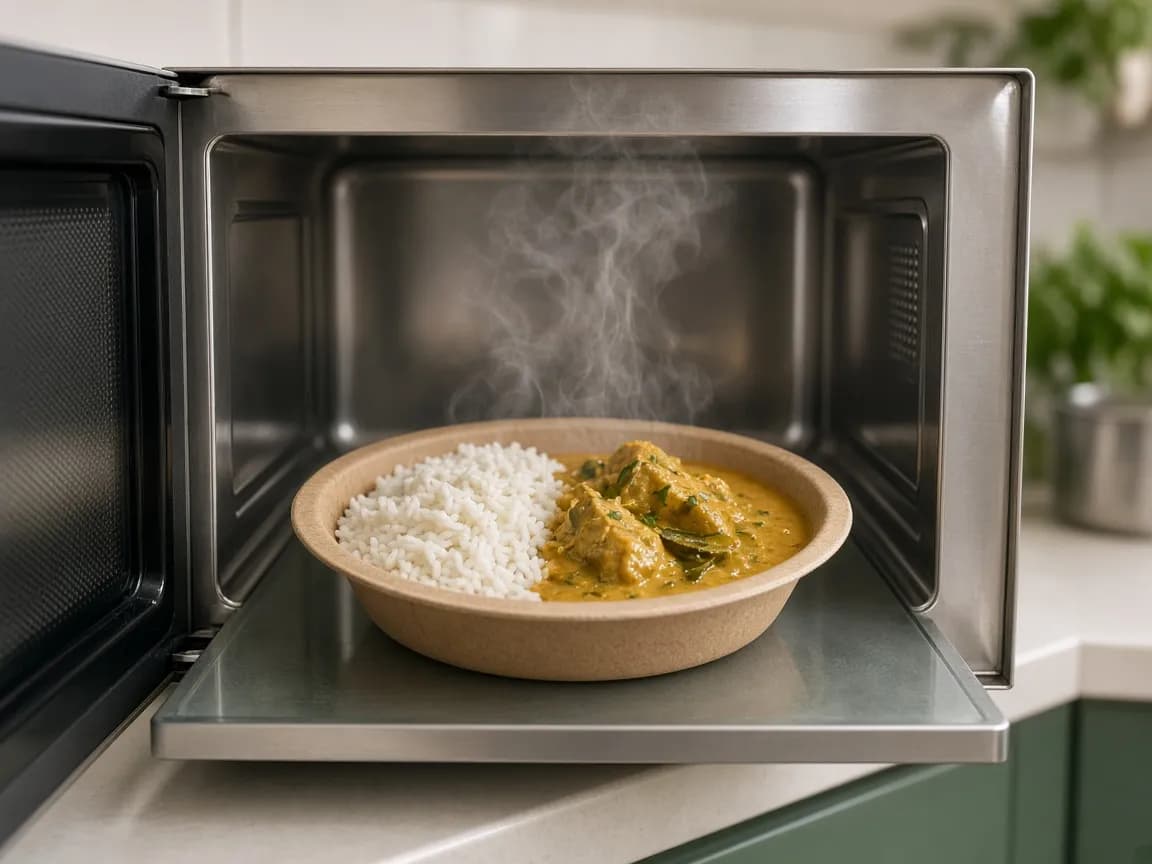
Most bagasse plates handle hot food and a short microwave reheat.
- Heat. One Greenprint 9 inch listing rates its plate at 32 to 176 F. World Centric's FAQ lists its plant fiber products at up to 200 F.
- Microwave. World Centric says its unlined fiber products are microwavable for up to 2 3/4 minutes. Most of the listings in our price examples below are marked microwavable.
- Freezer. The Greenprint listing marks its plate freezer safe, which suits make-ahead catering.
- Oven. World Centric tells operators to test its products in their own ovens and microwaves. Do not assume an oven rating that is not on the spec sheet.
A plate lunch off a steam table sits well inside those numbers. Fajitas straight off a cast iron pan may not.
That spread, 176 F on one listing and 200 F on another, is not a typo. It is the reason to read the rating on the exact plate you buy, not the category.
Further reading
How heavy is a bagasse plate, and why does it matter?
Weight is the hidden spec. A heavier plate uses more fiber, flexes less, and costs more.
Shipping weights on public listings show the spread. The EcoChoice 9 inch case lists at 17 lb. The Fineline 9 inch case lists at 24.1 lb. Both hold 500 plates. With the carton counted in, that works out to roughly 15 grams against 22 grams per plate.
- Lighter plates are fine for cake, snacks, and dry sides.
- Heavier plates earn their price under full entrees, barbecue, and anything carried a long way.
- Compare case weight, not just case price.
The cheapest case is not always the cheapest plate per meal. A light plate that guests double up under a heavy entree costs two plates. Our what is bagasse guide makes the same point for clamshells and bowls.
How many bagasse plates do you need for catering?
Count plates by course, not by guest. A guest who eats a main and a dessert uses two plates.
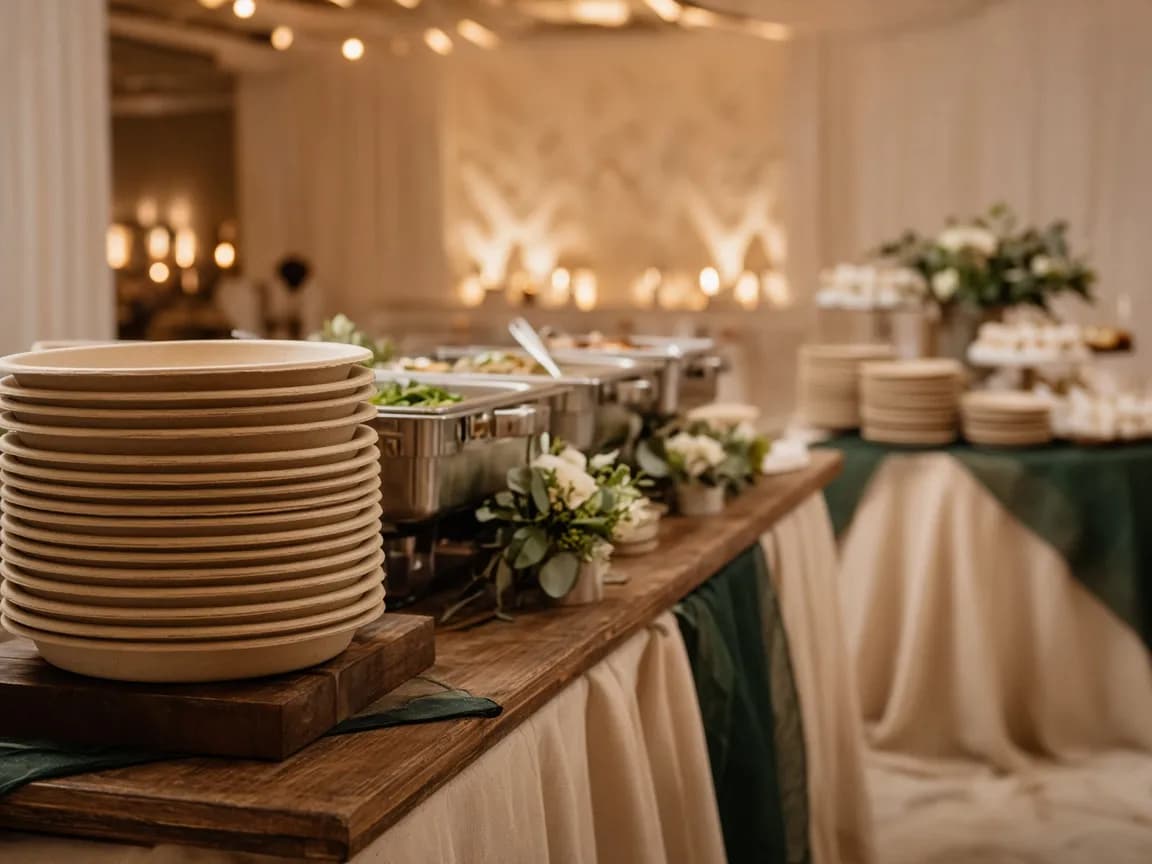
Count bagasse plates per course: main plates on the buffet, small plates for dessert.
- Main plates. One 10 inch plate per guest, plus extra for second trips.
- Salad or side plates. One 7 inch plate per guest if salad is served on its own plate.
- Dessert plates. One 6 inch plate per guest who will have dessert.
- Buffer. Add a margin for dropped plates and seconds.
Case counts do the rest of the math. A 500-count case of 10 inch plates covers a 400-guest buffet with 100 left for seconds. A 1,000-count case of 6 inch plates covers dessert for several events.
Running short halfway down the buffet line costs more than one extra case on the truck.
Further reading
Do bagasse plates go in the green bin?
In most of the Bay Area, yes, when the plate is plain fiber. Scrape food in with it.
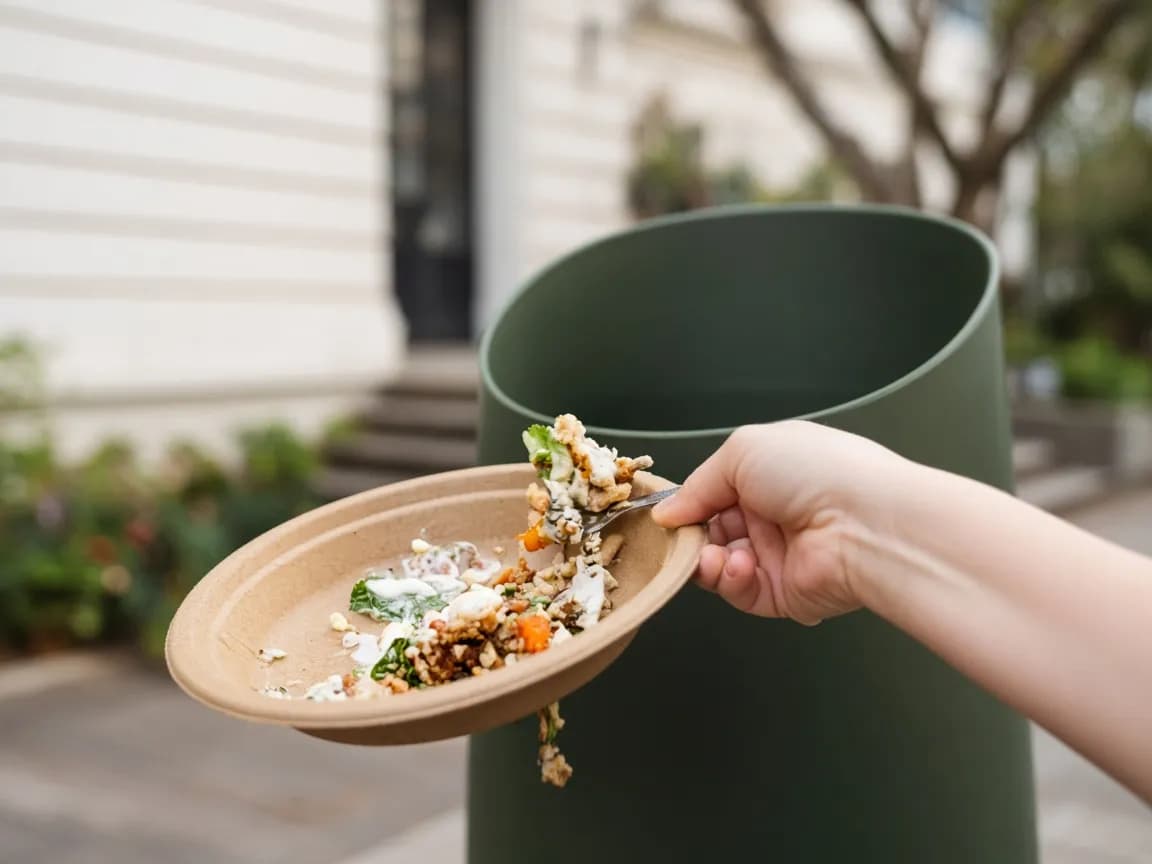
Plain bagasse plates and food scraps go in the green bin together where fiber is accepted.
- San Francisco. Recology's What Goes Where list puts natural fiber-based cups, plates, bowls, and utensils, bagasse included, in the compost bin.
- Alameda County. StopWaste lists uncoated food-soiled paper, paper plates included, as green bin material, and keeps shiny or plastic-lined paper out. A plain fiber plate falls on the accepted side by that rule. A plate with a plastic film does not.
- Your city. Check your hauler. Rules differ, and some programs are stricter.
The plain plate is the easy case. The trouble starts with a plastic sleeve left on the stack or a non-compostable sticker on the rim. If you have no compost service at all, our no composter near me guide covers what to do.
Further reading
What California rules apply to bagasse plates?
- AB 1200, PFAS. Health and Safety Code section 109000 covers plant fiber food packaging and names disposable plates, bowls, and trays. Since January 1, 2023, that packaging cannot contain intentionally added PFAS, or PFAS at or above 100 parts per million total organic fluorine. Look for "no PFAS added" on the spec sheet.
- Compostable labels. A plate sold as compostable has to meet California's labeling rules. Our labeling laws guide explains SB 343 and AB 1201.
- San Francisco. Compostable foodware must be certified by BPI or TUV AUSTRIA.
- San Mateo County. Where the county ordinance applies, food service businesses must use natural fiber foodware certified compostable and PFAS-free. Our San Mateo County ordinance guide walks through it.
Keep the certificate or spec sheet on file. If a venue or an inspector asks, that paper is your answer.
Quick answers about bagasse plates
Are bagasse plates the same as sugarcane plates?
Yes. Bagasse is sugarcane fiber, so bagasse plates and sugarcane plates are the same product under two names.
Are bagasse plates stronger than paper plates?
Generally, yes. A molded bagasse plate is thicker and stiffer than a basic paper plate. A heavier bagasse plate is stiffer still.
Are sugarcane plates microwave safe?
Most are, for a short reheat. World Centric puts its unlined fiber products at up to 2 3/4 minutes. Check the listing for the exact plate.
Are bagasse plates home compostable?
They break down in a commercial facility. World Centric says its fiber plates break down in a backyard pile in 12 to 18 months, which is slow. Our BPI vs OK Compost Home guide explains the two certifications.
Do you need compartment plates?
Only if your menu has sauces or sides that should not touch. For sandwiches, pizza, and dessert, a plain round plate does the job for less.
How much do bagasse plates cost?
Bagasse plates run from about 4 cents to about 25 cents each on public listings. Size, weight, compartments, and brand move the price.
Public listings read in November 2026 (no California shipping restriction shown):
- 6 inch, 1,000 per case. EcoChoice at $38.99, about 4 cents each. Fineline at $89.99, about 9 cents each.
- 7 inch, 1,000 per case. World Centric at $69.99, about 7 cents each.
- 9 inch, 500 per case. EcoChoice at $43.99, about 9 cents. Greenprint at $54.99, about 11 cents. Fineline at $98.49, about 20 cents.
- 10 inch 3-compartment. EcoChoice, 500 per case, at $57.99, about 12 cents. World Centric, 700 per case, at $119.99, about 17 cents. Fineline, 500 per case, at $122.99, about 25 cents.
The 9 inch spread is the one to notice. The heaviest case costs more than twice the lightest. Whether that is waste or value depends on what goes on the plate.
Safra does not publish case prices online. Existing customers order on Cut+Dry. New accounts can ask for a quote, and we will price bagasse plates with the rest of the Planet Choice fiber line.
Final thoughts
Bagasse plates are sugarcane fiber, molded thick enough to hold a real meal and plain enough to go in a green bin where fiber is accepted. Most kitchens need two sizes: a 9 or 10 inch for the main plate and a 6 or 7 inch for dessert and sides. Add compartment plates only when the menu calls for them.
The case price is the number everyone compares. It is not the number that decides the order. Plate weight decides whether one plate holds the meal, the heat rating decides whether it survives your hottest dish, and your city decides where it goes after.
If you want a second look at the plates you buy today, send us your current list and we will match it line by line.
Related posts
 Sustainability Legislation
What Is rPET? Recycled PET Food Containers Explained
rPET is recycled PET, the clear #1 plastic made partly from used bottles. How it is made, whether it is food safe, what it costs, and the rules.
Safra13 min read Sustainability Legislation
What Is PLA? The Plant-Based Plastic in Food Packaging Explained
PLA is a plastic made from fermented plant sugar. Where it shows up in food packaging, how hot it can get, and where it goes after use.
Safra13 min read Sustainability Legislation
What Is Compostable Cutlery? CPLA, Wood, and Fiber Utensils Explained
Compostable cutlery is mostly CPLA, wood, or plant fiber. What each handles, where the green bin takes it, and the California rules.
Safra13 min read