
What Is Kraft Paper? Food-Safe Kraft Paper Explained
Kraft paper is strong wood-pulp paper from the kraft process. Here is how it is made, basis weights, food safety, recycling, and cost.
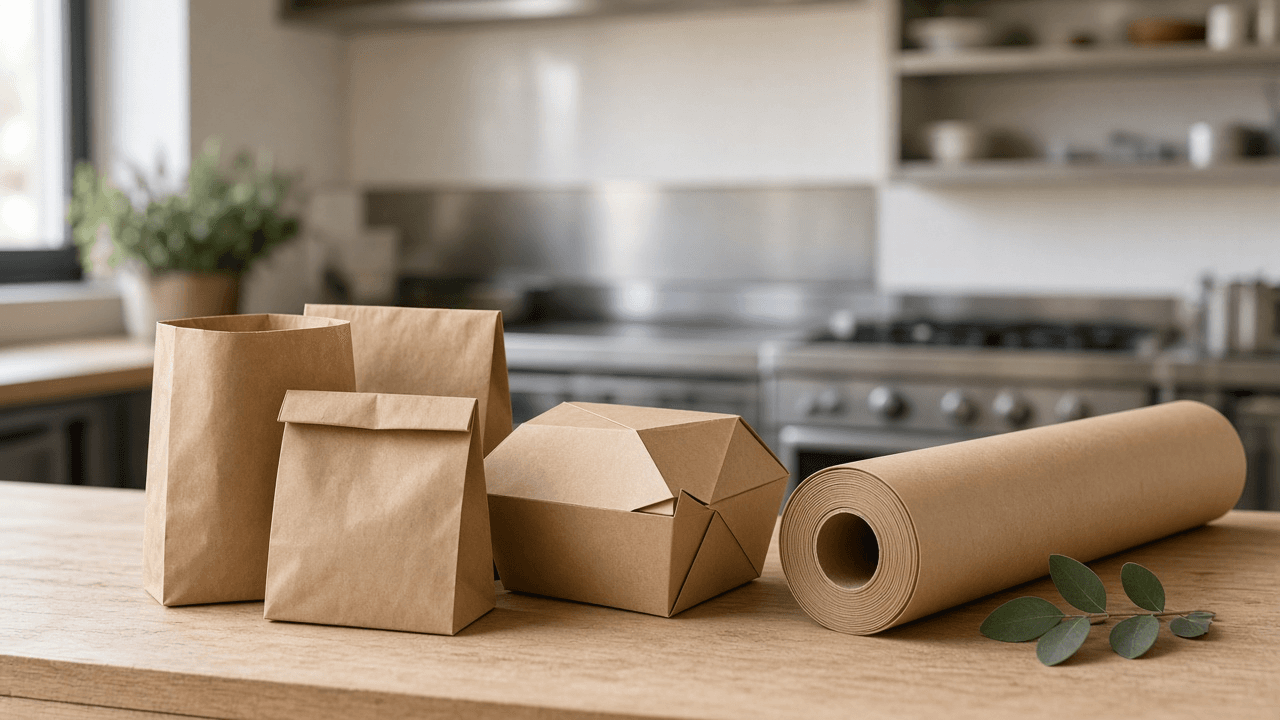
Kraft paper is strong, usually brown paper made from wood pulp cooked in the kraft (sulfate) process, which strips out lignin while keeping long, tough cellulose fibers. It is the paper behind grocery and takeout bags, butcher paper, folded takeout boxes, and most of the brown packaging in a food business.
This guide explains what kraft paper is, how it is made, what it is used for, what basis weight means, whether it is food safe, and how it is recycled or composted in California. It is written for restaurant, cafe, bakery, and catering operators in the Bay Area who buy paper by the case.
At Safra Distribution we are a family-owned food packaging and restaurant supplies distributor, delivering across six Bay Area counties from our Fremont warehouse. Kraft paper shows up in almost every order we pack, from brown paper bags to takeout boxes, so this is the plain-English version of the spec sheet.

Kraft paper in a food business: bags, boxes, and butcher paper from the same family of fiber.
Key facts about kraft paper
- "Kraft" is the German and Swedish word for strength, named for how much tougher kraft paper was than the papers before it.
- The kraft process cooks wood chips in a hot mix of sodium hydroxide and sodium sulfide, a recipe patented by Carl Dahl in 1884.
- Kraft pulping is today the most important process for making both bleached and unbleached chemical pulp.
- Brown kraft paper bags are typically made on about 30 to 57 lb basis weight paper; higher numbers are tougher.
- Since January 1, 2026, California's SB 1053 lets covered stores hand out only recycled paper checkout bags, and from January 1, 2028 those bags need at least 50 percent postconsumer content.
- An 18 inch by 1,000 foot roll of 40 lb kraft butcher paper listed at about $28 to $72 on public wholesale sites in November 2026.
Further reading
What is kraft paper?
Kraft paper is paper made from kraft pulp. The name describes how the pulp is cooked, not a color, a weight, or a single product.
Most kraft paper in foodservice is unbleached, which is why it is brown. The brown comes from traces of lignin, the natural glue in wood, that survive the cook. Bleached kraft paper is the same fiber whitened at the mill.
Kraft paper is strong for its weight. That is the whole point of it: a thin sheet that carries a full takeout order, folds into a box, or wraps a brisket without tearing.
On a spec sheet you will see "natural kraft," "brown kraft," "white kraft," "virgin kraft," and "recycled kraft." All of them describe kraft paper. The words after "kraft" tell you color and fiber source.
How is kraft paper made?
Kraft paper starts in a digester, not on a paper machine. The cook is what makes it strong.

From wood chips to kraft pulp to a finished roll of kraft paper.
- Chipping. Logs, mostly softwoods like pine, are debarked and cut into chips.
- Cooking. Chips are cooked under pressure in "white liquor," a hot mix of sodium hydroxide and sodium sulfide. The sulfide speeds up lignin removal.
- Washing. The dark spent liquor is washed out of the pulp and sent to a recovery boiler, which regenerates the cooking chemicals.
- Bleaching (optional). For white kraft paper, the pulp is bleached. Natural kraft skips this step.
- Papermaking. The pulp is formed into a sheet, pressed, and dried on steam cylinders into rolls.
- Converting. Rolls are cut, printed, glued, and folded into bags, sheets, boxes, and liners.
Why kraft paper is stronger: the sulfide removes lignin faster, so the fibers spend less time in hot alkali and keep more of their length and strength. The chemical recovery loop is also why the kraft process won out over earlier soda pulping.
Bleached vs unbleached kraft paper: what is the difference?
The difference is mostly color and a little cost. Strength is similar when the basis weight matches.

Unbleached and bleached kraft paper: same fiber, different finish.
- Unbleached (natural) kraft paper. Brown, the default for grocery bags, takeout bags, and butcher paper. One bag maker lists less wood, less energy, and less wastewater as advantages of natural paper over bleached.
- Bleached (white) kraft paper. White, used where a bakery, boutique, or printed brand wants a clean look. Takes color printing more crisply.
- Recycled kraft paper. Made partly or fully from recovered fiber. Often a little weaker and more variable in color, and the default for compliant checkout bags.
- Virgin kraft paper. Made from new fiber. Stronger and cleaner for direct food contact.
For a Bay Area kitchen the practical split is simple: natural kraft for bags and wraps, white kraft where the look sells, and recycled kraft wherever a local bag law asks for postconsumer content.
Further reading
What is kraft paper used for in foodservice?
Kraft paper shows up anywhere a food business needs strength at low weight. The common formats are:
- Bags. SOS bags, handled takeout bags, and grocery bags. The biggest use of kraft paper in any restaurant order. See our guide to food-safe kraft paper bags.
- Butcher paper. Uncoated kraft paper on rolls, usually pink or natural, for wrapping meat and smoking brisket.
- Takeout boxes. Folded kraft paperboard boxes in #1 to #8 sizes, often with a grease-resistant or PLA lining.
- Wraps and liners. Grease-resistant kraft sheets for sandwiches and baskets. Our greaseproof paper guide covers these.
- Cup sleeves and carriers. Recycled kraft board around hot cups and drink trays.

The three kraft paper formats most kitchens buy: bags, boxes, and butcher paper.
Kraft paper is weaker against grease and water on its own. Plain kraft paper will show oil within minutes. That is why takeout boxes carry a lining and why oily food gets a greaseproof liner inside a kraft bag.
What does basis weight mean for kraft paper?
Basis weight is how kraft paper strength is quoted in the US. It is the weight in pounds of a standard ream of the paper.
For food papers the standard is 500 sheets of 24 x 36 inches. Multiply pounds by about 1.63 to get grams per square meter.
Common kraft paper basis weights and what they fit:
- About 30 lb. Light SOS bags in small sizes. Dry bakery and light retail.
- About 35 lb. Mid-size lunch and deli bags.
- About 40 lb. Larger takeout and grocery bags, and most butcher paper rolls.
- About 57 lb and up. Large grocery and heavy-duty bags for cans, bottles, and catering.

Kraft paper bag sizes side by side: heavier basis weight for bigger loads.
Match kraft paper to the heaviest regular ticket, not the average one. A light bag that tears on a soup order costs more in double-bagging than the heavier case would have.
Is kraft paper food safe?
Kraft paper can be food safe, but the claim belongs to the specific product, not to kraft paper in general.
In the US, paper that touches food is covered by FDA rules such as 21 CFR 176.170, which lists what may be used in paper that contacts aqueous and fatty foods. Ask for a manufacturer statement that the item meets FDA food-contact rules for your use.
Three practical rules:
- Direct contact. Pastries, fries, and sandwiches touching the paper need a food-contact statement. Virgin or grease-resistant kraft paper is the safer pick.
- Secondary packaging. A bag around closed containers does not touch food, so recycled kraft paper works well.
- Grease. Plain kraft paper is not a grease barrier. In California, any grease-resistant plant-fiber packaging must also meet AB 1200, which bans intentionally added PFAS and caps total organic fluorine below 100 ppm.
Butcher paper is a good example. Uncoated kraft paper rolls sold for meat and BBQ are commonly described by sellers as FDA approved for food contact. Get that statement for the roll you buy.
Further reading
Is kraft paper recyclable or compostable?
Both, depending on how clean it is. Clean kraft paper goes in the blue bin; food-soiled kraft paper goes in the green bin.
- San Francisco. Recology lists packing or kraft paper and paper bags as recyclable when clean and dry, and soiled paper, greasy paper bags, and paper takeout boxes as compost.
- Alameda County. StopWaste accepts uncoated food-soiled paper in the green bin, but warns that shiny, smooth, or plastic-lined paper stays out.
- Lined boxes. A kraft takeout box with a plastic or PLA lining is no longer plain paper. Check your hauler before you tell customers which bin.

Clean kraft paper goes in the blue bin; greasy kraft paper goes in the green bin.
Under SB 1383, every California jurisdiction must provide organics collection to businesses, so the green-bin path for soiled kraft paper exists almost everywhere in the Bay Area. If you want to print "compostable" on a lined box, CalRecycle requires plastic-coated fiber to meet ASTM D6868.
Further reading
- Compostable vs biodegradable vs recyclable: California labels
- California plastic labeling laws: SB 343 and AB 1201
Quick answers about kraft paper
What is kraft paper made of?
Wood pulp, mostly from softwoods like pine, cooked in sodium hydroxide and sodium sulfide to remove lignin. Recycled kraft paper adds recovered paper fiber.
Is kraft paper the same as brown paper?
Most brown paper in foodservice is unbleached kraft paper, but kraft paper also comes bleached white. Brown is a color; kraft is the process.
Is kraft paper waterproof?
No. Plain kraft paper absorbs water and oil. Waterproof or grease-resistant kraft paper has a coating or a denser sheet.
Can kraft paper go in the oven?
Plain kraft paper is not oven-rated. Use silicone baking paper for sheet pans.
What California rules apply to kraft paper bags?
Kraft paper bags are the most regulated kraft paper item in a food business. Three rules matter:
- SB 1053 (stores). Since January 1, 2026, covered grocery, pharmacy, convenience, and liquor stores may hand out only recycled paper checkout bags, for at least 10 cents each. From January 1, 2028, those bags need at least 50 percent postconsumer recycled content.
- Bag labeling. Compliant bags must print the manufacturer name, the country of manufacture, and the postconsumer content percentage.
- Local restaurant rules. Several Bay Area cities set their own takeout bag rules for restaurants. Our SB 1053 guide and kraft bag guide cover San Francisco and Alameda County.
The fiber law and the bag law point the same way: recycled kraft paper for checkout bags, virgin or food-grade kraft paper for anything that touches food.
Further reading
What does kraft paper cost?
Kraft paper is cheap by the sheet and adds up by the case. Public wholesale listings read on November 2, 2026 put two common formats here:
- 18 inch x 1,000 foot pink kraft butcher paper roll, 40 lb: about $28 to $72 per roll.
- #8 PLA-lined kraft takeout box, 200 per case: about $41 to $49 per case, or 21 to 24 cents each.
For brown paper bag pricing by size and weight, see our brown paper bags guide.
Three things move kraft paper pricing: basis weight, virgin vs recycled fiber, and print. Freight matters too, because paper is heavy.
Safra Distribution delivers on weekly routes from Fremont across six Bay Area counties. Ask for a quote at your volume, because case pricing moves with size, basis weight, and order size.
Can you get custom printed kraft paper packaging?
Yes, and kraft paper is one of the easiest materials to print. Natural kraft takes one- and two-color logos well; white kraft shows full color more crisply.

Custom printed kraft paper bags are the most common branded item on a takeout order.
Safra's custom packaging program covers printed bags, cups, napkins, bowls, and catering boxes, with stock held in our Fremont warehouse and released as you need it. You get a print proof and a firm quote before anything goes to production.
How do you choose kraft paper packaging?
A good kraft paper buy comes down to six checks.
- Use. Direct food contact, secondary bag, or wrap. It decides virgin vs recycled.
- Basis weight. Match it to the heaviest regular order.
- Food-contact statement. FDA food-contact paperwork for anything that touches food.
- Grease barrier. A PFAS-free liner, lining, or greaseproof sheet for oily food.
- Recycled content. Enough postconsumer content to meet your city's bag rule.
- Bin path. Clean kraft paper to recycling, soiled kraft paper to compost; confirm lined boxes with your hauler.
Most operators end up with four kraft paper items: two bag sizes, one takeout box, and one roll or sheet. Add printed bags once the plain ones are dialed in.
Final thoughts
Kraft paper is the quiet workhorse of food packaging. It carries the order, folds into the box, and wraps the brisket, and it is one of the few materials that is both recyclable clean and compostable dirty.
If you are re-quoting, start with the bag you use most. Match the basis weight to your heaviest ticket, check the recycled content against your city's rule, and get the food-contact statement for anything that touches food.
Questions about a kraft paper bag, box, or roll for one location or several? Send us what you use today and we will match it line by line.
Further reading
Related posts
 Paper Bags
What Is Greaseproof Paper? The Food Wrap and Liner Paper Explained
Greaseproof paper is dense paper that resists oil without a coating. Here is how it is made, sizes, PFAS rules, compost, and cost.
Safra13 min read Paper Bags
Food-Safe Kraft Paper Bags: Wholesale Foodservice Bags
Food safe paper bags for kitchens: FDA paper rules, PFAS-free grease barriers, Bay Area bag laws, and how to buy kraft paper bags wholesale.
Safra12 min read Paper Bags
How to Choose Brown Paper Bags for Your Business: Sizes, Weights and Bulk Pricing
Choose brown paper bags by size, basis weight, and bulk case pricing for Bay Area takeout, bakery, and checkout programs.
Safra14 min read