
6.6 x 4.7 vs 9.1 x 4.8 Sushi Tray: Which Fits Your Menu?
6.6 x 4.7 vs 9.1 x 4.8 sushi trays compared for California kitchens: nigiri sets, rolls, combo platters, portion cost, and bagasse vs PET options from Safra.
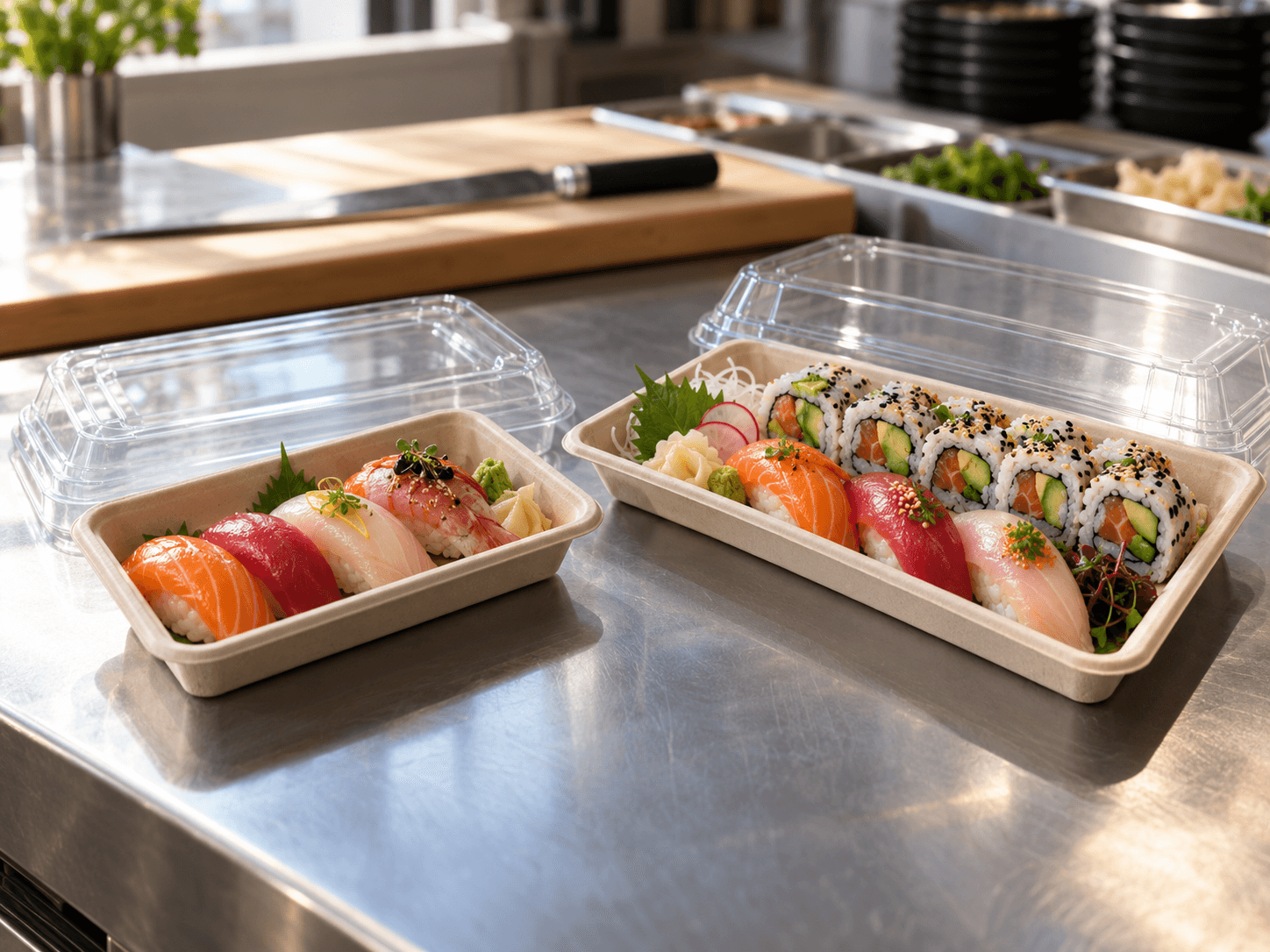
A 6.6 x 4.7 vs 9.1 x 4.8 sushi tray choice is the kitchen decision between a compact rectangular tray for single rolls and small nigiri sets versus a longer tray for combo platters, mixed rolls, and shareable sashimi that still looks full under a clear lid.
Key facts operators use when they compare a 6.6 x 4.7 vs 9.1 x 4.8 sushi tray:
- Safra's bagasse sushi tray ladder runs six sizes from about 6.6 x 4.7 inches to 9.1 x 4.8 inches, sold as tray and clear lid combos, commonly 300 per case.
- The 6.6 x 4.7 inch sushi tray maps to the small end of that ladder and to common #04 / 4 to 6 oz style molds used for one cut roll or a short nigiri set.
- The 9.1 x 4.8 inch sushi tray sits at the large end and maps to the combo footprint operators use for 8 to 12 piece sets, roll plus nigiri mixes, and poke-adjacent chilled builds that still need a flat tray look.
- Public September 2026 market listings put many PET sushi trays near the mid-teens to high-20s of cents each (for example Emperor's Select small and large packs on Webstaurant), while compostable PLA trays often land near the mid-20s to low-50s of cents each depending on brand and case count.
- Bagasse sushi tray bases with clear lids show up on public wholesale and marketplace listings near the low-20s of cents each for medium fiber packs; treat those as market orientation, not a Safra invoice.
- Live Safra case prices sit behind Cut+Dry sign-in; ask for a quote at your volume rather than treating a public list as your delivered price.
- Fiber / bagasse sushi trays absorb a little surface moisture and read as compostable under a clear anti-fog PET or PLA lid; all-clear PET trays sell visibility first and recycle only where your hauler accepts PET foodware.
- California foam foodware sales ended January 1, 2025, and AB 1200 keeps plant-fiber foodware under a no intentionally added PFAS / under 100 ppm total organic fluorine line, so a compostable sushi tray decision is a menu call and a compliance call at once.
Safra Distribution stocks compostable bagasse sushi trays and matching clear lids from its Fremont warehouse for Bay Area weekly delivery, often at a one-case minimum, with samples on the next route when you need to test roll counts and lid snap before you commit the menu.

*6.6 x 4.7 vs 9.1 x 4.8 sushi tray side by side on a kitchen pass*
Why does a 6.6 x 4.7 vs 9.1 x 4.8 sushi tray decision matter more than the inch numbers alone?
Kitchens do not buy inches in the abstract. They buy how a cut roll, a nigiri set, or a combo looks when the lid comes off after a delivery ride or a grab-and-go open.
A sushi tray is a presentation stage. The flat rectangle keeps pieces in a line, keeps ginger and wasabi from sliding into the rice, and lets the clear lid do the selling in a cold case. That is why operators who already settled a 32 oz vs 48 oz round container still open a second debate for sushi: the 6.6 x 4.7 vs 9.1 x 4.8 sushi tray split.
The wrong size wastes money two ways. An oversized 9.1 x 4.8 sushi tray with four lonely nigiri pieces looks skimpy and burns tray cost. An undersized 6.6 x 4.7 sushi tray packed with a full combo crushes rolls, fogs the lid against the fish, and drives remakes. Mapping each ticket to the right sushi tray is portion control you can see.
Further reading
Where does the 6.6 x 4.7 inch sushi tray win on a real menu?
The 6.6 x 4.7 inch sushi tray is built for dense, self-contained tickets that do not need a long runway.
Think a single cut roll (six to eight pieces), a 4 to 6 piece nigiri set, a kids sushi plate, a side of edamame or cucumber salad in a sushi-shaped tray, and grab-and-go singles that should look complete when filled edge to edge. The shorter footprint keeps the food centered. A full 6.6 x 4.7 sushi tray looks generous. A half-empty 9.1 x 4.8 sushi tray looks like someone forgot a roll.
Portion cost is the quiet win. When you plate into a 6.6 x 4.7 sushi tray, the vessel itself caps the piece count. Multiply one extra piece of fish across a few hundred lunch tickets a week and the packaging choice shows up in food cost, not just case price.
Storage favors the smaller mold too. Cases of 300 of the 6.6 x 4.7 size stack deeper on a crowded Fremont-bound shelf plan than the same count of longer trays, which matters when the walk-in and dry storage already fight for inches.

*6.6 x 4.7 inch sushi tray filled with a single roll for takeout*
Where does the 9.1 x 4.8 inch sushi tray earn the extra length?
The 9.1 x 4.8 inch sushi tray is not just "more fish." It is more room to plate the way the ticket was written.
Combo platters with one roll plus nigiri, 8 to 12 piece sets, sashimi rows that need space between slices, party samples for two, and chilled poke-adjacent builds that still want a tray look (not a deep bowl) need the longer footprint so pieces do not arrive mashed against the lid. The clear lid sells the mix; the longer base keeps wasabi, ginger, and soy cups from riding into the rice during delivery.
Catering add-ons and office lunch trays also read the 9.1 x 4.8 sushi tray as intentional. One sturdy combo tray beats two small trays that cost more packaging and look like the kitchen could not decide.
If a dish consistently overflows a 6.6 x 4.7 sushi tray or arrives compressed, move that SKU to 9.1 x 4.8 before you change the recipe. Packaging should protect the plate you already know how to cut.

*9.1 x 4.8 inch sushi tray plated as a combo platter with rolls and nigiri*
How should you map menu items across a 6.6 x 4.7 vs 9.1 x 4.8 sushi tray set?
Do not standardize on one sushi tray size for every line. Split the menu the same way successful kitchens split round containers.
- List every roll, nigiri set, sashimi plate, and combo that leaves in a sushi tray.
- Mark single-roll and short nigiri tickets for the 6.6 x 4.7 sushi tray.
- Mark combo, mixed, shareable, and longer sashimi tickets for the 9.1 x 4.8 sushi tray.
- Plate five tickets of each dish into both sizes during a soft test and photograph the open lid.
- Keep the size that looks full without crushing fish against the lid, then lock that mapping on the expo line.
- Order tray and lid as a matched combo from the same line. Sushi tray lids from one factory rarely snap onto bases from another.
- Start with one case of each size in your 6.6 x 4.7 vs 9.1 x 4.8 sushi tray trial from Safra when you need a low-risk Bay Area run.
Portion to the fill line, not to the piece-count memory of your busiest cutter. A consistent fill in a 6.6 x 4.7 vs 9.1 x 4.8 sushi tray pair is the cheapest quality control tool you will install this quarter.
Further reading
What do 6.6 x 4.7 and 9.1 x 4.8 sushi trays actually cost wholesale?
Safra does not publish a public price list. Live sushi tray case pricing sits in the Compostable Collection on Cut+Dry after you sign in. If catalog prices are not visible yet, use public ranges as orientation, then ask for a quote at your volume.
Public wholesale listings in September 2026 put common sushi tray formats roughly here:
- PET clear sushi trays (small to large rectangular footprints near the 6.5 to 8.5 inch band): about 13 to 27 cents each on Webstaurant-style case packs of 300 to 500.
- Compostable PLA sushi trays (for example World Centric 7 x 5 and Stalk Market mid sizes): about 25 to 52 cents each depending on brand and case count.
- Bagasse / fiber sushi trays with clear lids: public marketplace and wholesale packs often land near the low-20s of cents each for medium fiber counts; certification and lid type move the number.
Three things move sushi tray pricing more than the logo: wall weight, whether the lid is included, and freight. Trays are bulky for their weight, so a case of 300 takes real truck space. A clear PET lid sells the food better but may be rejected by some organics haulers even when the bagasse base is accepted. A local program at 10 or more cases a month usually lands below raw list.
Sign in to Cut+Dry for live prices, or send your current sushi tray list for a line-by-line quote. Never treat a competitor web price as your Safra delivered cost.
Bagasse vs PET: which sushi tray material fits California rules?
Whichever size fits your menu, the material matters as much as the footprint.
Bagasse sushi trays are molded sugarcane fiber. The natural tan base absorbs a little surface moisture from rice and fish, which helps presentation under a clear lid. For California plant-fiber foodware, AB 1200 expects no intentionally added PFAS and under 100 ppm total organic fluorine, with a current test report on file. BPI / ASTM commercial compost claims apply to the fiber base when the SKU is certified; confirm your city hauler accepts that format before you print compostable on the menu.
Clear PET sushi trays win on full visibility and a glossy retail look. They are cold-use trays, not a microwave story, and they belong in the recycle stream only where your hauler accepts PET food containers. Many Bay Area sushi counters still use PET for the lid even when the base is bagasse, because the clear top sells the fish. That hybrid is honest when you label it correctly: fiber base compostable where accepted, PET lid handled as plastic.
SB 54 keeps pushing covered packaging toward recyclable or compostable paths. Switching your sushi tray base to certified bagasse now means you are ahead of where the rules are heading instead of scrambling later. Our post on wholesale bagasse packaging covers the full tray family and the lid-fit warning that trips first-time buyers.

*Wholesale cases of bagasse sushi trays ready for Bay Area delivery*
How do Bay Area kitchens buy sushi trays wholesale from Safra?
Bay Area operators usually need cases next week, not a national catalog lead time. A typical 6.6 x 4.7 vs 9.1 x 4.8 sushi tray buying path:
- List formats and weekly burn (small single-roll trays vs large combo trays) plus any campus or hauler constraints.
- Become a customer so you can see live case pricing and place orders.
- Ask for samples on the next Bay Area delivery so the size test happens in your kitchen with your fish and your lids.
- Start with one-case minimums on winning SKUs, then lock a weekly route from the Fremont warehouse.
- Reorder from the Compostable Collection on Cut+Dry once the 6.6 x 4.7 vs 9.1 x 4.8 sushi tray mix is stable.
Service is built around Fremont warehouse inventory and weekly Bay Area routes. That consistency (same SKUs, case packs, and paperwork) is what free size charts cannot deliver alone.
FAQ: 6.6 x 4.7 vs 9.1 x 4.8 sushi tray
Is 6.6 x 4.7 the same as a #1 or #04 sushi tray?
Close enough for menu planning. Industry molds near 6.5 to 6.6 inches by about 3.5 to 4.7 inches cover the small single-roll / short nigiri job. Always match the lid to the exact SKU family rather than assuming every "small" tray shares a lid.
Is 9.1 x 4.8 the same as a large combo tray?
It sits at the large end of Safra's published bagasse sushi tray ladder and covers the combo / 8 to 12 piece job. Neighboring public SKUs (about 8.7 to 9.25 inches long) serve the same ticket class. Test your longest roll cut before you lock the PO.
Can I put poke in a sushi tray?
Yes when the build is shallow and chilled. A sushi tray suits poke-adjacent presentations that still want a flat tray look. Deep poke with lots of toppings usually belongs in a bowl; see our round and square bowl guides if the ticket is a composed bowl, not a tray.
Are bagasse sushi trays PFAS free?
Ask for the current TOF / PFAS report per SKU. California plant-fiber foodware sold for food contact needs no intentionally added PFAS and under 100 ppm total organic fluorine. Safra keeps reports on file for stocked fiber SKUs.
What is the minimum order for sushi trays?
Many Safra SKUs are one-case friendly. Ask for a quote at your volume if you need a mixed pallet or custom print later.
Where do I see live sushi tray case prices?
Sign in to the Compostable Collection on Cut+Dry after you become a customer. Public ranges above are orientation only.
Final thoughts
There is no single winner, and that is the point. The 6.6 x 4.7 sushi tray is better for single rolls, short nigiri sets, tighter food costs, and high-volume grab-and-go. The 9.1 x 4.8 sushi tray is better for combo platters, mixed sets, shareable sashimi, and menus where presentation under a clear lid drives loyalty. Most successful sushi counters stock both and assign each ticket to the size that serves it best.
What should not be a debate is matching the tray and lid as a combo, confirming BPI and PFAS paperwork on fiber bases, and buying from a local weekly route so cases show up before the lunch rush, not after.
At Safra Distribution, we supply restaurants across the Bay Area with compostable bagasse sushi trays in the 6.6 x 4.7 and 9.1 x 4.8 sizes (and the sizes between them), along with clear lids and everything else your takeout program needs. If you are ready to optimize your sushi tray sizes and make the switch to compostable products, browse our containers at safradistribution.com/#collections or reach out through safradistribution.com/become-a-customer and we will help you match the right trays to your menu.
Related posts
 Food Containers
Compostable Cold Cups and Lids in Bulk
Compostable cold cups and lids in bulk for Bay Area shops: sizes, BPI and PFAS notes, case packs, and Safra wholesale delivery.
Safra13 min read Food Containers
Fiber Bowls
Fiber bowls by the case: ounce sizes, BPI compostability, California PFAS rules, and how Bay Area kitchens buy wholesale.
Safra11 min read Food Containers
Planet Choice vs World Centric: Which Compostable Containers Fit Your Kitchen?
Compare Planet Choice vs World Centric compostable containers for Bay Area kitchens: formats, case packs, BPI and PFAS, lids, and how to choose.
Safra12 min read